
The election outcome could also influence how China approaches Washington, particularly as Beijing weighs Trump's weakened political position against the importance of maintaining direct ties with the US President
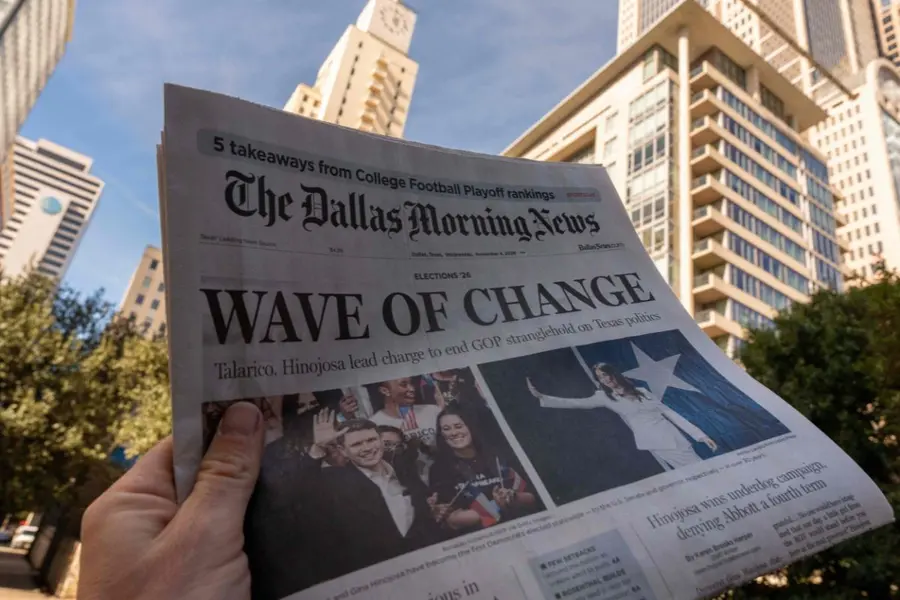
Washington: The Democrats' sweeping victory in the US midterm elections, which gives the party control of Congress, could complicate President Donald Trump's foreign policy towards China, while creating new opportunities and challenges for Beijing.
With Democrats gaining control of both the Senate and the House of Representatives, Trump could face greater resistance to his decisions on trade, tariffs and Taiwan during the final two years of his presidency.
Also Read

The election outcome could also influence how China approaches Washington, particularly as Beijing weighs Trump's weakened political position against the importance of maintaining direct ties with the US President.
Here are three key areas where the midterm results could affect US-China relations.
1. Could Democrats restrict Trump's tariffs on China?
Democratic control of Congress could give lawmakers greater scope to challenge Trump's use of tariffs on Chinese imports, potentially weakening one of his key negotiating tools in the ongoing trade dispute between the two countries.
Trump has repeatedly used tariffs during the US-China trade war. The two sides eventually reached a temporary truce, which is due to expire in January.
Restricting the President's ability to impose tariffs could limit Washington's leverage in future negotiations with Beijing, according to Wu Xinbo, dean of the Institute of International Studies at Fudan University in Shanghai.
However, Democrats may not find it politically easy to oppose the tariffs. The measures have attracted support from sections of American businesses, trade unions and blue-collar workers, many of whom form an important part of the party's traditional support base.
Drew Thompson, a senior fellow at Singapore's S. Rajaratnam School of International Studies, said Democrats would look for opportunities to challenge Trump's policies over the next two years.
However, the party would have to consider the domestic economic consequences of restricting tariffs.
Similarly, Patricia Kim, a foreign policy fellow at the Brookings Institution, said Congress would be less likely to back measures that significantly increase pressure on China if they risk higher costs for American consumers and businesses or increase the possibility of conflict.
2. Could Taiwan become a major point of tension?
Taiwan could emerge as one of the most significant areas of disagreement between the White House and a Democrat-controlled Congress.
China considers Taiwan part of its territory, while the island operates as a self-governing democracy. The United States is its most important security partner and has supplied it with billions of dollars' worth of weapons to strengthen its defences against a possible Chinese attack.
However, Trump raised questions about Washington's commitment to Taiwan in May when he suggested that US arms sales to the island could be used as a bargaining chip in negotiations with Beijing.
His administration has since delayed a $14-billion weapons package for Taiwan.
Analysts believe China could use the remaining two years of Trump's presidency to increase pressure on Taiwan, particularly if Beijing believes Washington is distracted or that Trump might be willing to negotiate an agreement that limits US intervention.
Neil Shearing, group chief economist at Capital Economics, described the Taiwan issue as a potential game changer in US-China relations.
A Democrat-controlled Congress could, however, put pressure on Trump to approve the delayed arms package.
Wu Xinbo said lawmakers could push the President to resume arms sales to Taiwan next year, a move that could further strain relations between Washington and Beijing.
There is also another possible outcome. Stronger support for Taiwan from Congress could encourage Beijing to exercise greater caution in its approach towards the island.
Steve Tsang, director of the SOAS China Institute, said renewed US congressional support for Taiwan could provide China with a stronger incentive to avoid taking risks.
However, Congress's influence has limits. Thompson pointed out that the President retains the power to veto legislation requiring arms sales to Taiwan or simply ignore such measures.
3. Will China see Trump as a lame-duck president?
The midterm setback has weakened Trump's political position, but analysts do not expect Beijing to fundamentally change its approach towards the US President.
China is likely to continue engaging directly with Trump, particularly through high-level meetings with Chinese President Xi Jinping.
Patricia Kim said Beijing would view leader-to-leader engagement as the least costly way to manage its relationship with Washington.
Neither country, she added, appears to expect or actively seek a fundamental improvement in bilateral relations.
However, China's calculations could change as Trump's influence over domestic politics and foreign policy comes under greater pressure.
Steve Tsang said Beijing could use Trump's weakened position, which may leave him increasingly isolated during the final years of his presidency, to exert greater pressure on Washington.
At the same time, China is unlikely to push too hard. Tsang said Beijing would be cautious about provoking unpredictable responses from Trump.
What does the election result mean for US-China relations?
Democratic control of Congress could make it harder for Trump to pursue his foreign policy without opposition, particularly on tariffs and arms sales to Taiwan.
For Beijing, the outcome presents both an opportunity to exploit divisions within Washington and a challenge, as a more assertive Congress could push for stronger support for Taiwan.
Ultimately, the election results may not fundamentally change the rivalry between the two countries. Instead, they could make Trump's remaining two years in office more politically complicated, with Congress playing a greater role in shaping Washington's approach towards China.
AFP
Published: 05 Nov 2026, 10:36 am IST


ABOUT THE AUTHOR
Related Topics
Disclaimer: Kindly avoid objectionable, derogatory, unlawful and lewd comments, while responding to reports. Such comments are punishable under cyber laws. Please keep away from personal attacks. The opinions expressed here are the personal opinions of readers and not that of Mathrubhumi.