
As a powerful El Nino returns alongside historically high ocean temperatures, scientists warn that impending marine heat waves could devastate global fisheries and coral reefs by late 2026.
Washington: The official return of El Nino has been confirmed. Climate models project a 2-in-3 probability that a robust to highly severe El Nino will develop by late autumn 2026, fundamentally altering global weather patterns, atmospheric conditions and oceanic temperatures.
As the most dominant force within our climate framework, El Nino represents one half of the El Nino-Southern Oscillation (ENSO)—acting as the "heads to La Nina's tails”.
The phenomenon is characterised by a massive stretch of the Pacific Ocean, spanning roughly 10,000 kilometers westward from Ecuador, which experiences sustained warming for several months. While a temperature spike of just 1 to 2 degrees Celsius might seem minor, it possesses more than enough energy to drastically restructure global wind paths, precipitation, and thermal trends across the earth.
As a climate scientist specialising in oceanic systems, I expect these water temperatures to climb even higher as El Nino intensifies through the summer and autumn months. The time to prepare is now.
Global repercussions of the El Nino phenomenon
While no two El Nino events mirror each other perfectly, historical data gives meteorologists a clear blueprint of anticipated outcomes.
Public attention typically centers on terrestrial impacts, and for good reason. Altered atmospheric currents shift moisture zones, leaving some regions uncharacteristically wet and others severely parched. It frequently intensifies storm systems across the southern United States while simultaneously suppressing hurricane formation in the Atlantic.
However, El Nino also inflicts severe damage beneath the surface, disrupting vital marine habitats—such as coral reefs and seagrass fields—that anchor global fishing sectors. Most notably, the phenomenon triggers widespread, intense periods of localised ocean warming known as marine heat waves. Because baseline global ocean temperatures are already hovering near historic highs, these impending thermal spikes could push fragile marine ecosystems over the edge.
Understanding marine heat waves
A marine heat wave is an extended period of abnormally high oceanic temperatures, structurally similar to a heat wave experienced on land.
On a smaller scale, these events can flood local coastal inlets and bays with unusually warm water for a few weeks. At their peak, however, they can expand to catastrophic dimensions. Consider the Northeast Pacific "Warm Blob" of 2013-2014: it grew to three times the geographic size of Texas, driving ocean temperatures 2 to 3 degrees Celsius above baseline averages for months and, in some zones, years.
While warmer coastal waters might appeal to recreational swimmers, they present a survival crisis for marine life adapted to strict temperature thresholds. For these organisms, surviving a marine heat wave feels akin to running a marathon.
Certain fish experience such drastic spikes in their metabolic rates that they burn calories faster than they can consume food, leading to starvation. Notably, a previous marine heat wave caused Pacific cod populations to plunge by 70 percent in the Gulf of Alaska. Other documented consequences include severe coral bleaching, massive toxic algal blooms, degraded kelp forests, and a rise in marine mammal strandings. Collectively, these disruptions drain billions of dollars from the global economy annually.
These oceanic heat spikes occur for several reasons.
- Shifts in oceanic currents moving warm water pools.
- Weakened surface winds that lower evaporation rates, trapping heat.
- Reduced cloud cover that allows prolonged, direct solar radiation to bake the ocean surface.
- When weak winds and clear skies converge simultaneously, record-breaking marine heat waves are born.
The influence of the "Climate King"
El Nino reigns supreme over the global climate system. When it exerts its influence, the world’s oceans react profoundly—though the severity of a marine heat wave depends entirely on geographic location.
Along the western coast of the United States, El Nino typically dampens the northern winds that drive evaporation and push cold, deep water upward (upwelling). Without this cooling mechanism, coastal heat waves spike. Given that California's coastal waters are already abnormally warm, El Nino threatens to push temperatures higher for longer periods.
Similarly, Peruvian fishers have spent centuries navigating these thermal spikes, which historically drive away fish populations. It wasn’t until the 1920s that researchers connected these localized South American heat events to the grander, Pacific-wide ENSO cycle. Meanwhile, in the Bay of Bengal, the intersection of El Nino and the Walker Circulation—a distinct tropical atmospheric pattern—heightens the threat of extreme ocean warming.
The hidden threat: Seafloor heat waves
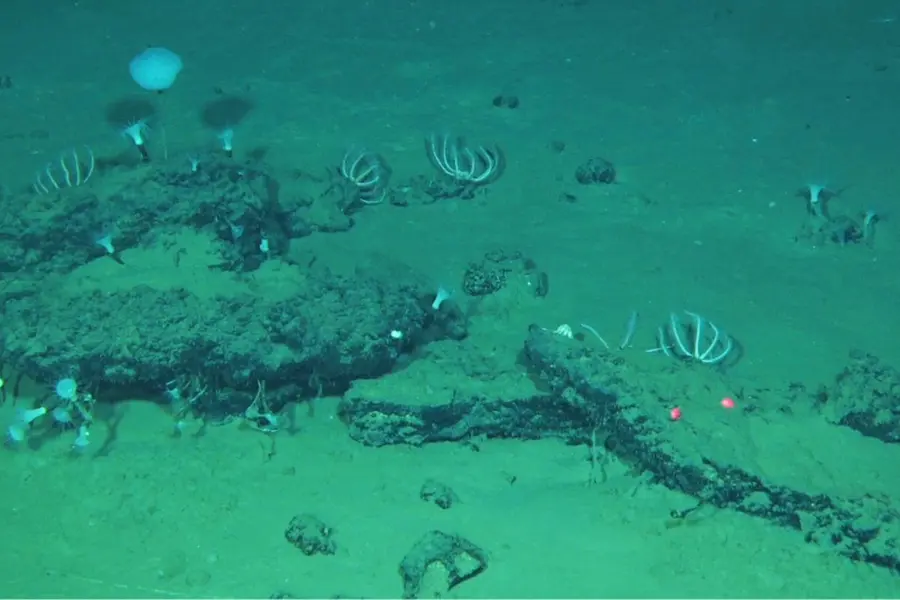
Even if surface temperatures appear stable, ecological crises can still brew in deep water.
In a 2023 study, my team demonstrated that marine heat waves frequently unfold along continental shelves and deep seafloors. These "bottom marine heat waves" can be far more intense and long-lasting than surface warming. For instance, during the 1997-1998 El Nino cycle, a seafloor heat wave off the US West Coast persisted for four to five months after the ocean surface had already returned to normal temperatures.
These deep-sea thermal events place immense stress on bottom-dwelling marine life. Following a seafloor heat wave in 2018, Bering Sea snow crab landings plummeted by 84 percent.
What lies ahead as El Nino strengthens?
Fortunately, modern seasonal forecasting models can accurately predict marine heat waves three to six months out, with predictive accuracy peaking during El Nino years.
Current models project that as El Nino intensifies, damaging thermal stress will engulf nearly half of the global ocean by late 2026. The coastlines of California and Mexico face an exceptionally high probability of severe marine heat waves, while the Indian Ocean and segments of the Southern Ocean are also highly vulnerable.
While these long-range forecasts could shift slightly as the seasons progress, the data is compelling enough that we must proactively prepare for the ecological impacts.
PTI
Published: 15 Jun 2026, 02:55 pm IST
Related Topics
Disclaimer: Kindly avoid objectionable, derogatory, unlawful and lewd comments, while responding to reports. Such comments are punishable under cyber laws. Please keep away from personal attacks. The opinions expressed here are the personal opinions of readers and not that of Mathrubhumi.
