
Japan’s Liberal Democratic Party (LDP) leader Sanae Takaichi has begun coalition negotiations with the Japan Innovation Party as she races to secure a majority to become the country’s first woman prime minister.
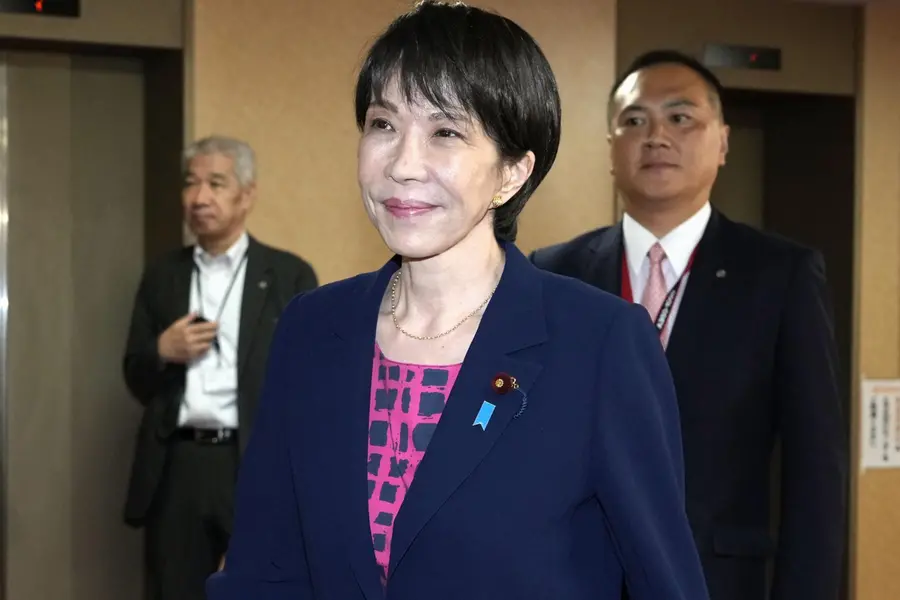
Tokyo: Japan’s ruling Liberal Democratic Party (LDP) has opened formal coalition talks with the second-largest opposition party as time runs short to elect a new prime minister.
The political uncertainty followed the departure of the Komeito party, which ended its 26-year alliance with the LDP last week, leaving the government without a parliamentary majority.
Also Read

Sanae Takaichi, who recently succeeded Shigeru Ishiba as LDP leader, met Japan Innovation Party (JIP) co-head Fumitake Fujita in Tokyo on Thursday. Their discussion marked the first step towards a possible partnership that could help secure the numbers needed to form a government.
To be appointed prime minister, Takaichi must command a minimum of 233 votes in the lower house. The LDP currently holds 196 seats, while the JIP has 35—leaving the coalition two seats short of a majority.
Despite progress in talks, Fujita acknowledged key policy differences remained, particularly regarding the JIP’s stance on banning corporate political donations. However, both parties expressed agreement on national security and energy policy, signalling room for cooperation.
“The discussions advanced mutual trust because President Takaichi and I shared similar views on current affairs and Japan’s political philosophy,” Fujita said, noting that further meetings would follow on Friday.
Meanwhile, opposition groups have been attempting to unite behind a single candidate but continue to face internal disagreements.
If no coalition deal is reached before parliament convenes, each party is expected to nominate its own leader in the first round of voting. Takaichi, as head of the largest bloc, would likely advance to a runoff, where she could still secure the premiership.
The LDP aims to hold the leadership vote on 21 October, just days ahead of US President Donald Trump’s scheduled visit to Japan before the Asia-Pacific Economic Cooperation summit in South Korea.
The LDP’s coalition collapse last week marked a rare disruption in Japan’s post-war political stability. Komeito’s decision to withdraw stemmed from growing differences over policy direction and leadership under Takaichi, who took office earlier this month.
Her attempt to form a new coalition with the JIP reflects both urgency and political strategy, as the LDP struggles to maintain control ahead of an impending leadership election.
Analysts suggest that even a narrow partnership could stabilise Japan’s legislature, though ideological divisions may complicate governance. The JIP, known for its reformist and fiscally conservative agenda, has historically been cautious about aligning too closely with the LDP.
The outcome of the talks will determine whether Takaichi can become Japan’s first woman prime minister, a milestone that would mark a historic shift in the nation’s political landscape.
The next round of discussions is expected to clarify whether both parties can reconcile policy gaps and present a unified front before next week’s parliamentary session.
(With AFP inputs)
Published: 16 Oct 2025, 06:13 pm IST
Related Topics
Disclaimer: Kindly avoid objectionable, derogatory, unlawful and lewd comments, while responding to reports. Such comments are punishable under cyber laws. Please keep away from personal attacks. The opinions expressed here are the personal opinions of readers and not that of Mathrubhumi.