
From overthinking texts to fearing emotional distance, relationship anxiety is common — and traditional Japanese philosophies offer practical ways to manage it mindfully
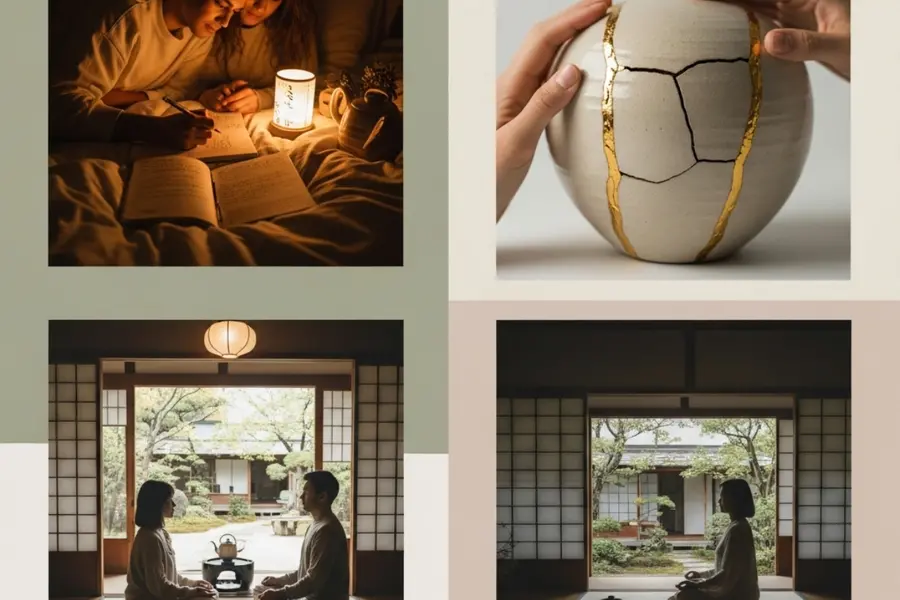
You know that feeling when your partner takes a little longer than usual to reply, and suddenly your mind starts racing? You replay their last message, analyse their tone, and wonder if something has changed.
Relationship anxiety often shows up quietly like this — in overthinking, comparison, or the need for constant reassurance. It is deeply human, especially in a world that moves fast and magnifies every emotion. But instead of fighting these feelings, certain Japanese mindfulness-based philosophies offer a gentler approach: slow down, accept what is imperfect, and return to the present moment.
Japanese techniques to let go of relationship anxiety
Relationship anxiety often feels like replaying conversations in your head, worrying about small changes in tone, or fearing that something is “wrong” even when it is not. While modern psychology offers structured coping strategies, several Japanese philosophical concepts rooted in mindfulness and acceptance provide practical lifestyle approaches to emotional regulation within relationships.
Below are key Japanese concepts and how they can be applied in daily life.
1. Wabi-sabi: Embracing imperfection
Wabi-sabi is the philosophy of finding beauty in imperfection and incompleteness. In relationships, anxiety often arises from unrealistic expectations of constant harmony or emotional perfection.
Applying wabi-sabi means accepting minor disagreements, personality differences, or quirks as natural aspects of a real bond. Instead of interpreting every argument as a threat to the relationship, this mindset reframes imperfections as part of authenticity. Research in relationship psychology also supports that accepting a partner’s imperfections improves long-term satisfaction.
2. Shikata ga nai: Accept what you cannot control
Shikata ga nai translates to “it cannot be helped.” It encourages distinguishing between what is within your control and what is not.
Relationship anxiety frequently centres around uncertainty — worrying about the future or trying to predict a partner’s thoughts. Practising this concept involves acknowledging limits: you cannot control another person’s emotions or guarantee outcomes. Redirecting focus to your own actions, communication and self-care reduces unnecessary emotional strain.
3. Oubaitori: Avoid comparison
Oubaitori refers to four different trees — cherry, plum, peach and apricot — each blooming in its own time. The concept promotes non-comparison.
Social media often intensifies relationship anxiety by presenting curated versions of other couples’ lives. Applying oubaitori means recognising that every relationship develops at its own pace. Avoiding comparison reduces pressure and fosters appreciation for your own journey.
4. Ichigo ichie: Be present
Ichigo ichie means “one time, one meeting.” It emphasises treating each moment as unique and unrepeatable.
Anxiety thrives in future-focused thinking. Practising presence — such as actively listening during conversations or setting aside phones during shared time — strengthens emotional connection. Mindfulness-based approaches are widely supported in mental health research for reducing rumination and stress.
5. Kintsugi: Healing through scars
Kintsugi is the art of repairing broken pottery with gold, making cracks part of the design rather than hiding them.
In emotional terms, past relationship wounds or personal insecurities can fuel anxiety. Instead of viewing them as damage, kintsugi reframes them as experiences that contribute to resilience. Open conversations about vulnerability can strengthen trust and reduce fear-based assumptions.
Why it matters
Relationship anxiety is not uncommon and does not necessarily indicate relationship failure. Lifestyle-based mindfulness approaches such as these encourage emotional regulation, gratitude and acceptance — all of which are linked to healthier interpersonal bonds.
Japanese philosophical practices do not eliminate uncertainty, but they promote a balanced response to it. By shifting from control and comparison to presence and acceptance, individuals may reduce unnecessary stress within relationships.
(Disclaimer: This article is for informational and lifestyle purposes only. It is not a substitute for professional mental health advice, diagnosis or treatment. Individuals experiencing persistent anxiety, emotional distress or relationship conflict should consult a qualified mental health professional or licensed therapist.)
Published: 08 Feb 2026, 04:43 pm IST
Related Topics
Disclaimer: Kindly avoid objectionable, derogatory, unlawful and lewd comments, while responding to reports. Such comments are punishable under cyber laws. Please keep away from personal attacks. The opinions expressed here are the personal opinions of readers and not that of Mathrubhumi.
