
Singapore says it will not negotiate with Iran for safe passage through the Strait of Hormuz, insisting that transit rights are protected under international law and UNCLOS.
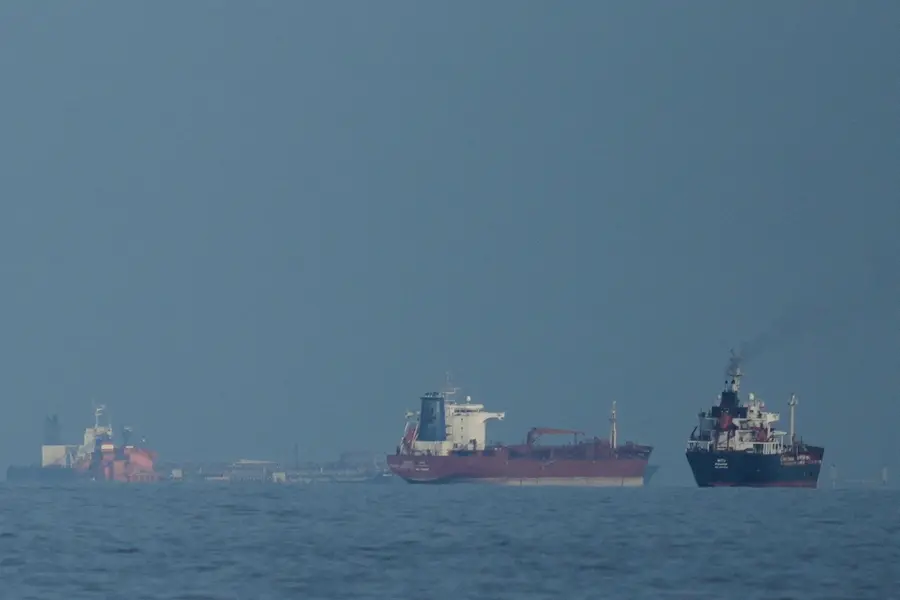
Singapore: Singapore will not negotiate for safe passage through the Strait of Hormuz as doing so would undermine the fundamental principles of international law, Foreign Minister Vivian Balakrishnan said on Tuesday.
Singapore, which has emerged as an Asian financial hub, has been severely impacted by the West Asia conflict, leading to the closure of the Strait of Hormuz and disrupting global energy supply.
Speaking in the Parliament, Balakrishnan said Singapore would not engage with Iran in paying a toll for its vessels as transit through Hormuz was a right, not a privilege.
"There is a right of transit passage," he said. "It is not a privilege to be granted by the bordering state. It's not a licence to be supplicated for. It is not a toll to be paid," the Channel News Asia quoted the minister as saying.
Strait of Hormuz, like the Strait of Malacca and the Strait of Singapore, is a waterway used for international navigation, he said.
"This right is codified in the United Nations Convention on the Law of the Sea (UNCLOS), to which Singapore is a signatory."
Balakrishnan said the principle even applied to states that had not ratified UNCLOS, and Hormuz was not a "get-out-of-jail-free card" for them.
Iran previously said it had allowed ships of several countries, including China, India, Pakistan, Japan, Thailand and Malaysia, to cross the Strait of Hormuz since the country's forces effectively controlled traffic through the narrow sea passage during its war with the US and Israel.
Balakrishnan characterised Singapore's approach as being grounded in principle rather than geopolitics.
"You may be wondering why I'm taking such a legal and strict definition. It's not because I'm particularly obsessed with law but because the Strait of Malacca and the Strait of Singapore are, in fact, another critical choke point," said the minister.
Balakrishnan said that more maritime oil, crude and refined, flows through the Strait of Malacca and the Strait of Singapore than the Strait of Hormuz.
While the narrowest point in the Strait of Hormuz is 21 nautical miles, the narrowest point in the Strait of Singapore is less than two nautical miles, he added.
"Do you understand now why we have to take a categorical position that international law and UNCLOS are the constitution of the oceans?" said the minister.
The minister said he had engaged with Iran's foreign minister before the conflict and would do so again, but drew a clear line on negotiations over the passage.
"As a matter of principle, and not because we are taking sides, I cannot engage in negotiations for safe passage of ships or negotiate on toll rates because to do so would be implicitly eroding this legal principle," he said. PTI
Published: 07 Apr 2026, 08:31 pm IST
Disclaimer: Kindly avoid objectionable, derogatory, unlawful and lewd comments, while responding to reports. Such comments are punishable under cyber laws. Please keep away from personal attacks. The opinions expressed here are the personal opinions of readers and not that of Mathrubhumi.
