
Pakistan could invoke the Mecca Defence Pact to defend Saudi Arabia against Houthi attacks, but Islamabad may resist joining any Saudi offensive inside Yemen.
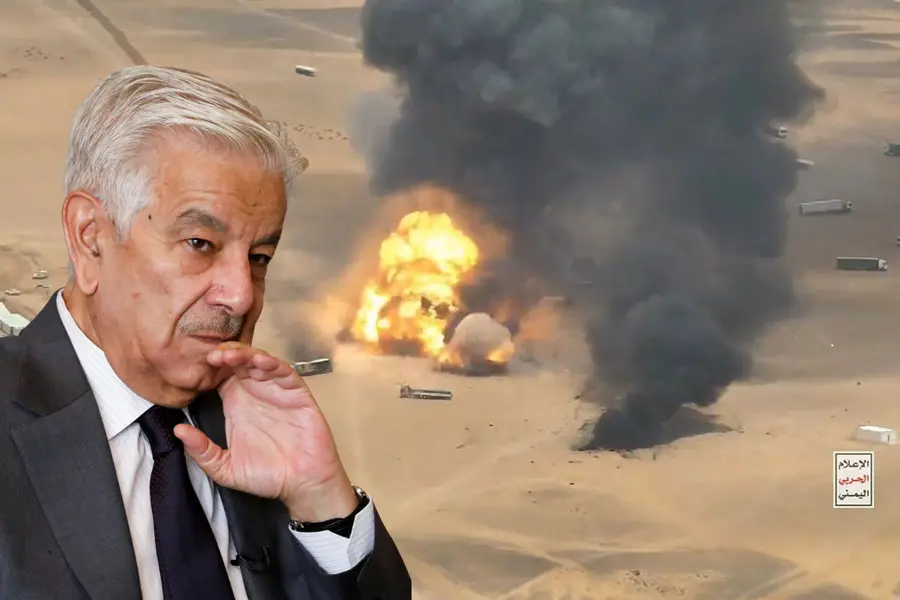
Islamabad: Pakistan could face its first major test under the newly signed Mecca Joint Defence Agreement as Houthi attacks on Saudi Arabia raise questions about whether Islamabad would intervene militarily. Pakistan's defence minister Khwaja Asif has said the pact could become operational if aggression against Saudi Arabia or a spillover from Yemen reaches Saudi territory.
However, analysts cited in reports suggest Pakistan could draw a line between defending Saudi Arabia and joining an offensive inside Yemen.
Also Read

What is the Mecca Pact?
Pakistan, Saudi Arabia and Turkey signed the Mecca Joint Defence Agreement on August 7.
The agreement establishes a collective-defence framework under which aggression against one member can trigger a response from the others.
Pakistan and Saudi Arabia also have a separate Strategic Mutual Defence Agreement that has been in force since 2025.
The latest crisis could therefore provide the first major test of how these defence commitments would operate in an actual conflict.
The discussion follows Houthi drone and missile attacks targeting Saudi Arabia.
Pakistan's Defence Minister Khwaja Asif said the collective-defence provisions could become operational if there were unprovoked aggression against Saudi Arabia or the Yemen conflict spilled into Saudi territory.
Asif told Geo News that Pakistan was “bound by the terms and conditions” of the agreement and would honour them if required.
He also said the pact was defensive rather than aggressive in nature.
Could Pakistan strike the Houthis?
A report by Turkiye Today, citing a Pakistani source, said Pakistani airstrikes against the Houthis in Yemen could take place soon.
The report claimed one possible military priority would be clearing Houthi forces from Saadah and other areas. However, this remains a reported possibility rather than a publicly confirmed Pakistani military operation.
Islamabad's official position, as reflected in Asif's comments, has focused on defending Saudi Arabia if its territory comes under attack rather than announcing an offensive campaign inside Yemen.
Why is Yemen the difficult part?
The central question is whether defending Saudi Arabia would require Pakistani forces to attack targets inside Yemen.
The Houthis are a non-state armed group based primarily in Yemen, and Saudi Arabia has previously conducted military operations against them.
Saudi Arabia led a military intervention in Yemen in 2015 after the Houthis seized control of large parts of the country. The intervention failed to achieve its objective of defeating the movement and became part of a prolonged conflict.
That history makes any Pakistani participation in military action inside Yemen politically and strategically sensitive.
Pakistan could draw a line at an offensive
Middle East analysts cited by BBC Urdu have suggested that Pakistan could support defensive operations to protect Saudi territory without joining a Saudi offensive into Yemen.
Mehran Kamrava of Georgetown University, Qatar, said the Yemen conflict could become a test of whether Pakistani and Turkish forces would actually be prepared to fight on the Yemeni front.
The distinction is important.
If Saudi Arabia comes under direct attack, Islamabad could argue that collective defence provisions apply. But if Riyadh launches a new ground operation inside Yemen, Pakistan and Turkey could view that as offensive action rather than collective defence.
What did Khwaja Asif say?
Asif said there should be no ambiguity about the pact's collective-defence provisions.
He said unprovoked aggression against a member state or a spillover of the Yemen conflict into Saudi Arabia could activate the agreement.
He also expressed hope that the situation would come under control and warned against attempts to export Yemen's internal conflict into Saudi Arabia.
At the same time, he said the Houthis, as a non-state actor, were best dealt with by Yemeni authorities.
Why Iran is part of the equation
The Houthis are backed by Iran, making any direct Pakistani military action against the group potentially more complicated for Islamabad.
Pakistan maintains relations with both Saudi Arabia and Iran and has historically sought to balance its ties with the two regional powers.
A Pakistani military campaign against the Houthis could therefore have consequences beyond its relationship with Saudi Arabia.
It could also increase the risk of Pakistan becoming more directly involved in the wider regional confrontation involving Iran, the US and Gulf states.
The wider Iran-US conflict
The debate over the Mecca Pact is taking place amid renewed fighting between Iran and the United States.
According to the Associated Press report supplied for this story, Iranian attacks targeted US allies in the Gulf following renewed American strikes on Iranian military targets.
The latest escalation has also affected the Strait of Hormuz, a crucial route for global energy shipments.
The AP reported that Brent crude had risen to around $95 a barrel after the latest escalation, more than 30% above its level at the start of the war.
The conflict has also created pressure on Gulf states that host US military facilities and remain exposed to Iranian retaliation.
Why the Strait of Hormuz matters
The Strait of Hormuz connects the Persian Gulf with the Gulf of Oman and is one of the world's most important energy routes.
The AP reported that roughly one-fifth of globally traded oil passed through the waterway before the US and Israel attacked Iran on February 28, after which Iran largely shut the route.
Continued disruption could put additional pressure on global oil prices and increase the economic consequences of the conflict.
This is also why attacks involving Saudi Arabia and other Gulf states have implications well beyond the region.
What happens if Saudi Arabia attacks Yemen?
This could become the real test of the Mecca Pact.
If the agreement is interpreted as requiring members to defend Saudi territory from Houthi attacks, Pakistan could potentially deploy forces or provide military support for defensive operations.
But a Saudi ground offensive into Yemen would raise a different question: whether collective defence allows members to participate in offensive operations against the group responsible for the attacks.
Analysts cited by BBC Urdu believe Islamabad could be reluctant to cross that line.
The first real test of the Mecca Pact
The Mecca agreement was created as a framework for collective defence, but its practical meaning will depend on how member states define “aggression” and “defence”.
The Houthi threat creates an unusually complicated test because attacks originate from a non-state armed group operating inside another country.
For Pakistan, the distinction between protecting Saudi Arabia and conducting offensive operations in Yemen could allow Islamabad to honour its security commitment while avoiding a repeat of its controversial involvement in the Yemen conflict.
If Saudi Arabia seeks only defensive assistance, the pact could demonstrate its value as a deterrent. If Riyadh launches a major operation inside Yemen, disagreements over what constitutes collective defence could expose the limits of the new alliance.
The situation is therefore about more than the Houthis. It could establish how Pakistan, Saudi Arabia and Turkey interpret their new defence commitment when military action carries the risk of widening a regional conflict.
Published: 09 Sept 2026, 08:29 pm IST
ABOUT THE AUTHOR
Related Topics
Disclaimer: Kindly avoid objectionable, derogatory, unlawful and lewd comments, while responding to reports. Such comments are punishable under cyber laws. Please keep away from personal attacks. The opinions expressed here are the personal opinions of readers and not that of Mathrubhumi.