
Houthi missile and drone capabilities are creating fresh security challenges for Saudi Arabia, raising questions about the limits of military power, the reliability of traditional defence partnerships and the security of critical global shipping routes.
It is a rather unsettling spectacle to watch one of the world's wealthiest countries, armed with sophisticated American weaponry and protected by decades of security cooperation with Washington, discover that a movement born in the mountains of northern Yemen can make its airports, oil installations and maritime interests vulnerable.
Ansar Allah, better known as the Houthis, has accomplished what many conventional armies would struggle to achieve. It has made Saudi Arabia's security predicament an international problem, and the world's shipping companies, energy markets and naval powers unwilling participants in a quarrel that began in one of the poorest countries in the Arab world.
The story of Ansar Allah is not one of an obscure ragtag militia waking up one morning with a missile arsenal and an ambition to terrorise global commerce. It began with the revival of Zaydi religious identity in northern Yemen during the 1990s, gained momentum under Hussein al Houthi, and took on its present political and military character through years of confrontation with the Yemeni state. The movement survived six rounds of fighting between 2004 and 2010, seized Sanaa in 2014 amid the disintegration of the state, and consolidated its position after Saudi Arabia intervened militarily in 2015. What Riyadh expected to be a campaign to restore the recognised government became a war of attrition that exposed the limits of air power, money, and military hardware when confronted by an adversary with local roots, difficult terrain, and an extraordinary capacity for survival.
Iranian assistance subsequently helped the Houthis improve their missile and drone capabilities, although the movement is not merely an Iranian puppet assembled in some workshop in Tehran. It has its own leadership, domestic constituency and political ambitions. The relationship suits both parties. While Iran acquires a means of pressuring its regional adversaries without having to deploy its own conventional forces, the Houthis acquire technical expertise and weapons that would otherwise be beyond their reach. It is an arrangement that offers the benefits of an alliance without the burden of explaining every decision to a superior officer.
The war in Gaza gave the movement its opportunity to graduate from a local insurgency to an actor with global visibility. By attacking shipping in the Red Sea and launching missiles and drones towards Israel, Ansar Allah presented themselves as champions of the Palestinian cause. Their declared solidarity has provided a powerful political narrative, even as attacks on commercial vessels have imposed costs on people and businesses with little or no connection to the war in Gaza. When shipping companies divert vessels around the Cape of Good Hope, the Houthis do not have to sink a fleet to make their point. A threat, if sufficiently credible, can be almost as expensive as the deed. The Bab el Mandeb Strait is therefore central to their leverage.
It connects the Red Sea to the Gulf of Aden and the Indian Ocean, forming a critical passage for vessels travelling between Asia and Europe through the Suez Canal. Its strategic importance becomes even greater when the Strait of Hormuz is also disrupted. Threatening both routes is a little like discovering that two doors to the same building are guarded by people who do not particularly care how much the occupants pay for the inconvenience. The comparison is imperfect, but the economic logic is not. Freight costs rise, insurance premiums follow, delivery schedules lengthen, and energy markets become more nervous. A movement that cannot defeat the world's major navies can nevertheless make their presence necessary, expensive and politically awkward.
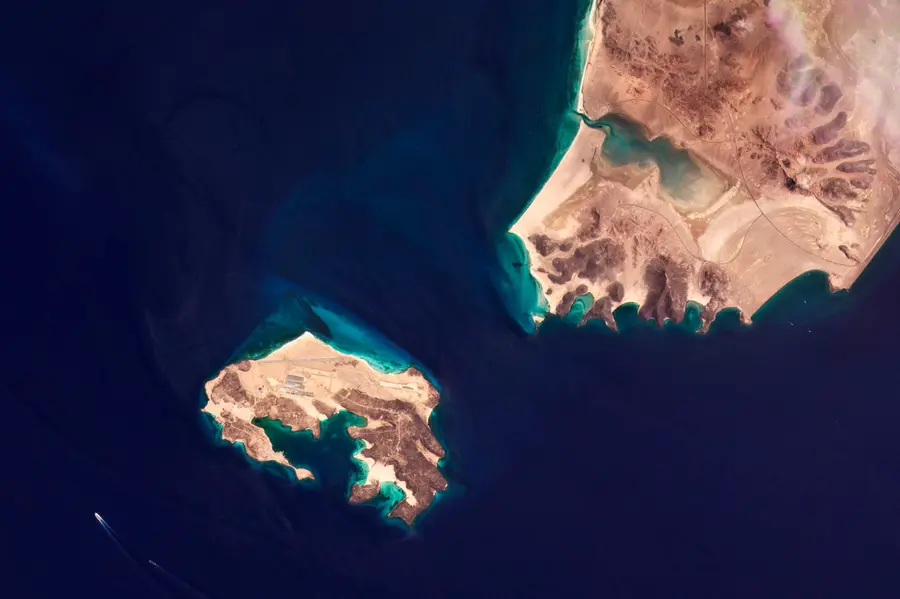
The latest escalation has brought this problem directly to Saudi Arabia. Houthi attacks have reportedly targeted Riyadh's King Khalid International Airport and Saudi Aramco facilities, while fighting has intensified around Yemen's Red Sea coast. Saudi-backed Yemeni forces reported major gains near Mocha and the Bab el Mandeb in early October, although the precise extent of territorial control has been contested. Even if the Houthis are pushed back from the immediate approaches to the strait, their ability to launch missiles and drones from other positions means that territorial gains alone cannot guarantee maritime security.
The battlefield is geographical, but the problem is also technological and political. Saudi Arabia's predicament is compounded by the behaviour of its principal security partner. Washington has continued to provide intelligence support, but it has been reluctant to commit itself to the offensive campaign Riyadh wants against the Houthis. American officials have their own priorities, including protecting American interests and avoiding another open-ended war. That is perfectly intelligible in Washington, where the costs of a distant conflict can be calculated in appropriations and election cycles. In Riyadh, though, where missiles are arriving at the doorstep, it looks rather less like strategic restraint and more like an expensive insurance policy whose provider has begun reading the exclusions in the small print.
Saudi Arabia has consequently turned towards Pakistan and Turkey, signing the Mecca Joint Defence Agreement in August and moving to activate its collective defence provisions. The arrangement has considerable political significance, but a photograph of three solemn leaders does not bridge the gap between a declaration of solidarity and a functioning military alliance. Turkey has been providing mainly defensive and technical assistance, while the extent of Pakistan's operational commitment remains uncertain. Ankara has not committed combat troops to the Yemeni campaign, and the agreement still requires parliamentary ratification in Turkey.
Neither country has yet demonstrated that it can replace the United States as Saudi Arabia's principal security partner. There is an additional complication. Pakistan must consider its relationship with Iran and the risks of becoming directly involved in a war on its border region, while Turkey has its own regional interests and reasons to avoid an open-ended military commitment in Yemen. Riyadh may have discovered that diversifying its alliances is sensible, but diversification is not the same as acquiring three copies of the same security guarantee. An alliance is only as strong as its members' willingness to accept the consequences of honouring it. The wider irony is that Iran has offered to facilitate talks between Saudi Arabia and Ansar Allah. Tehran can thus present itself as a potential mediator in a conflict involving a movement it supports, while Washington, despite its vastly greater military capabilities, has declined to support the offensive Riyadh considers necessary. This does not mean Iran controls every Houthi decision, nor does it make Tehran a disinterested peacemaker, but it does give Iran a potentially valuable role in any settlement.
The patron may not command every move of its partner, but it can still benefit from being the person everyone eventually has to speak to. The prognosis is unlikely to be a clean military victory for either side. Saudi-backed forces may regain territory, and sustained pressure could degrade Houthi capabilities, but the experience since 2015 suggests something worrying though. Bombing alone may not eliminate the movement, and a broader offensive risks expanding the war and inviting further retaliation that would end up in another costly stalemate. Negotiations, meanwhile, could leave the Houthis in control of substantial territory and preserve their capacity to threaten Saudi interests. Riyadh's challenge is to make its new defence partnerships credible while retaining a diplomatic exit from a conflict that has already demonstrated the limits of its military superiority.
The Houthis have not acquired the power to dictate the fate of the world, but they have acquired something more modest, but still immensely consequential. The ability to make powerful countries pay for their inability to control events. Their rise warns that global influence does not always belong to those with the largest economies or the most expensive aircraft. Sometimes it belongs to those who occupy the right stretch of coastline, have a credible means of imposing costs, and are prepared to endure punishment their adversaries would rather avoid. Saudi Arabia is now learning that lesson at considerable expense, and the rest of the world may yet discover that ignoring it costs far more.
(The author is a National Award winner for Best Narration and an independent political analyst. Views expressed are personal.)
Published: 17 Oct 2026, 02:33 pm IST
Related Topics
Disclaimer: Kindly avoid objectionable, derogatory, unlawful and lewd comments, while responding to reports. Such comments are punishable under cyber laws. Please keep away from personal attacks. The opinions expressed here are the personal opinions of readers and not that of Mathrubhumi.
