
Israel's National Security Minister Itamar Ben-Gvir issued a stark warning to Iran after Tehran launched missiles at Israel.
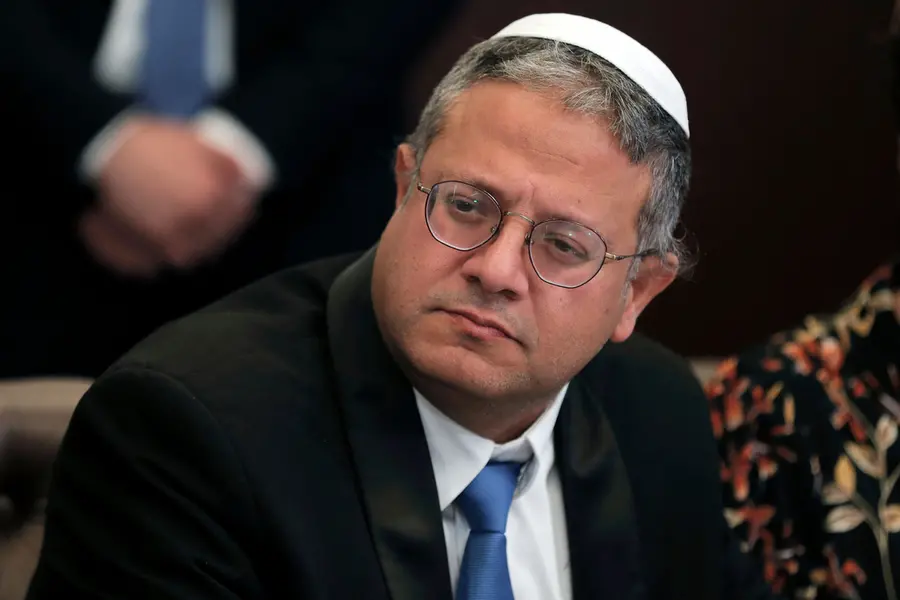
Israel's National Security Minister Itamar Ben-Gvir issued a stark warning to Iran after Tehran launched missiles towards Israel on Monday, raising fears that the fragile ceasefire that has held since April could collapse and trigger a wider regional conflict.
In a post on X following the missile launches, Ben-Gvir declared: "Tonight, Tehran must burn!", signalling growing pressure within Israel for a forceful military response.
The attack marked the first direct Iranian missile bombardment of Israel since a ceasefire took effect earlier this year. While the Israeli military said all incoming missiles were intercepted, reports from Israeli media suggested there may have been impacts in northern parts of the country.
Conflicting reports over missile impacts
Air raid sirens sounded across several areas of Israel as millions of residents were instructed to seek shelter. The military later said its air defence systems had successfully intercepted the missiles.
However, local media reported possible impacts in northern Israel.
“Those two things may both be simultaneously true, it may be that the impacts are debris falling from missile interceptions,” said Sky News Jerusalem Correspondent James Parsons.
“Make no mistake, this is a very serious point.”
Explosions were reportedly heard in northern Israel before authorities announced that residents could leave protected areas.
Iran says attack was retaliation
Iranian state media confirmed the missile launches, describing them as a response to recent Israeli military actions in Lebanon.
Tensions escalated after Israel carried out a strike on Beirut's southern suburbs earlier on Sunday despite reported efforts by Washington to prevent further military action. Israel said the operation followed attacks launched by the Iran-backed Hezbollah movement against northern Israeli communities.
Iran's Revolutionary Guard warned that any future attacks would provoke a broader response.
"Should these acts of aggression be repeated, the responses will be broader in scope and will encompass all American and Zionist targets throughout the region,” the force said in a statement referencing recent incidents involving Lebanon and Iranian interests near the Strait of Hormuz.
Iran subsequently closed its western airspace amid concerns that Israel could retaliate.
Israeli military vows response
Senior Israeli military officials quickly condemned the Iranian strike.
“Iran has made a grave mistake,” Israel military spokesperson Brig. Gen. Effie Defrin said.
Israel's military chief Lt. Gen. Eyal Zamir also signalled readiness for further action, stating that the armed forces would “strike the enemy with determination as soon as the order is given.”
Prime Minister Benjamin Netanyahu is facing increasing domestic pressure to respond decisively to both Iran and Hezbollah, particularly as security concerns continue to affect communities near Israel's northern border.
Trump urges restraint
Despite calls within Israel for retaliation, US President Donald Trump appeared to favour de-escalation.
According to Israel's public broadcaster Kan, Trump indicated that he did not believe Israel needed to launch further military action in response to the missile attack.
He also told the Financial Times, “I call all the shots. He (Netanyahu) doesn’t call the shots.”
Trump separately urged Iran to halt missile attacks and return to negotiations. Speaking after Israel's earlier actions in Lebanon, he said the strikes had not been coordinated with Washington and added: “I’m not happy about it.”
In an interview with NBC's "Meet the Press", Trump said he preferred a “more surgical attack on Hezbollah” and reiterated his desire to avoid a broader regional war.
Regional powers seek diplomatic solution
The latest escalation has complicated ongoing mediation efforts led by several regional powers.
Pakistan, Qatar, Turkey and Egypt have been engaged in attempts to bridge differences between Tehran and Washington.
Pakistan's Interior Minister Mohsin Naqvi travelled to Tehran on Sunday and delivered a message from Pakistan's army chief, Field Marshal Asim Munir, to Iranian Supreme Leader Ayatollah Mojtaba Khamenei, according to Iranian state media. Details of the message were not disclosed.
In Cairo, Egyptian and Qatari officials discussed possible elements of a future agreement between the United States and Iran, though no specifics were released.
Following the missile attack, Iranian Foreign Minister Abbas Araghchi held discussions with counterparts from France, Qatar, Saudi Arabia, Britain, Egypt and Turkey, as well as Pakistan's army chief, according to Iranian state television.
Airspace closures across region
The renewed tensions also disrupted regional air traffic.
Iraq announced the closure of its airspace for 72 hours, while Syria imposed a 12-hour shutdown of its skies. Flights from Tehran's main international airport were suspended.
Iran has continued to project military influence across the region, while tensions around the Strait of Hormuz remain a source of concern for global energy markets.
Meanwhile, US Central Command said American forces stationed across the Middle East remained on high alert.
“U.S. forces across the Middle East remain vigilant and ready,” the command posted on X shortly before the missile launches.
The US Embassy in Israel subsequently instructed staff members and their families to shelter in place as a precaution.
(With AP inputs)
Published: 08 Jun 2026, 09:16 am IST
Related Topics
Disclaimer: Kindly avoid objectionable, derogatory, unlawful and lewd comments, while responding to reports. Such comments are punishable under cyber laws. Please keep away from personal attacks. The opinions expressed here are the personal opinions of readers and not that of Mathrubhumi.
