
The Iran war is triggering deadly protests, a fuel crisis and economic pressure in Pakistan, exposing deep contradictions in Islamabad’s foreign policy and fragile economy.
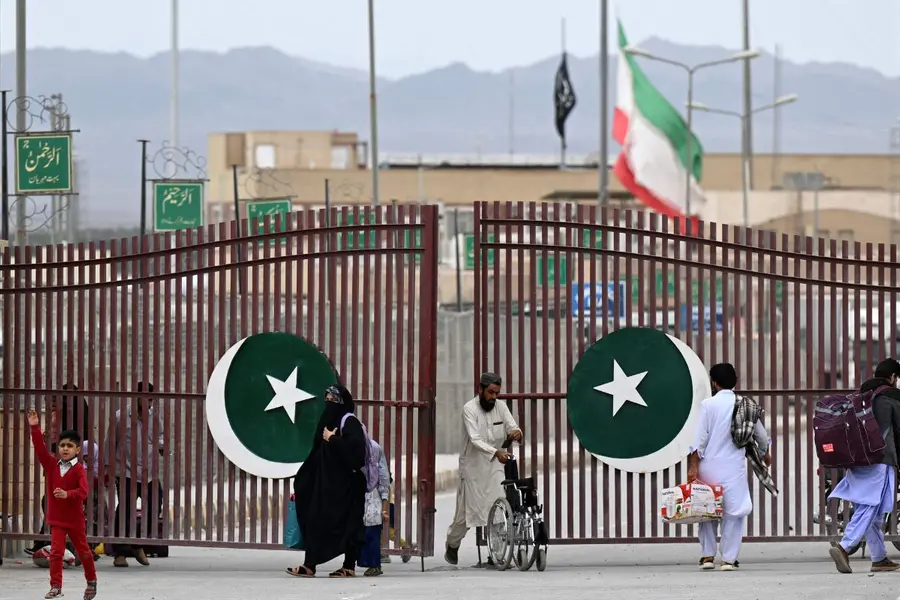
As the conflict involving Iran spreads across West Asia, Pakistan is facing an unexpected fallout from a war it is not directly involved in. While the confrontation primarily involves the United States, Israel and Iran, its ripple effects have triggered political unrest, economic stress, and security concerns inside Pakistan.
From violent street protests to a worsening fuel crisis and rising tensions on the Afghanistan border, Islamabad is now grappling with multiple crises at once. Analysts say the situation has exposed deep contradictions in Pakistan’s foreign policy and highlighted the fragile state of its economy.
Deadly protests shake cities
One of the most visible impacts of the Iran conflict has been unrest across Pakistan. Demonstrations linked to the war turned violent in several cities last week, with protesters targeting American interests and government installations.
According to Bloomberg, at least 24 people were killed during the clashes, while some local reports placed the death toll above 35.
The protests have highlighted how deeply the Iran crisis has polarised Pakistan’s domestic politics. Anger has been directed not only at the United States but also at Pakistan’s leadership, with critics accusing the government of maintaining contradictory positions on the conflict.
Saudi defence pact creates diplomatic dilemma
Pakistan’s current predicament is partly the result of its own strategic choices. Just months before the Iran war erupted, Islamabad reaffirmed a defence cooperation agreement with Saudi Arabia, signalling closer military coordination between the two countries.
However, the outbreak of the Iran conflict has transformed that diplomatic commitment into a major strategic dilemma.
Supporting Saudi Arabia risks angering Iran, a neighbour with which Pakistan shares a long and sensitive border. Remaining neutral, on the other hand, could strain ties with Gulf allies and Washington.
This delicate balancing act has placed Pakistan’s military and political leadership under intense pressure.
Trapped between Gulf allies and domestic sentiment
Pakistan has long attempted to position itself as a leading voice in the Muslim world. At the same time, it maintains deep security ties with the United States and close relations with Gulf monarchies. The Iran war has brought these competing relationships into sharp conflict.
While Gulf allies expect Islamabad to align with them against Iran, domestic political sentiment in Pakistan remains largely sympathetic towards Tehran.
Meanwhile, Washington continues to expect cooperation from Islamabad on regional security issues. Navigating these competing expectations has become increasingly difficult for the government.
Border tensions with Afghanistan add pressure
Complicating matters further are escalating tensions with Afghanistan. Recent border clashes between the two countries have increased security concerns and added to Pakistan’s already fragile political environment.
The instability comes at a critical time as Islamabad negotiates financial support from the International Monetary Fund (IMF). Economists warn that continued regional tensions could undermine Pakistan’s economic recovery and complicate its IMF programme.
Oil shock triggers fuel crisis
The Iran conflict has also delivered a major blow to Pakistan’s energy sector. Global oil prices have surged amid fears of supply disruptions in the Gulf, significantly increasing Pakistan’s import bill.
The country’s finance minister warned that monthly oil import costs could reach $600 million if the crisis continues.
For an economy already struggling with low foreign exchange reserves, the rising energy bill poses a serious challenge. Fuel prices have already jumped sharply, with petrol rising by PKR 55 per litre to PKR 321.17 and diesel reaching PKR 335.86.
Emergency measures to conserve fuel
Facing the risk of shortages, Prime Minister Shehbaz Sharif has introduced emergency measures to reduce fuel consumption.
The government has ordered the temporary closure of schools and universities, introduced a four-day workweek for government offices and encouraged employees to work from home. Citizens have also been urged to reduce unnecessary travel and conserve electricity.
The measures highlight Pakistan’s heavy dependence on imported fuel and its limited ability to absorb sudden shocks in global energy prices.
A country caught in geopolitical crossfire
The Iran war has ultimately exposed the vulnerabilities within Pakistan’s political and economic system.
Despite its ambitions of playing a central role in regional geopolitics, Pakistan now finds itself struggling to manage simultaneous crises, from domestic unrest and rising fuel prices to border tensions and economic uncertainty.
For Islamabad, the challenge ahead will be to contain these pressures before they escalate into a broader political and financial crisis.
Published: 10 Mar 2026, 03:31 pm IST
Related Topics
Disclaimer: Kindly avoid objectionable, derogatory, unlawful and lewd comments, while responding to reports. Such comments are punishable under cyber laws. Please keep away from personal attacks. The opinions expressed here are the personal opinions of readers and not that of Mathrubhumi.
