
The IAF needs to induct 36-40 fighter jets annually to arrest the decline in squadron strength, Air Chief Marshal A P Singh said, while highlighting Pakistan’s reported fifth-generation J-35 plans and India’s push for AMCA and longer-range BVR missiles.
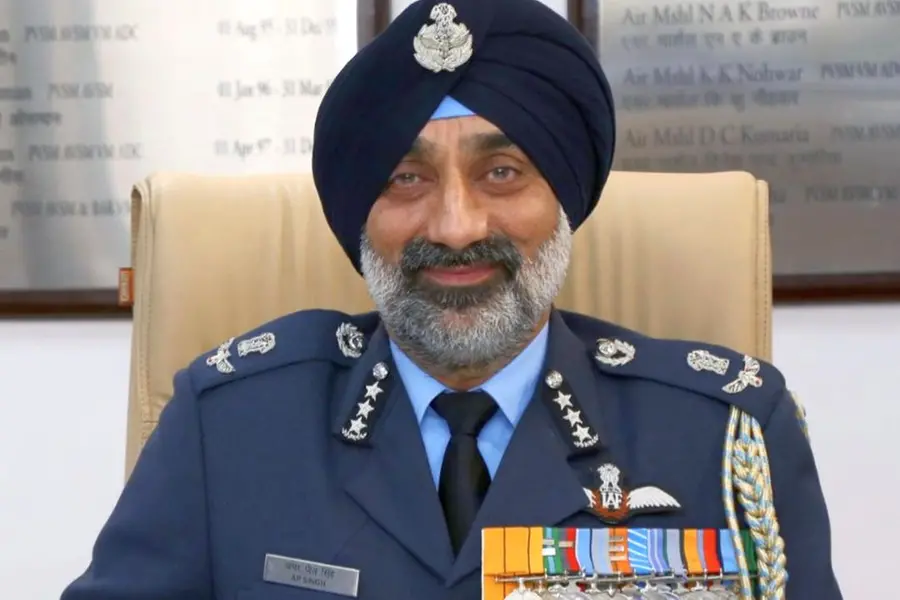
The Indian Air Force needs to induct around 36 to 40 fighter aircraft every year to prevent its fighter squadron strength from declining further, Air Chief Marshal A P Singh said ahead of Air Force Day, while describing Pakistan’s reported plans to acquire China’s J-35 fifth-generation fighter as a concern.
IAF targets faster fighter induction
Also Read

Addressing the media ahead of the 94th Air Force Day on October 8, Air Chief Marshal Singh said the IAF could initially induct 30 to 35 fighter aircraft annually if current procurement and production plans progress as expected.
He said Hindustan Aeronautics Limited could deliver up to 24 LCA Mk1A aircraft a year, although production of around 20 aircraft annually would be a more immediate assumption.
The proposed Multi-Role Fighter Aircraft programme could add about 12 aircraft a year if the contract for 114 Rafale jets is finalised by the end of 2026.
The Air Chief said the proposed acquisition of 12 additional Su-30 aircraft could further increase annual induction, with deliveries of around six aircraft a year.
Taken together, these programmes could eventually allow the IAF to reach an annual induction rate of roughly 30-35 aircraft, and potentially 35-40 aircraft if all plans progress as intended.
The IAF's broader requirement is around 36-40 aircraft every year to prevent its fighter squadron strength from falling below 30 and to move towards the sanctioned strength of 42 squadrons.
Pakistan’s reported J-35 plan raises concern
Asked about reports that Pakistan is seeking China's J-35 fifth-generation stealth fighter, Singh described the development as a cause for concern.
He said the issue should not be assessed solely by looking at an individual aircraft, arguing that the effectiveness of a fighter depends on how it is integrated with other elements of a country's military system.
Singh also referred to India's experience with different platforms and said the integration of aircraft, weapons, sensors and command-and-control systems would be important in responding to any emerging threat.
The reported Pakistani interest in the J-35 comes as India is developing its own fifth-generation Advanced Medium Combat Aircraft, or AMCA.
AMCA remains a priority
Singh said the AMCA programme needs to be pushed forward and indicated that alternative decisions may have to be considered if there are delays.
Russia has also offered its Su-57 fifth-generation fighter to India, he said, but clarified that no decision has been taken on the proposal.
The Air Chief stressed the importance of having a fifth-generation capability if neighbouring countries acquire such aircraft.
In the coming years, the IAF expects its fighter fleet to include LCA Tejas Mk1A, the planned LCA Mk2, Rafale aircraft and eventually the indigenous AMCA.
IAF seeks stronger beyond-visual-range capability
The Air Chief also outlined efforts to strengthen the IAF's beyond-visual-range, or BVR, air combat capability.
The indigenous Astra air-to-air missile is already in production, while the Astra Mk2 is in the research and development stage and the Astra Mk3 remains at an earlier stage of development.
The Astra Mk1 has a reported range of around 80-110 km, while the Mk2 is being developed for a range of about 200 km.
The Astra Mk3 programme is linked to India's Solid Fuel Ducted Ramjet technology and is expected to provide a substantially longer range, potentially exceeding 350 km.
The IAF is also considering additional foreign-origin long-range air-to-air missiles. Reported options include Russia's R-37M and additional French Meteor missiles.
Singh said the combination of Astra variants and foreign missiles is expected to address the IAF's immediate BVR requirements while indigenous systems continue to develop.
Drones and loitering munitions
The Air Chief said the IAF is also increasing its use of drones and loitering munitions.
However, he said there was no requirement to create a separate drone force, indicating that unmanned systems would remain integrated into the broader air power structure.
He also highlighted the growing importance of advanced fighter aircraft, long-range precision weapons, integrated air command and control and unmanned aerial systems.
Why fighter numbers matter
The IAF has long faced a gap between its authorised fighter squadron strength and its actual inventory.
The sanctioned strength is 42 fighter squadrons, while the current fleet is substantially below that level. Older aircraft are also being phased out as newer platforms enter service.
The annual induction rate is therefore critical. Even a significant increase in production can take years to translate into a larger operational fleet because aircraft deliveries, pilot training, infrastructure, maintenance and squadron formation all take time.
The proposed mix of Tejas, Rafale, Su-30 and AMCA is intended to provide different capabilities rather than relying on a single fighter type.
India’s fighter modernisation challenge
The IAF's stated requirement of 36-40 aircraft annually reflects the gap between planned inductions and the pace at which older fighters leave service.
The immediate challenge is therefore not limited to acquiring a fifth-generation fighter. India also needs to increase the production of existing aircraft, finalise pending procurement programmes and ensure that missile and support systems develop alongside the aircraft fleet.
The BVR focus is particularly significant because modern air combat increasingly depends on the integration of aircraft sensors, missiles, electronic warfare, airborne early-warning systems, data links and command-and-control networks rather than on the performance of an individual fighter alone.
AMCA is intended to provide India with a domestic fifth-generation fighter capability, but any delay would affect the timeline for replacing or supplementing existing platforms. The reported Pakistani interest in the J-35 has added another dimension to the regional fifth-generation fighter debate.
For the IAF, the stated objective is therefore twofold: increase the number of operational fighter aircraft while simultaneously improving the weapons, sensors and networked systems that determine their effectiveness.
Published: 03 Oct 2026, 10:26 pm IST
ABOUT THE AUTHOR
Related Topics
Disclaimer: Kindly avoid objectionable, derogatory, unlawful and lewd comments, while responding to reports. Such comments are punishable under cyber laws. Please keep away from personal attacks. The opinions expressed here are the personal opinions of readers and not that of Mathrubhumi.