
HAL delivers the final two Tejas Mk-1 trainers to the IAF as radar, weapons and software integration issues continue to affect Mk-1A deliveries.
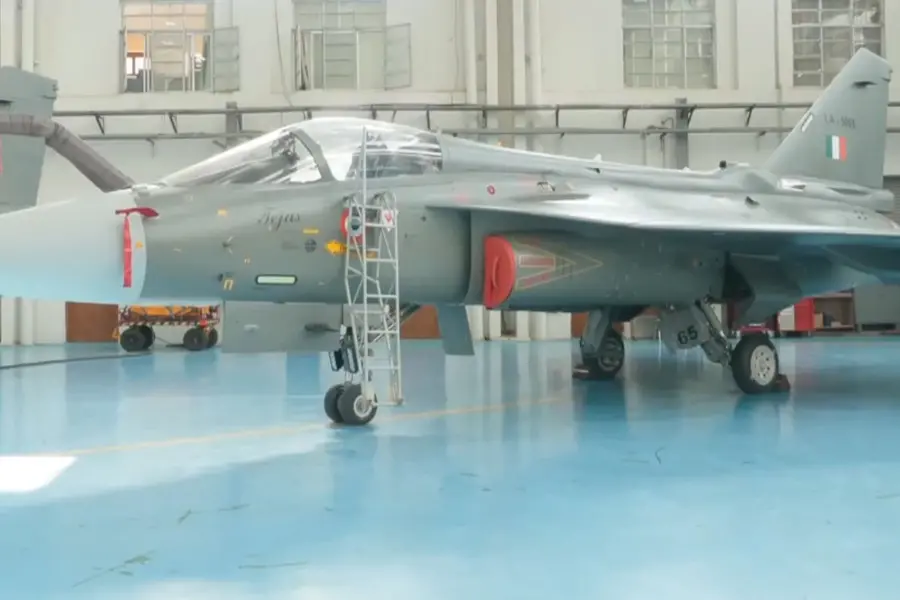
Hindustan Aeronautics Limited (HAL) has reached an important milestone in India’s indigenous fighter aircraft programme with the delivery of the final two LCA Tejas FOC twin-seat trainer aircraft to the Indian Air Force (IAF).
The company also handed over HTT-40 Basic Trainer Aircraft to the IAF, while Dhruv Next Generation helicopters were delivered to Pawan Hans in Bengaluru.
The developments come at a significant time for HAL as the company prepares to move into the next phase of Tejas production. While the completion of the original Tejas Mk-1 order marks progress, the much larger Mk-1A programme is still awaiting the resolution of some critical technical issues.
Completing the first Tejas order
The delivery of the final two twin-seat Tejas FOC trainers completes HAL’s original 40-aircraft LCA Mk-1 order placed by the IAF in two tranches in March 2006 and December 2010.
For HAL, this marks the completion of an important chapter in the evolution of India’s indigenous fighter aircraft programme. The Tejas Mk-1 has moved from development and testing into operational service, providing the foundation for the more advanced Mk-1A variant. The company’s focus is now shifting towards delivering the significantly larger Mk-1A fleet.
Mk-1A deliveries still face technical challenges
HAL Chairman and Managing Director Ravi K said the company expects to begin delivering the LCA Mk-1A to the IAF by the end of this year, although several issues involving radar, weapons and software integration are still being addressed.
Speaking to ANI, Kumar said extensive software modifications were currently being carried out during the testing phase. “For deliveries to happen, the aircraft should be ready for that; we are still not there yet. We are working very hard for that. We will resolve issues soon and start delivering,” he said.
He also cautioned against committing to a firm delivery timeline while the testing and integration work continues. “During check-in, there are lots of issues. I can't commit. Lots of software is involved in this. This software requires changes. That's why I'm not committing to a timeline,” Kumar said.
The comments underline the complexity involved in taking a modern fighter aircraft from production to full operational readiness. Beyond building the airframe, systems such as radar, weapons and mission software have to work together and complete the required testing and integration.
180 Tejas Mk-1A aircraft on order
According to reports, HAL has already produced 27 Tejas Mk-1A airframes from the total order of 180 aircraft. The first contract, signed in February 2021, covers 83 aircraft at a value of around Rs 48,000 crore. A second order for 97 additional aircraft was placed in September 2025 for approximately Rs 62,370 crore.
The Mk-1A is intended to bring enhanced capabilities compared with the earlier Mk-1 configuration, making its timely induction an important part of the IAF’s plans to strengthen its fighter fleet.
ALSO READ: HAL’s Make in India push takes flight with three indigenous aircraft
However, the current focus remains on completing the remaining testing and addressing issues associated with the AESA radar, missile integration and software.
HTT-40 adds another piece to India’s indigenous aviation push
Alongside the Tejas milestone, HAL also handed over HTT-40 Basic Trainer Aircraft to the IAF. The first batch forms part of a Rs 6,838-crore contract signed in March 2023 for 70 HTT-40 aircraft. The aircraft is intended to support the basic flying training requirements of future military pilots, giving HAL another important role in India’s indigenous military aviation ecosystem.
The simultaneous delivery of Tejas trainers and HTT-40 aircraft highlights the expanding range of platforms being developed and manufactured by HAL for India's defence aviation requirements.
From production milestones to delivery momentum
HAL’s latest deliveries therefore represent both an achievement and a transition point.
The completion of the original Tejas Mk-1 order demonstrates that the indigenous fighter programme has progressed considerably from its early development phase. At the same time, the much larger Mk-1A programme brings a different challenge scaling up production while ensuring that increasingly sophisticated aircraft systems complete their testing and integration requirements.
ALSO READ: HAL and Safran to develop ‘Aravalli’ helicopter engine in India
The coming months will therefore be important for HAL. The company has a substantial order pipeline, but converting those orders into aircraft delivered to the IAF will depend not only on manufacturing capacity but also on resolving the remaining technology and integration challenges.
For India’s indigenous aerospace ambitions, the Tejas programme has moved well beyond the question of whether an Indian fighter can be designed and built. The immediate challenge is now about delivering it at scale, with the required systems fully integrated and ready for operational service.
Published: 18 Sept 2026, 06:02 pm IST
ABOUT THE AUTHOR

Related Topics
Disclaimer: Kindly avoid objectionable, derogatory, unlawful and lewd comments, while responding to reports. Such comments are punishable under cyber laws. Please keep away from personal attacks. The opinions expressed here are the personal opinions of readers and not that of Mathrubhumi.