
Nvidia shares reportedly fall 5.5% in a day, extending losses to over 30% from their early October peak.
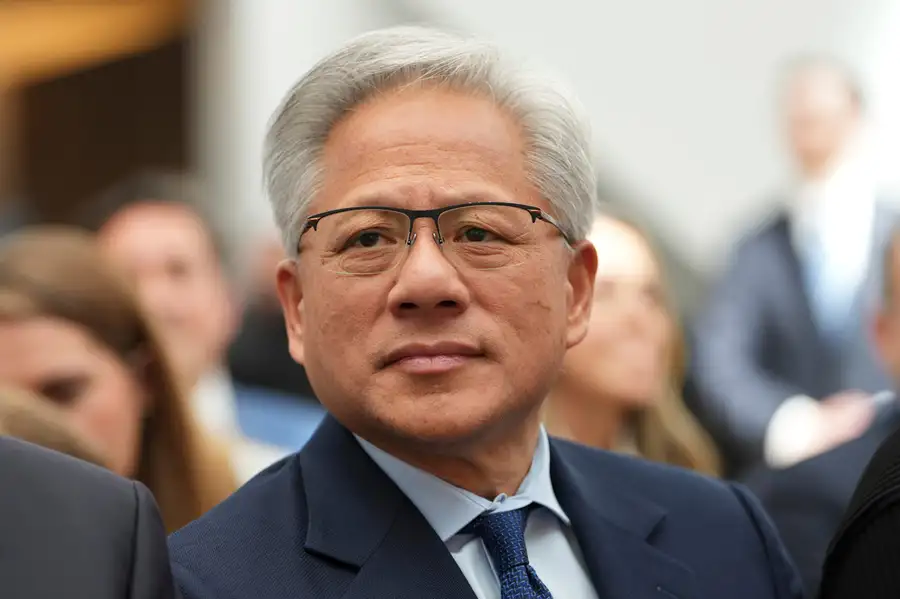
Jensen Huang, the man who built Nvidia into one of the world's most powerful artificial intelligence companies, appeared to have run out of fight in his final hours as chief executive. After weeks of mounting pressure over allegations of extramarital relationships and questions surrounding a woman suspected by US intelligence of having links to Chinese espionage, Huang reportedly became increasingly withdrawn, responding to people around him with two-word expressions: "Whatever" and "I don't care".
A detailed Bloomberg account of the events leading to his departure paints a striking picture of a leader whose trademark energy and control appeared to give way to resignation.
People familiar with the situation told Bloomberg that Huang had also become deeply critical of himself, reportedly describing himself as a "piece of sh--".
The remarks marked a dramatic contrast with the leadership style that had defined his 33-year tenure at Nvidia. Known for his relentless work ethic and extraordinary attention to detail, Huang had closely monitored everything from chip development to the compensation of junior employees.
But as the company's board deliberated over his future, the once-dominant chief executive appeared to have accepted that his position was no longer sustainable.
Nvidia announced on Thursday, November 12, that Huang had resigned as president, CEO and a member of the board, effective immediately. Chief Financial Officer Colette Kress was appointed interim CEO as the company began searching for a permanent successor.
How the allegations reached Nvidia's board
The crisis centred initially on Huang's reported relationship with Alice Huang, a Chinese businesswoman suspected by US intelligence of having links to Beijing's intelligence network.
The allegations had raised concerns about potential national security implications, particularly given Nvidia's position at the centre of the global AI chip industry and US restrictions on advanced semiconductor exports to China.
The company's board initially expressed confidence in Huang. On November 8, Nvidia announced an independent investigation into reports that its founder had been the target of a foreign intelligence effort.
The board said it had no reason to believe that national security or Nvidia's trade secrets had been compromised, but that the inquiry would examine all available information.
Huang had earlier defended his interactions with Alice Huang in an interview with Bloomberg, describing them as no different from his dealings with Chinese customers and business executives.
"It was all completely normal and not unusual," he said.
However, the Financial Times reported on November 6, citing US officials, that the relationship was romantic.
Also read | Trump urged Jensen Huang to fight for his Nvidia job; affair and Chinese spy allegations remain unresolved: What really happened?
The admission that changed the course of the crisis
The situation took a decisive turn when Nvidia's general counsel, Tim Teter, visited Huang at his residence to question him about the allegations.
Huang admitted to the relationship, according to people familiar with the conversation.
Teter subsequently informed the directors that the matter could no longer be left unaddressed. The company then appointed law firm Wachtell, Lipton, Rosen & Katz to conduct an independent investigation.
In an email to employees, Huang acknowledged his infidelity, apologised to his family and pledged to cooperate fully with the board's inquiry.
But the controversy intensified further on November 11, when The New York Times reported another alleged extramarital relationship involving Kimberly Powell, Nvidia's vice-president of healthcare.
A third allegation subsequently emerged, with a report claiming that Huang had also been involved in an intimate relationship with another unnamed Nvidia employee.
The successive allegations added to the pressure on the company's leadership. The board held a remote meeting on Wednesday, November 11, with discussions continuing late into the night. Huang's resignation followed the discussions.
The leadership style that made Huang central to Nvidia
Huang's departure also puts the spotlight on the unusually centralised management structure he built at Nvidia.
Around 60 executives reported directly to him, giving the CEO an exceptionally wide span of control.
He also required employees to send regular updates outlining their five biggest priorities. These reports helped him monitor projects across the organisation and keep track of what teams were working on.
Huang was known for responding to these updates promptly, sometimes even late at night. However, people familiar with the matter told Bloomberg that his replies had become noticeably slower as the controversy intensified.
His hands-on approach had been a defining feature of Nvidia's growth, but it also meant that the company depended heavily on his personal involvement in strategic and operational decisions.
Who will take over from Jensen Huang?
Nvidia has appointed Colette Kress, its chief financial officer since 2013, as interim CEO while the board searches for a permanent successor.
Kress will continue to hold the CFO position alongside her interim leadership responsibilities.
Huang's exit ends a 33-year association with the company he co-founded and transformed from a graphics chipmaker into a dominant force in artificial intelligence and accelerated computing.
The leadership transition comes at a crucial time for Nvidia. The company is scheduled to announce its third-quarter fiscal 2027 results on November 17, with investors likely to watch closely for indications of how the change at the top could affect its business and long-term strategy.
Nvidia has also sought to reassure stakeholders that its operations will continue without interruption.
Also read | Who is Kimberly Powell? Nvidia executive reportedly linked to CEO Jensen Huang
Nvidia shares fall as leadership crisis deepens
The controversy has also weighed on investor sentiment. Nvidia shares reportedly fell 5.5 per cent on Thursday, with the company's stock losing more than 30 per cent from its early October peak, according to the latest report.
The market reaction comes at a critical time for the world's leading AI chipmaker, whose financial arrangements and investments in cloud computing platforms and research laboratories have made it central to the wider artificial intelligence industry.
Investors will be watching how the leadership transition affects confidence in the company, particularly as it prepares to announce its quarterly results on November 17.
Questions over national security remain
Huang's resignation may not end the scrutiny surrounding his reported relationship with Alice Huang.
The allegations have raised broader questions about whether the association could have exposed sensitive information relating to Nvidia's advanced chip technology and US export restrictions on China.
However, allegations of espionage and any suggestion that Huang facilitated the transfer of restricted technology remain unproven.
Nvidia's board has said its investigation will examine whether the company or US national security interests were compromised.
For the company, the immediate challenge is to demonstrate that it can maintain its technological leadership and business momentum without the founder who shaped its identity for more than three decades.
For Huang, the departure marks a dramatic end to one of the most influential corporate leadership tenures in the technology industry.
Published: 13 Nov 2026, 11:15 am IST


ABOUT THE AUTHOR

Related Topics
Disclaimer: Kindly avoid objectionable, derogatory, unlawful and lewd comments, while responding to reports. Such comments are punishable under cyber laws. Please keep away from personal attacks. The opinions expressed here are the personal opinions of readers and not that of Mathrubhumi.