
A new United Nations University report has warned that the rapid expansion of artificial intelligence could place unprecedented pressure on global resources, with AI-related data centres potentially consuming enough water to meet the household needs of 1.3 billion people by 2030.
Artificial intelligence is transforming industries, economies and everyday life, but researchers are increasingly warning that the technology's environmental footprint is growing at an alarming pace.
A new report by the United Nations University has found that the infrastructure powering AI systems could dramatically increase demand for water, electricity and land over the coming years, raising concerns about the long-term sustainability of the technology boom.
Also Read

The study argues that while public discussions often focus on AI's carbon emissions, the enormous water requirements of data centres have received far less attention.
Why AI consumes so much water
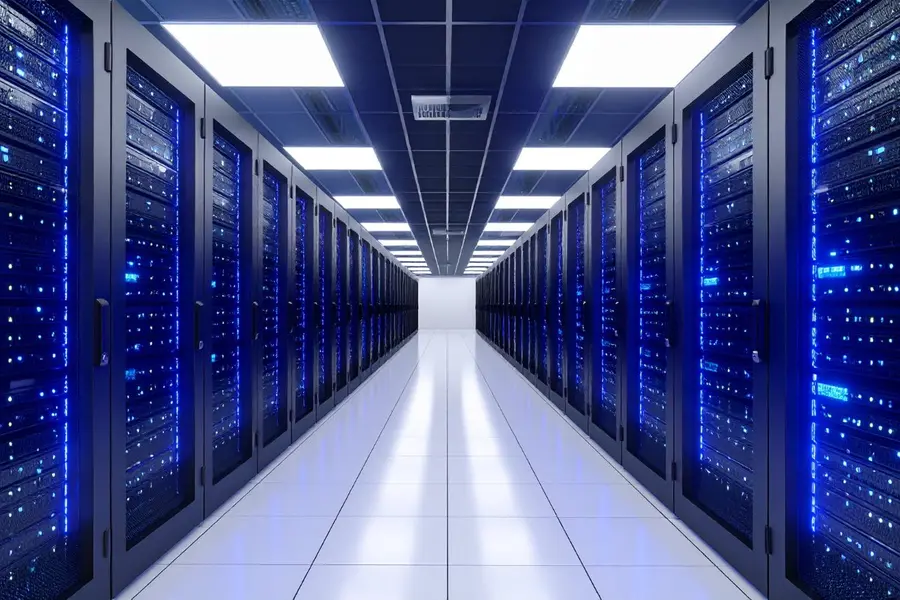
Behind every AI chatbot, image generator and recommendation system lies a vast network of data centres packed with high-performance servers.
These servers generate enormous amounts of heat and require constant cooling to operate efficiently. Cooling systems consume substantial quantities of water, while additional water is indirectly used in generating the electricity needed to power AI operations.
According to the report, if current growth trends continue, AI-related infrastructure could consume enough water by 2030 to meet the basic household needs of approximately 1.3 billion people — roughly equal to the current population of Africa.
Electricity demand expected to surge
The study also projects a steep increase in energy consumption.
Researchers estimate that AI workloads accounted for around 20 per cent of total data-centre electricity use in 2025. If that share rises to 40 per cent by 2030, AI alone could require around 378 terawatt-hours (TWh) of electricity annually.
More broadly, total data-centre electricity demand could nearly double to 945 TWh by the end of the decade.
To put that figure into perspective, the projected electricity consumption would be nearly three times the combined annual power use of Pakistan, Bangladesh and Nigeria, countries that together are home to more than 650 million people.
Everyday AI use driving resource consumption
The report notes that environmental impacts are not limited to large-scale AI training models.
Researchers found that routine consumer use of AI systems may account for between 80 and 90 per cent of total AI-related energy consumption. Every query submitted to a chatbot, every AI-generated image and every automated recommendation requires computing resources.
Image and video generation systems are particularly resource-intensive and consume significantly more energy than text-based AI interactions.
Physical infrastructure behind AI expansion
The study emphasises that AI is not merely a software technology.
Its operation depends on a vast physical ecosystem that includes data centres, advanced semiconductor chips, cooling systems, networking equipment and electricity infrastructure. The production and maintenance of these systems require substantial amounts of raw materials, energy and water.
As demand for AI services continues to grow globally, researchers warn that the environmental burden could increase unless more efficient technologies and sustainable practices are adopted.
Call for sustainable AI development
Despite highlighting serious concerns, the report does not argue against AI innovation.
Instead, researchers are urging governments, regulators and technology companies to consider environmental costs when planning future AI expansion.
The study calls for greater transparency around resource consumption, improved efficiency standards for data centres and stronger policies aimed at balancing technological progress with environmental sustainability.
Published: 06 Jun 2026, 06:27 pm IST
Disclaimer: Kindly avoid objectionable, derogatory, unlawful and lewd comments, while responding to reports. Such comments are punishable under cyber laws. Please keep away from personal attacks. The opinions expressed here are the personal opinions of readers and not that of Mathrubhumi.