
What if your clothes could make it harder for AI to recognise you? From face-like prints to specialised materials, discover how adversarial clothing is turning privacy concerns into fashion
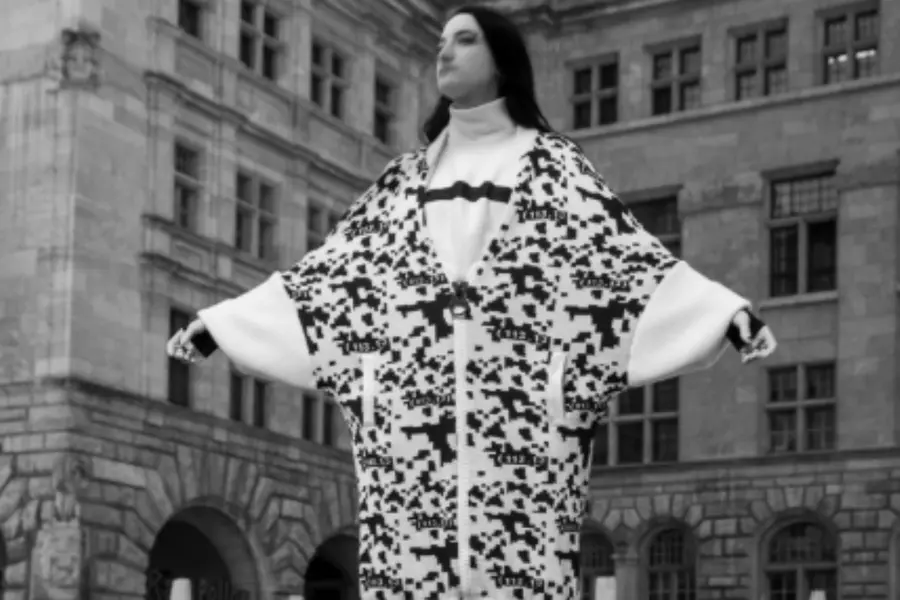
The latest fashion statement isn't about a colour or designer label. It is about making yourself harder for a machine to recognise. The print on your T-shirt might be there to confuse a camera. A jacket can be made with patterns that are meant to trip up the software analysing the people in front of it.
It sounds a little far-fetched, but clothes like these already exist. They fall under what is known as adversarial clothing, a niche area of fashion that takes aim at the technology increasingly used to identify and analyse people.
The idea isn't entirely new. Designers and researchers have been playing with anti-surveillance fashion for years. What feels different now is the amount of attention it is getting. As AI-powered cameras become more common and questions around privacy grow louder, clothing designed to confuse them is starting to look less like a quirky experiment and more like a conversation worth having.
What exactly is adversarial clothing?
The word "adversarial" comes from the world of artificial intelligence.
In machine learning, an adversarial example is an input that has been deliberately altered to make an AI system get something wrong. Researchers have demonstrated that relatively small changes to an image can cause computer vision systems to misclassify what they are looking at, even when the change is difficult for a person to notice.
Also Read: 1 white shirt, 5 looks; Easy outfit ideas you can actually wear
Designers have taken that idea out of the screen and put it on fabric.
Adversarial clothing uses carefully designed patterns, colours, shapes or materials intended to interfere with certain computer vision systems. Depending on the design and the technology involved, the aim might be to make an AI system struggle to detect a person, identify a face incorrectly or produce false detections.
Some garments use patterns that resemble the visual features a facial recognition system might interpret as faces.
Urban Privacy's FACEPTION collection, for example, uses repeated face-like shapes intended to create multiple false positives for facial-recognition software. The brand also says some of its designs use wider silhouettes to make gait-based identification more difficult.
Other approaches involve infrared light or reflective materials. Urban Privacy, for instance, sells an LED coat designed to interfere with night-vision cameras, while other anti-surveillance accessories have been designed around the way infrared light is used by some cameras.
So, no, it is not simply a case of wearing the loudest print you can find and becoming invisible to every camera. The design has to be created with a particular kind of machine vision in mind.
This isn't actually a brand-new idea
This is the part that makes the current fashion moment interesting.
Adversarial clothing may feel like a brand-new trend, but designers and researchers have been exploring the idea for years.
Also Read: From Zendaya, Lady Gaga to Kylie Jenner, why Fecal Matter has become a celebrity favourite
In 2019, artist and designer Kate Rose presented an "Adversarial Fashion" collection featuring fake licence-plate imagery. The idea was to interfere with automated licence-plate readers by presenting them with additional plate-like information.
Researchers have also experimented with adversarial T-shirts. A project involving researchers from Northeastern University, MIT and IBM developed a patterned T-shirt intended to interfere with object-detection systems, demonstrating that adversarial attacks could be applied to a moving piece of clothing rather than just a static digital image.
What has changed is the conversation around it. The technology has moved further into everyday life, while public discussions about facial recognition, biometric data, smart cameras and AI surveillance have become much louder. That gives an old idea a new audience.
In other words, the technology behind adversarial fashion isn't new. The fashion moment around it is.
Why is it suddenly being talked about?
Part of the answer is that surveillance no longer feels like something that only happens in a spy film or a high-security building. Cameras are already a familiar part of public spaces. What has changed is what software can do with the images.
Modern computer-vision systems can analyse footage at scale and, depending on the system, identify faces, objects and patterns of movement. The concern is not simply that a camera can record you. It is that software can potentially turn that image into data that can be searched, compared or tracked. That creates a strange imbalance.
Online, we have become accustomed to clicking "accept", changing privacy settings or refusing cookies. On a pavement, in a shopping centre or at another public location, there may be no equivalent button asking whether you want to be scanned.
That lack of choice is one reason designers see privacy-focused clothing as more than a gimmick. Rachele Didero, founder of the Italian brand Cap_able, has argued that people have choices about data collection in digital spaces that do not necessarily exist in physical spaces.
And that gives the clothing a second purpose.
It is not only supposed to interfere with a machine. It is also supposed to make a statement to humans.
When fashion becomes a form of protest
Fashion has always been a way of communicating something without saying it out loud. A slogan T-shirt can make a political statement. Clothing has long been used to express identity, protest rules and push back against ideas about how people should present themselves. Adversarial fashion simply adds another audience to that equation: the machine.
The wearer sees a graphic print, an unusual silhouette or a pair of futuristic glasses. The camera sees something it may struggle to interpret correctly.
That contrast is part of the appeal.
Vollebak co-founder Nick Tidball told the Guardian that the clothing combines the practical idea of protection with fashion and a visible statement about privacy.
That may explain why these clothes are beginning to look less like technical equipment and more like actual fashion.
Urban Privacy's newer FACEPTION designs, for example, are presented as oversized T-shirts, hoodies and other streetwear pieces rather than conventional protective gear. Its upcoming collection is also described in terms of large-scale prints, asymmetrical cuts and streetwear silhouettes.
The message is essentially: privacy doesn't have to look boring.
But does adversarial clothing really work?
This is where the story needs a reality check. There is genuine research showing that machine-learning systems can be vulnerable to carefully designed adversarial inputs. There is also research specifically exploring adversarial patterns on clothing.
A 2025 study, for example, investigated printable adversarial textures for shirts, trousers and hats and tested their ability to interfere with human-detection systems across different viewpoints and movements.
But that does not mean an adversarial T-shirt makes someone invisible to every camera.
Different surveillance systems use different technologies. A pattern designed to interfere with one computer-vision model may not work against another. Lighting, camera angle, distance, movement and changes to the software can also affect performance.
Mozilla's 2025 hands-on review of several anti-surveillance products similarly found that effectiveness varied between products and systems.
Also Read: Forty years after the 'Hand of God', Maradona's most iconic jersey return
Even the designers themselves do not present these clothes as a magical invisibility cloak.
That distinction matters. Wearing a particular pattern does not mean you have disappeared from surveillance. At best, a particular garment may interfere with a particular type of system under particular conditions. And AI systems are constantly being improved.
It is an arms race of sorts: designers find a weakness, technology changes, designers adapt again.
The strange irony of AI fashion
There is something almost wonderfully contradictory about this trend. Fashion is increasingly using artificial intelligence to predict trends, generate designs, create images and influence how clothes are marketed. At the same time, another part of the fashion world is designing clothes specifically to make AI's job harder.
One side is asking: How can fashion use AI? The other is asking: How can fashion stop AI from seeing us?
Cap_able has openly positioned its work around this tension, describing adversarial clothing as a meeting point between aesthetics, technology and resistance.
That makes adversarial fashion more interesting than a collection of strange-looking T-shirts.
It is really a conversation about who gets to decide how visible we are.
Would people actually wear it?
Nobody wants their everyday clothes to look like a piece of laboratory equipment. And if anti-surveillance fashion is going to become mainstream, it has to pass a very ordinary test: Would you still want to wear it if the technology didn't work? That is where design becomes important.
The newer generation of adversarial clothing is trying to make the answer yes. Instead of hiding the technology behind dull protective fabrics, designers are turning unusual patterns, oversized shapes, reflective materials and bold graphics into part of the look.
Urban Privacy, for instance, describes its FACEPTION pieces as fashion that also communicates privacy concerns. Cap_able has similarly focused on making garments aesthetically intentional rather than treating the visual design as an afterthought.
And that could be the difference between a technology experiment and a fashion trend.
People don't usually buy clothes because they are technically interesting. They buy them because they like how they look, how they feel and what they say about them.
So, is adversarial clothing the next big fashion trend?
Probably not in the sense that everyone will suddenly replace their everyday wardrobe with anti-surveillance jackets. But it is becoming a fascinating fashion conversation.
The current wave is arriving at an interesting moment, when AI-powered cameras are becoming more sophisticated and people are increasingly questioning how much of their identity they surrender simply by moving through public spaces. Recent coverage from fashion and technology publications suggests that designers see an opportunity to turn that discomfort into something wearable.
It isn't really about whether a particular print will be fashionable next season. It asks a much stranger question: what if getting dressed could also be a way of deciding who gets to see you?
Published: 09 Aug 2026, 04:38 pm IST
ABOUT THE AUTHOR

Related Topics
Disclaimer: Kindly avoid objectionable, derogatory, unlawful and lewd comments, while responding to reports. Such comments are punishable under cyber laws. Please keep away from personal attacks. The opinions expressed here are the personal opinions of readers and not that of Mathrubhumi.