
Footage aired on state TV showed uniformed soldiers reading out a statement claiming they were taking charge “to restore order,” though the status of President Talon remains unclear.
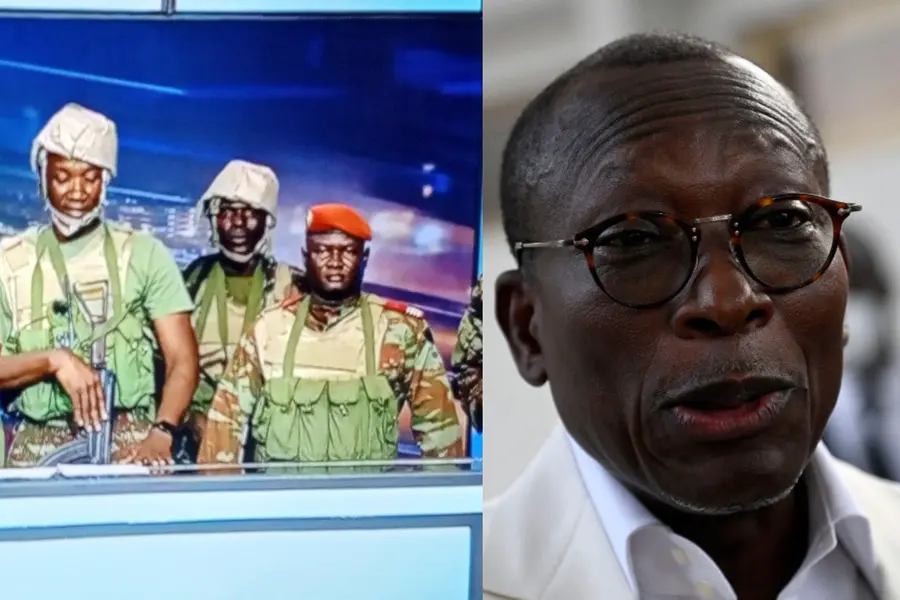
Cotonou/Porto-Novo: A group of soldiers appeared on Benin’s state television early Sunday, announcing the dissolution of the government and declaring that President Patrice Talon had been “removed from office,” signalling an apparent coup attempt in the West African nation.
The group, which called itself the Military Committee for Refoundation, announced the removal of the president and all state institutions.
According to France24, the unrest began in the early hours with an armed attack on President Talon’s residence in Porto-Novo. The assault was reportedly led by Lt. Col. Pascal Tigri, who, along with troops loyal to him, later seized control of the national broadcaster.
Footage aired on state TV showed uniformed soldiers reading out a statement claiming they were taking charge “to restore order,” though the status of President Talon remains unclear.
Talon's whereabouts were unknown, and the French Embassy said on X that "gunfire was reported at Camp Guezo" near the president's official residence. It urged French citizens to remain indoors for security.
Benin, officially the Republic of Benin and formerly the Kingdom of Dahomey, is a West African nation bordered by Togo to the west, Nigeria to the east, Burkina Faso to the northwest, and Niger to the northeast.
What’s the political crisis in Benin?
The country was long regarded as one of sub-Saharan Africa’s most stable democracies, but political conditions have shifted sharply since Patrice Talon took office in 2016. His administration has been accused of using the justice system to target opponents, tightening its grip on power. In recent years, deadly police crackdowns on protests, the arrest of activists, and broader curbs on civil liberties have raised growing concerns about the country’s democratic backslide.
Talon was due to step down next April after the presidential election.
Talon’s pick, former Finance Minister Romuald Wadagni, was the favourite to win the election. Meanwhile, the Opposition candidate, Renaud Agbodjo, was rejected because he did not have sufficient sponsors.
In November, the country’s legislature extended the presidential term of office from five to seven years, keeping the term limit at two.
Published: 07 Dec 2025, 02:19 pm IST
Related Topics
Disclaimer: Kindly avoid objectionable, derogatory, unlawful and lewd comments, while responding to reports. Such comments are punishable under cyber laws. Please keep away from personal attacks. The opinions expressed here are the personal opinions of readers and not that of Mathrubhumi.
