
Mali’s Defense Minister has been killed in a massive, coordinated offensive by an unprecedented alliance of separatist rebels and al-Qaida-linked militants.
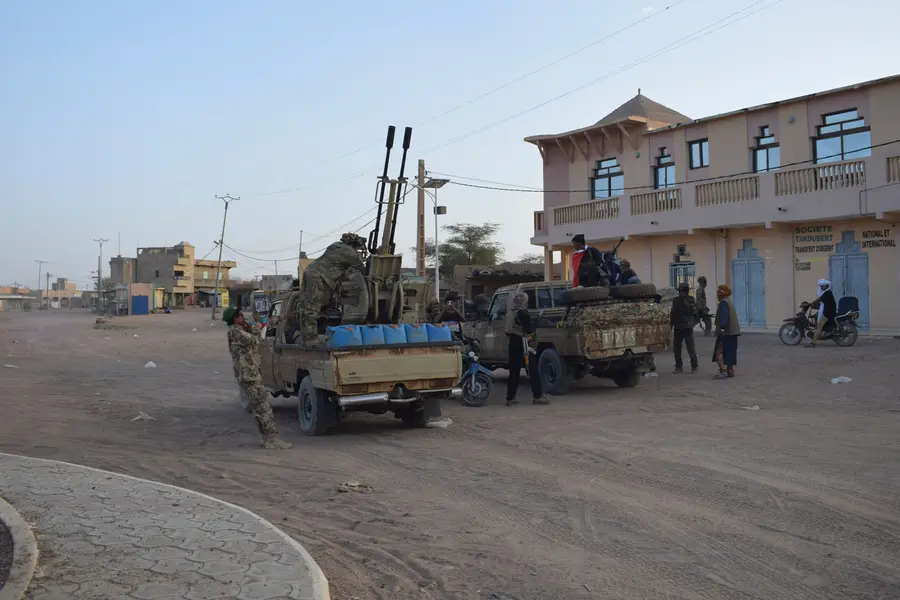
Dakar (Senegal): In a staggering blow to Mali’s ruling military junta, authorities confirmed Sunday that Defense Minister Gen Sadio Camara was killed during a weekend of intense, nationwide violence. The assault, orchestrated by a rare coalition of Tuareg-led separatists and jihadist militants, saw the fall of military outposts and the seizure of the strategic northern stronghold, Kidal.
A national crisis
The Malian government utilised social media and state television to announce the death of Gen Camara. According to official statements, the general’s residence was hit by a suicide car bomb and a ground assault on Saturday. Though the ministry claimed Camara "engaged in an exchange of fire with the assailants" and "managed to neutralise" several before succumbing to his wounds at a hospital, his death marks the most high-profile casualty in Mali’s decade-long conflict.
While the government has yet to release a full death toll, they confirmed at least 16 individuals were wounded. A three-day, overnight curfew has been implemented in the capital, Bamako, to restore order.
The fall of Kidal
The Azawad Liberation Front (FLA), a separatist group seeking independence in the north, declared it had retaken the city of Kidal after Malian forces and Russian Africa Corps troops retreated.
"Kidal is declared free," stated FLA spokesperson Mohamed El Maouloud Ramadan, noting that a deal had been reached for the "peaceful exit" of government forces. Gen. Oumar Diarra, head of the armed forces, later confirmed that the military had repositioned to Anefis, roughly 100 kilometers to the south.
An unprecedented alliance
In a development that has alarmed regional security experts, the secular FLA separatists joined forces with the al-Qaida-affiliated JNIM to coordinate Saturday’s strikes. This partnership targeted not only the north but also areas near the capital and several other urban centers.
Ramadan confirmed the collaboration, stating, "This operation is being carried out in partnership with the JNIM, which is also committed to defending the people against the military regime in Bamako."
Geopolitical implications for Russia
The coordinated offensive serves as a direct challenge to Russia’s influence in West Africa. Since the military junta pivoted away from Western allies toward Russian security partners, violence has continued to escalate.
Wassim Nasr of the Soufan Center noted that the open political and military coordination between these two distinct groups is a first for the region. Experts suggest the failure to intercept such a large-scale plot is a "major blow to Russia," casting doubt on the effectiveness of the Africa Corps mercenaries in protecting major Malian cities.
AP
Published: 27 Apr 2026, 06:29 am IST
Related Topics
Disclaimer: Kindly avoid objectionable, derogatory, unlawful and lewd comments, while responding to reports. Such comments are punishable under cyber laws. Please keep away from personal attacks. The opinions expressed here are the personal opinions of readers and not that of Mathrubhumi.
