
Bangladesh has demanded India extradite ousted former prime minister Sheikh Hasina, who was sentenced to death in absentia for crimes against humanity
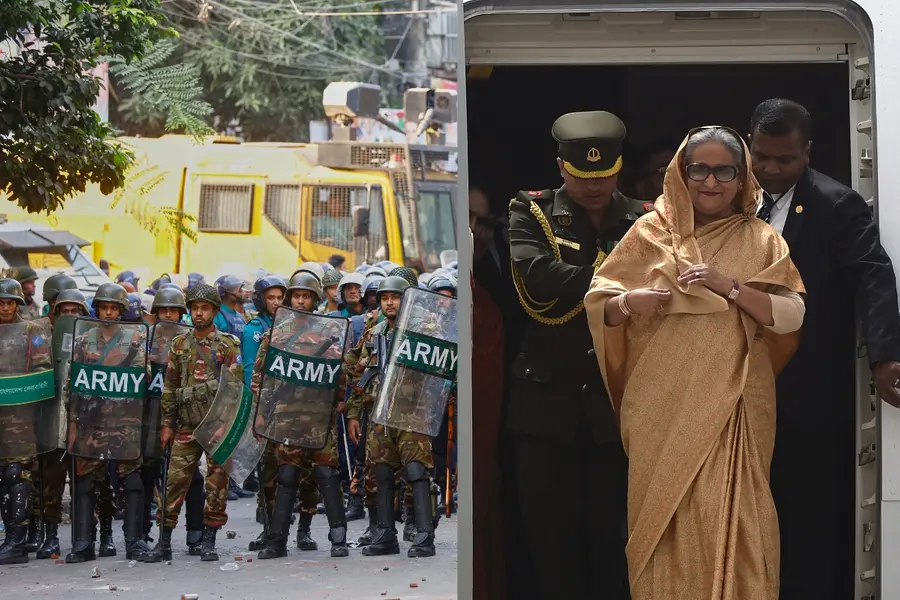
Dhaka: Bangladesh on Monday demanded that India extradite ousted former prime minister Sheikh Hasina, hours after she was sentenced to death in absentia for crimes against humanity. Hasina, 78, fled to India following her ouster during a mass uprising in August 2024, a move that strained ties between the two neighbours.
A Dhaka court also sentenced former interior minister Asaduzzaman Khan Kamal to death in absentia. Both were found guilty over a violent crackdown on last year’s student-led protests. Bangladesh stated that Kamal’s current whereabouts are also believed to be in India.
Also Read

In a statement, Dhaka’s foreign ministry said India has an “obligatory responsibility” to extradite the convicts and warned that offering them asylum would be “extremely unfriendly and an affront to justice.”
"We call on the Indian government to immediately hand over these two convicted individuals to the Bangladeshi authorities," the foreign ministry said in a statement in Bengali.
"This is also a duty for India, as per the extradition treaty existing between the two countries," it added.
"It would be an extremely unfriendly act and a contempt for justice if any other country were to grant asylum to these individuals convicted of crimes against humanity," the ministry said.
India’s foreign ministry said it had “noted the verdict” but did not comment directly on potential extradition. It emphasised India’s commitment to “peace, democracy, inclusion and stability” in Bangladesh.
In her reaction, Hasina said the judgement has been made by a "rigged tribunal established and presided over by an unelected government with no democratic mandate."
"They are biased and politically motivated. In their distasteful call for the death penalty, they reveal the brazen and murderous intent of extremist figures within the interim government to remove Bangladesh's last elected prime minister, and to nullify the Awami League as a political force," she said in a statement.
Hasina said she was not afraid to face her "accusers" in a proper tribunal where the evidence can be weighed and tested fairly.
"That is why I have repeatedly challenged the interim government to bring these charges before the International Criminal Court (ICC) in the Hague."
Hasina’s 15-year tenure was marked by widespread human rights abuses, including mass detentions and extrajudicial killings of political opponents. Although Bangladesh had planned to request an Interpol red notice for Hasina last year, no record currently exists on the global police alert system.
Interim Bangladeshi leader Muhammad Yunus, a Nobel Peace Prize winner, described the verdict as “historic” and called for calm, urging citizens to refrain from acts that could disrupt public order.
Hasina’s son Sajeeb Wazed, currently in the United States, said in a message to The Associated Press that the “verdict is a joke and meaningless. My mother is safe in India. The trials were so legally flawed they won’t survive any challenge once rule of law returns to Bangladesh.”
In a media statement on Monday, Bangladesh’s Ministry of Home Affairs urged India to send both Hasina and Khan back soon.
India’s foreign ministry, in a statement, acknowledged the tribunal’s verdict but fell short of stating whether it would hand them over to Dhaka.
“As a close neighbor, India remains committed to the best interests of people of Bangladesh, including in peace, democracy, inclusion and stability in that country. We will always engage constructively with all stakeholders to that end,” it said.
The development represents a new point of tension in India-Bangladesh relations, particularly regarding legal and diplomatic responsibilities over fugitives.
(With AFP inputs)
Published: 17 Nov 2025, 06:16 pm IST
Related Topics
Disclaimer: Kindly avoid objectionable, derogatory, unlawful and lewd comments, while responding to reports. Such comments are punishable under cyber laws. Please keep away from personal attacks. The opinions expressed here are the personal opinions of readers and not that of Mathrubhumi.