
India says Bangladesh's request to extradite former prime minister Sheikh Hasina is being examined under established procedures.
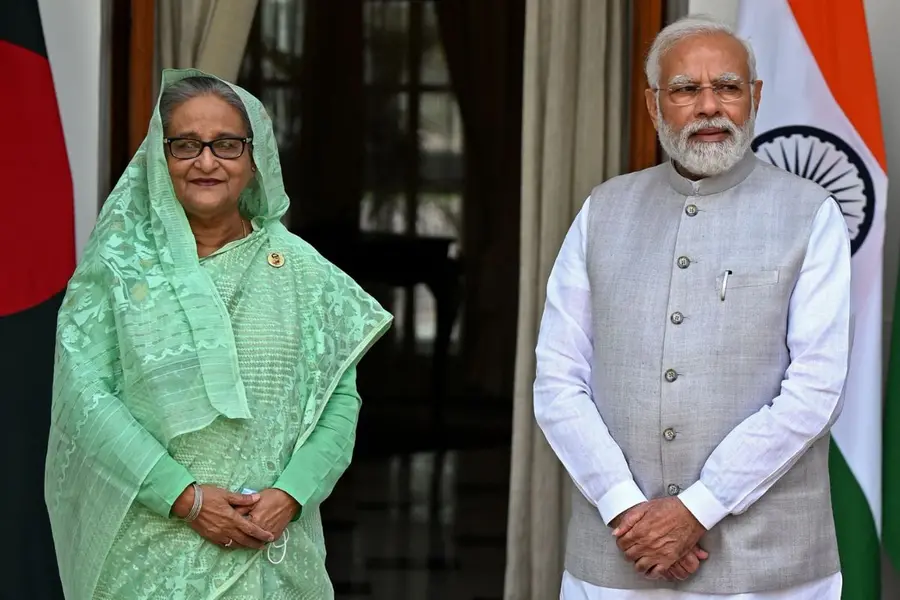
New Delhi: India on Tuesday said Bangladesh's request for the extradition of former prime minister Sheikh Hasina is being examined in line with established procedures, as diplomatic engagement between the two countries continues.
External Affairs Ministry spokesperson Randhir Jaiswal said India is examining Dhaka's request and will provide an update when there is further information. “We have made it very clear that this issue is being examined in line with established processes on the Indian side. We will give you an update when there is one.”
Also Read

The statement came a day after Bangladesh Prime Minister Tarique Rahman's meeting with Indian High Commissioner Dinesh Trivedi in Dhaka, during which Bangladesh renewed its request for Hasina's extradition.
Hasina, 78, has been living in India since leaving Bangladesh in August 2024 following the collapse of her government amid a mass anti-government movement.
Why is Bangladesh seeking Hasina's return?
Bangladesh has been seeking Hasina's return in connection with cases arising from the crackdown on student-led protests in 2024.
The previous interim government led by Muhammad Yunus had also formally requested her extradition, citing her conviction in cases related to the protests.
Hasina and former home minister Asaduzzaman Khan Kamal were sentenced to death by Bangladesh's International Crimes Tribunal after being convicted of crimes against humanity linked to the 2024 crackdown.
India's latest statement does not indicate whether it has accepted or rejected Bangladesh's request. It only confirms that the request remains under examination.
Bangladesh renews extradition request
During the meeting with Indian High Commissioner Trivedi, Bangladesh expressed hope that India would expedite the extradition process involving Hasina.
Dhaka also reiterated its request for India to hand over two Bangladeshi nationals arrested in West Bengal earlier this year over alleged involvement in the killing of Bangladeshi political figure Sharif Osman Hadi.
On the latter matter, Jaiswal said it was a legal issue and that investigations were continuing.
India-Bangladesh diplomatic engagement
The extradition issue comes as India and Bangladesh seek to maintain diplomatic engagement despite tensions between the two countries.
Trivedi met Prime Minister Narendra Modi in New Delhi on Tuesday, a day after his meeting with Tarique Rahman in Dhaka.
According to the Indian High Commission, Trivedi sought Modi's guidance on further strengthening the bilateral relationship with a people-centric approach.
The envoy had conveyed India's commitment to working with the Bangladeshi administration and people in a positive and forward-looking manner during his meeting with Rahman.
Tarique Rahman invited to India
India has extended two separate invitations to Bangladesh Prime Minister Tarique Rahman.
One invitation is for a bilateral visit to India, while the other is for him to attend the outreach session of the BRICS Summit in New Delhi in September.
India is scheduled to host the BRICS Summit on September 12 and 13. Rahman has been invited to the outreach session in his capacity as the current chair of BIMSTEC.
BIMSTEC comprises Bangladesh, Bhutan, India, Myanmar, Nepal, Sri Lanka and Thailand.
Hasina's recent remarks add to tensions
The latest diplomatic developments follow renewed tensions after Hasina participated in a virtual press interaction from New Delhi on August 5, marking two years since her ouster.
During the interaction, Hasina said she remained determined to return to Bangladesh in December and spoke about restoring democracy in the country. She also acknowledged the possibility of imprisonment or a death sentence if she returned.
Bangladesh subsequently lodged a strong protest over the event and said such statements affected public sentiment and complicated efforts to improve bilateral ties.
India said it had no involvement in the event.
Jaiswal described it as an interaction organised by a private media entity and said the government neither participated in it nor endorsed views expressed at the forum.
For now, India has not indicated whether it will approve or reject Bangladesh's extradition request.
The government's position is that the request is being processed through established procedures. Any further decision or clarification from New Delhi could have implications for India-Bangladesh diplomatic relations, particularly as both sides continue high-level engagement.
Analysis: Why the extradition issue matters
The Sheikh Hasina extradition request is one of the most sensitive issues in India's relationship with Bangladesh.
New Delhi is simultaneously dealing with Dhaka's request for Hasina's return while engaging with the government led by Tarique Rahman on broader bilateral issues. The invitations extended to Rahman for a bilateral visit and the BRICS outreach session indicate that diplomatic channels remain active despite disagreements over Hasina.
The issue also has a legal dimension because Bangladesh's request is linked to proceedings and a death sentence handed down by its International Crimes Tribunal. India's eventual response would therefore involve established legal and diplomatic processes rather than being solely a political decision.
For now, New Delhi's public position remains limited to saying that the extradition request is under examination.
Published: 12 Aug 2026, 08:56 am IST
ABOUT THE AUTHOR
Related Topics
Disclaimer: Kindly avoid objectionable, derogatory, unlawful and lewd comments, while responding to reports. Such comments are punishable under cyber laws. Please keep away from personal attacks. The opinions expressed here are the personal opinions of readers and not that of Mathrubhumi.