
Sheikh Hasina speaks from exile as questions continue to swirl around Bangladesh’s dramatic power shift.
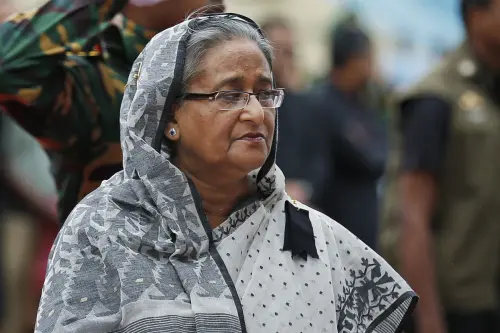
Ousted Bangladesh Prime Minister Sheikh Hasina has rejected claims that the United States played a role in removing her from power, saying she has found no “decisive evidence” of foreign interference in the dramatic political shifts that forced her into exile last year.
Speaking to NDTV from India, where she has lived since her resignation on 5 August 2024, the former leader also questioned the global standing of interim chief Muhammad Yunus, once a celebrated figure in Western political circles.
Hasina denies US backing in regime change
Hasina, 78, dismissed long-standing speculation that Washington supported groups pushing for her removal amid widespread student-led protests that ended her 15-year rule.
“I have seen no decisive evidence to suggest that foreign powers had any influence on the events of last summer. I do know that many people in American political circles admired Yunus for his economic achievements and erroneously equated these with political prowess,” she said.
She added that her focus now is on restoring democratic norms in Bangladesh.
“I believe that any country that values democracy will support us in our fight to restore our democratic values,” Hasina said.
Criticism of Yunus and his interim government
Hasina argued that Muhammad Yunus, a Nobel laureate once respected by American liberals, has since lost favour due to decisions made during his 15-month interim rule.
“Now that they have seen him place radical extremists in his cabinet, dismantle Bangladesh's democratic infrastructure, and discriminate against minorities, I imagine he is no longer so popular amongst Western liberals,” she noted.
According to Hasina, Yunus sent a clear message about his political direction early in his tenure.
“Yunus made it clear there would be no place for religious pluralism when he staffed his cabinet with extremists and released convicted criminals linked to Hizb-ut Tahrir,” she said.
Bangladesh after Hasina’s resignation
Since Hasina’s ouster, Bangladesh has experienced intermittent violence and deepening social fractures, with minority communities bearing the brunt of attacks. Political shifts under the interim authority have included suspending the registration of the Awami League in May and banning its activities on grounds of national security and war crimes allegations against senior party leaders.
The former prime minister, credited with driving Bangladesh’s economic transformation but criticised for rights abuses and suppressing dissent, is currently being tried in absentia. She faces charges of crimes against humanity linked to an alleged crackdown on student protests in mid-2024 – accusations she firmly denies.
Meanwhile, Sajeeb Wazed – son of ousted Bangladesh leader Sheikh Hasina – warned that Awami League supporters will obstruct next February’s elections if the ban on the party is not lifted, also claiming his mother could face a death sentence in an upcoming verdict. He told Reuters that protests may escalate into violence without international intervention and maintained that Hasina remains safe under Indian protection. The former prime minister is expected to be convicted in absentia on charges she says are politically motivated, following a period of unrest that left more than 1,400 people dead and severely disrupted the country’s garment industry.
Hasina has remained in India since fleeing Bangladesh last year. A verdict in the case against her is expected on Monday.
Published: 17 Nov 2025, 09:23 am IST
Related Topics
Disclaimer: Kindly avoid objectionable, derogatory, unlawful and lewd comments, while responding to reports. Such comments are punishable under cyber laws. Please keep away from personal attacks. The opinions expressed here are the personal opinions of readers and not that of Mathrubhumi.
