
Former Bangladesh Prime Minister Sheikh Hasina has denounced the death sentence issued against her, calling the verdict “rigged, biased and politically motivated”
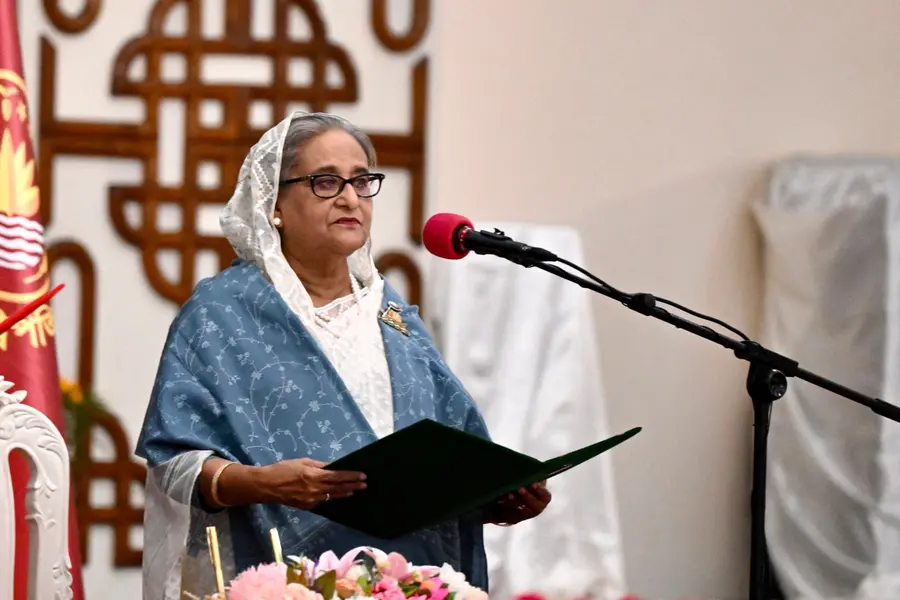
Dhaka: Former Bangladesh Prime Minister Sheikh Hasina has issued a sharp condemnation of the death sentence announced against her by the International Crimes Tribunal (ICT), alleging that the ruling was delivered by a “rigged tribunal” functioning under an “unelected government” with no democratic mandate. In a detailed statement released on 17 November 2025, Hasina claimed that the verdict reflected the interim administration’s intent to remove her from the political landscape and undermine the Awami League.
Hasina’s remarks strongly criticised the government led by Dr Mohammad Yunus, accusing it of misgovernance, human rights violations, and suppressing political opposition. She argued that the tribunal had been manipulated to scapegoat the Awami League for the unrest and deaths during the July–August 2025 turmoil, while ignoring violence committed against party members and religious minorities.
What did Hasina say about the death sentence issued against her?
Sheikh Hasina described the verdict as the outcome of a “rigged tribunal” that she said was created and controlled by an unelected government lacking democratic legitimacy. She argued that the ruling was “biased and politically motivated”, claiming it reflected an effort by extremist elements inside the interim administration to eliminate her and dismantle the Awami League as a political force. She further alleged that the demand for the death penalty demonstrated a premeditated intention to silence the country’s last elected prime minister.
She stated that she was denied a fair opportunity to defend herself and argued that the ICT lacked independence and impartiality. Hasina reiterated her willingness to face trial at the International Criminal Court, saying the interim government had refused such scrutiny because it feared being implicated in rights abuses.
Why does Hasina reject the legitimacy of the International Crimes Tribunal?
Hasina stated that she was denied a fair trial, including the right to have lawyers of her choice represent her. She argued that despite its name, the tribunal was neither international nor impartial. According to her statement, senior judges sympathetic to the previous government were removed, and the ICT prosecuted only Awami League members while failing to act on violence perpetrated against religious minorities, indigenous communities, and journalists. She said the verdict was predetermined and reiterated her challenge for the charges to be examined by the International Criminal Court.
The former prime minister also defended her government’s actions during the 2025 unrest, maintaining that political leaders acted in good faith and did not order lethal force. She said the situation escalated beyond control but rejected claims of deliberate attacks on civilians. She argued that much of the tribunal’s evidence had been taken out of context and lacked credibility.
How did she criticise the interim government under Mohammad Yunus?
Hasina accused the interim government of presiding over widespread administrative failure, including deteriorating public services, a weakened police presence, and compromised judicial fairness. She alleged that religious minorities faced attacks and that women’s rights had suffered setbacks. According to her statement, extremist elements, including figures from Hizb-ut-Tahrir, had influence within the administration, undermining Bangladesh’s secular political tradition. She said journalists were facing harassment, economic growth had stalled, and the Awami League had been banned from participating in elections.
Hasina warned that under the interim government, democratic institutions had deteriorated, minorities faced increased attacks, journalists were threatened, and Awami League supporters across the country were detained or targeted. She asserted that national elections due next year must be free, fair and inclusive.
What allegations did she make regarding political violence and arrests?
The former prime minister alleged that retaliatory attacks, burnings, and lynchings targeting Awami League members since July 2024 were carried out under orders from the interim administration. She claimed that many of those responsible had been granted indemnity, while Awami League activists faced criminal charges based on what she described as false evidence presented by the ICT’s chief prosecutor. She further stated that convicted extremists and killers had been released from prison while Awami League supporters filled jails.
How did Hasina address the events of July–August 2025?
She called the unrest a tragedy for the nation but rejected claims that she or other leaders ordered lethal force against protestors. She argued that the tribunal’s prosecutors offered no persuasive evidence to support the charges and said security forces acted under established legal protocols. She acknowledged that the government lost control of the situation but insisted that characterising the events as a planned assault on citizens misrepresented the facts.
Hasina stressed that the future of Bangladesh must be determined by its people through a free, fair and inclusive election next year. She accused the current administration of denying citizens this right and appealed to the international community to recognise what she described as the government’s authoritarian actions.
Published: 17 Nov 2025, 03:25 pm IST
Related Topics
Disclaimer: Kindly avoid objectionable, derogatory, unlawful and lewd comments, while responding to reports. Such comments are punishable under cyber laws. Please keep away from personal attacks. The opinions expressed here are the personal opinions of readers and not that of Mathrubhumi.
