
Azerbaijan has found itself increasingly mentioned in discussions around the Iran–Israel conflict, not as a direct participant, but as a strategically located neighbour whose geography, alliances, and energy links make it relevant to the wider regional security picture.
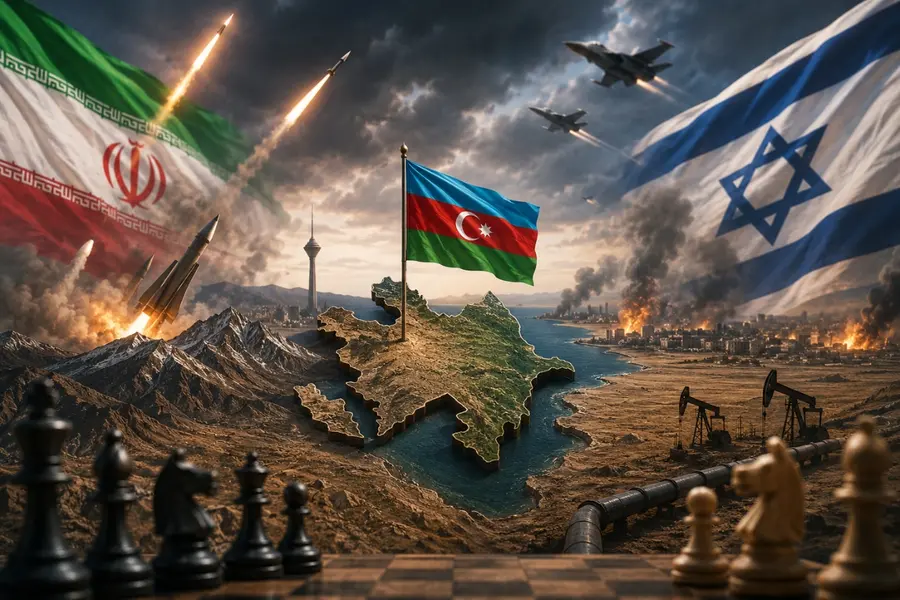
Baku: Azerbaijan is not a direct participant in the Iran–Israel conflict, but it is increasingly being drawn into the narrative around the escalation due to its strategic location, close proximity to northern Iran, and expanding defence and energy ties with Israel. As tensions rise across West Asia, unverified media claims and geopolitical speculation have placed Baku under scrutiny, even as it continues to deny any involvement and maintains that its territory is not being used for military operations against Iran.
Azerbaijan is not officially involved in the Iran–Israel conflict, nor has it declared any participation in military operations. However, it is frequently mentioned in regional analysis because of its location in the South Caucasus, directly bordering Iran along a long and sensitive frontier.
Also Read

This proximity means that any escalation involving northern Iran can naturally bring Azerbaijan into strategic discussions, even if it remains outside the conflict itself.
Why Azerbaijan is being mentioned in media claims
Recent reports and allegations in some Iranian media outlets, including hardline publications, have suggested that attacks on Iranian cities could have involved routes or airspace near or across Azerbaijan.
These claims include suggestions that drones or aircraft might have used northern corridors or the Caspian Sea direction. However, these allegations have not been independently verified, and Azerbaijan has repeatedly denied allowing its territory or airspace to be used against Iran.
The inclusion of Azerbaijan in such narratives reflects suspicion rather than confirmed involvement.
Strategic ties with Israel increase geopolitical sensitivity
One key reason Azerbaijan is discussed in this context is its long-standing and expanding strategic relationship with Israel.
The two countries cooperate in areas including defence technology, intelligence cooperation, and energy trade. Azerbaijan has also been a supplier of crude oil to Israel through established pipeline networks.
This relationship has led Iran to view Israeli presence or influence in Azerbaijan with caution, particularly given Iran’s concerns about foreign military or intelligence activity near its borders.
Border with Iran and ethnic sensitivity add complexity
Azerbaijan shares a long border with Iran, where a significant ethnic Azerbaijani population lives in the north-western provinces of Iran. This demographic link adds another layer of sensitivity in Tehran’s security calculations.
While the majority of Iranian Azerbaijanis are fully integrated into Iranian society, the cultural and linguistic connection between the two sides of the border has historically been a factor in regional political narratives.
Because of this proximity and shared identity links, any escalation near northern Iran can quickly draw Azerbaijan into wider geopolitical discussions.
Energy routes and global relevance
Azerbaijan is also a major energy transit state, supplying oil and gas to global markets, including Europe through key pipeline corridors.
This makes the country strategically important far beyond the region. Any instability affecting Azerbaijan or its surrounding routes could have implications for global energy security, especially as Europe continues to diversify energy supplies.
This economic role adds to why analysts monitor Azerbaijan closely during regional conflicts, even when it is not directly involved.
Why Azerbaijan is “dragged in” despite neutrality
In summary, Azerbaijan is being “dragged into” the narrative around the Iran–Israel conflict for three main reasons:
- Geography: It borders northern Iran and sits near sensitive military and air corridors
- Partnerships: It maintains strong strategic ties with Israel alongside regional balancing diplomacy
- Perception risk: Unverified claims and wartime narratives often project neighbouring states into the conflict zone
Despite this, Azerbaijan has consistently denied involvement and continues to publicly position itself as a neutral actor seeking stable relations with all sides.
At present, Azerbaijan remains a peripheral but strategically significant state in the evolving Iran–Israel crisis. Its role is shaped more by geography and partnerships than by direct participation, but in an expanding regional conflict, even peripheral states can become focal points of suspicion, analysis, and diplomatic pressure.
Published: 08 Jun 2026, 03:11 pm IST
Disclaimer: Kindly avoid objectionable, derogatory, unlawful and lewd comments, while responding to reports. Such comments are punishable under cyber laws. Please keep away from personal attacks. The opinions expressed here are the personal opinions of readers and not that of Mathrubhumi.