
Diplomatic efforts for a ceasefire remain stalled, with Hezbollah rejecting proposals and Iran threatening retaliation.
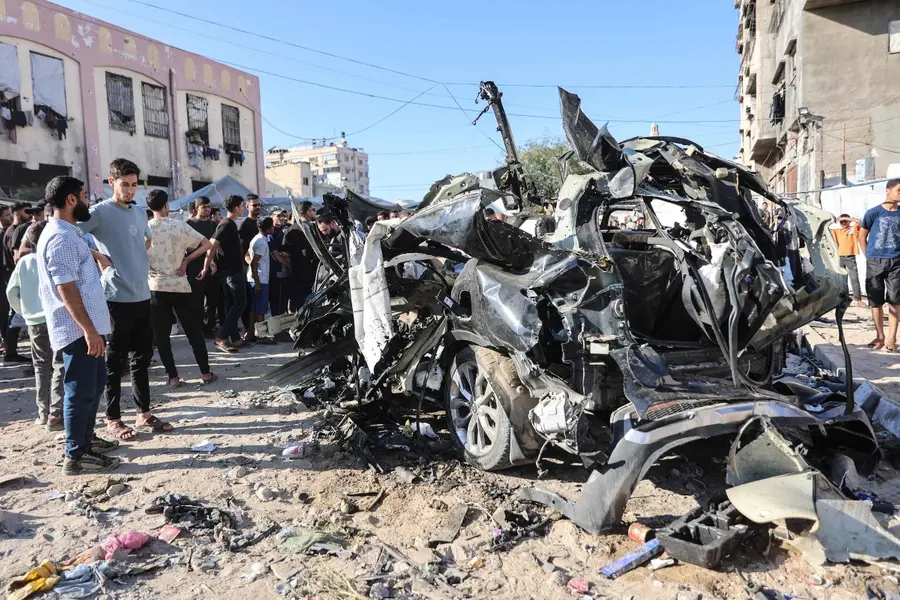
Beirut: The Israeli military launched airstrikes against the southern suburbs of Beirut on Sunday, hitting apartments within two buildings following the reported interception of rockets fired by Hezbollah into Israeli territory.
While Israel and Hezbollah have engaged in routine cross-border exchanges, the Lebanese capital's southern districts, widely regarded as strongholds for the Iran-backed group, have seen comparatively few actions, having sustained only two previous strikes since the middle of April.
The office of Israeli Prime Minister Benjamin Netanyahu announced that the military "just struck a militant command centre in Beirut's Dahiyeh district, in response to Hezbollah's fire towards Israeli territory".
In a corresponding statement, the Israeli military detailed that a "precise strike" was executed against a Hezbollah command facility after the group targeted Israeli civilians with rocket fire.
"Prior to the strike, steps were taken to mitigate harm to civilians, including the use of precise munitions and aerial surveillance," the military stated.
According to Lebanon’s state-run National News Agency (NNA), the bombardment "targeted two apartments in two buildings".
An AFP photographer at the scene observed damage to two residential units inside a building situated on a narrow roadway. Traffic gridlock ensued as local residents attempted to evacuate the suburb while the Lebanese army deployed throughout the district.
Earlier in the week, Lebanese and Israeli diplomats in Washington promoted a conditional ceasefire proposal that would mandate a cessation of Hezbollah rocket fire and a withdrawal of its forces from the Israeli border region.
Hezbollah dismissed the proposal, counter-demanding a complete withdrawal of Israeli forces from all Lebanese territory. Following the disclosure of the draft agreement, Israel maintained it would continue hitting Beirut's southern suburbs if Hezbollah launched further assaults into northern Israel.
Air raid sirens sounded across northern Israel earlier Sunday morning. The military later confirmed that "two projectiles that crossed from Lebanon into Israeli territory were intercepted".
Hezbollah did not immediately issue a statement regarding the suburb strikes, though the group did claim responsibility for separate operations targeting Israeli forces inside Lebanon on Sunday.
Iranian Threats
The conflict in Lebanon escalated when Hezbollah initiated rocket strikes against Israel on March 2 in solidarity with Iran. Since then, Tehran has maintained that any comprehensive peace agreement to end the broader regional war—which was temporarily paused by a separate April truce—must simultaneously conclude the hostilities in Lebanon.
Mohammad Bagher Ghalibaf, Iran's chief nuclear negotiator and parliamentary speaker, condemned the United States for granting Israel a "green light" to conduct the Beirut bombardment and warned of impending retaliation.
"Our armed forces, as always, are free to act," Ghalibaf stated.
Ebrahim Rezaei, the spokesperson for the Iranian parliament's national security commission, similarly threatened "a decisive and painful response" following Sunday's developments.
Tehran’s firm stance linking the regional conflicts has hampered diplomatic efforts by Washington. In a televised interview broadcast Sunday, U.S. President Donald Trump urged Israel to adopt a more calculated strategy.
"I'd like to see a more surgical attack on Hezbollah," Trump remarked during an interview with NBC's "Meet the Press" recorded Friday. "I'd like to see Lebanon have a better life."
Evacuation Orders in Tyre
Lebanon's state media reported a succession of additional Israeli bombardments across southern sectors of the country on Sunday.
The fresh wave of attacks followed Saturday's strikes that Lebanese authorities said killed at least five individuals, including members of the Lebanese military and a general.
On Sunday, the Israeli military broadcast a broad evacuation directive covering the majority of the coastal city of Tyre and its outlying communities. The port city currently accommodates thousands of internally displaced persons and has sustained intense bombardment since the outbreak of hostilities.
Civil defence personnel moved approximately 500 displaced families out of schoolhouses functioning as temporary shelters, relocating them to the city's Christian district, which fell outside the evacuation boundaries, according to an AFP correspondent.
Further north near Sidon, funeral services were held Sunday for a rescue worker and three members of a single family who perished in an Israeli airstrike.
According to the Lebanese Health Ministry, at least 131 emergency and rescue personnel have been killed by Israeli actions over the course of the conflict.
"We do not carry rockets, our only weapon is the bread we deliver to people. They went and gave the family bread, but as they were leaving, a drone struck them," rescue worker Qassem Foani told AFP.
The Lebanese Health Ministry reports that Israel's prolonged aerial bombardment campaign and subsequent ground operations have resulted in more than 3,600 fatalities across Lebanon.
With inputs from AFP
Published: 07 Jun 2026, 11:36 pm IST
Related Topics
Disclaimer: Kindly avoid objectionable, derogatory, unlawful and lewd comments, while responding to reports. Such comments are punishable under cyber laws. Please keep away from personal attacks. The opinions expressed here are the personal opinions of readers and not that of Mathrubhumi.
