
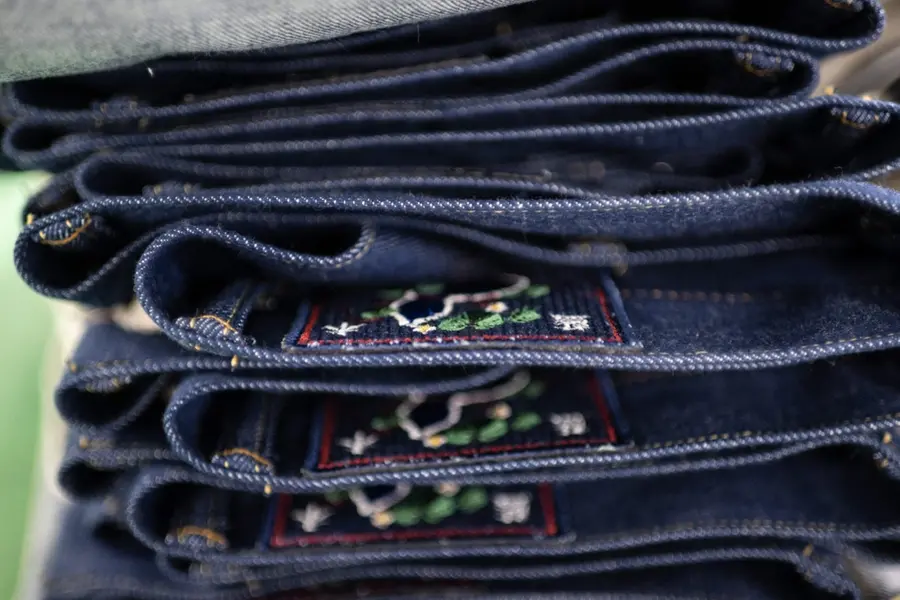
Kojima, Japan: Japanese jeans are gaining a reputation as a premium alternative to mass-produced fast fashion. Hand-dyed with natural indigo and woven on vintage looms, these garments cater to denim connoisseurs worldwide, offering a level of quality and craftsmanship unmatched by mainstream brands.
At the small Momotaro Jeans factory in southwestern Japan, jeans are made to last for decades. Yoshiharu Okamoto, a key member of the team, explains the traditional, time-consuming process of dyeing cotton threads in natural indigo, which is sourced locally in Japan.
Also Read

The color is said to be richer than synthetic dyes, adding to the unique appeal of the brand. "We're very strict about all aspects of manufacturing," said Japan Blue's president Masataka Suzuki. That includes "whether the sewing is done properly, and whether the dye is beautiful," making local craftspeople with traditional manufacturing skills indispensable.
A price for perfection
Momotaro Jeans is known for its premium pricing, with standard jeans retailing for around 30,000 yen ($200), and more luxurious versions, including a silk-blend pair, costing up to 60,000 yen. The brand’s most expensive offering, made using a wooden loom adapted from a luxury kimono loom, can exceed 200,000 yen.
Inspired by renowned Japanese denim brands like Evisu and Sugar Cane, Momotaro Jeans is attracting more attention from international buyers, who now make up 40 percent of the brand's sales. Japan Blue, the company behind Momotaro, is expanding its presence, with a new store in Kyoto targeting affluent tourists.
Kojima’s denim legacy
The town of Kojima has a rich history in textile-making, dating back to the Edo period when it produced woven cords for samurai sword handles. Over time, Kojima transitioned into manufacturing cotton items like "tabi" socks and school uniforms. Today, the region is known for its luxury denim, used by top international fashion brands.
While Japanese jeans have garnered significant interest over the past decade, they are still considered a niche product, particularly in Western markets. Michael Pendlebury, a UK-based tailor, explains that the high cost of these jeans makes them a luxury item not accessible to most consumers. "Mass-produced denim brands like Levis, Diesel and Wrangler are the largest, and more worn, but the highest quality is still Japanese in my opinion," he said, adding that the weak yen and a tourism boom could boost sales of made-in-Japan jeans.
The noise and tradition of shuttle looms
One of the unique aspects of Momotaro Jeans, which is named after a folklore hero in Okayama, is the use of old shuttle looms, which produce high-quality denim but at a much slower rate compared to modern machinery. These looms are challenging to maintain, with only a few skilled artisans capable of repairing them, making the process more costly and time-consuming, according to Shigeru Uchida, a weaving craftsman at Momotaro.
"There are only a few of them in Japan now" because they are no longer made, the 78-year-old Uchida said, walking back and forth between the machines to detect unusual sounds that could signal a breakdown. "The texture is very smooth to the touch... and when made into jeans, it lasts quite a long time," Uchida said.
Sustainability and longevity
Momotaro Jeans prides itself on sustainability, offering a lifetime repair guarantee for its products. Suzuki, a representative from the brand, highlights that the jeans are built to last and can be returned for repairs whenever necessary, ensuring their long-lasting appeal and reducing waste. "When people spend a lot of time in their jeans, the path of their life is left on the clothes," depending on how they wear or wash them and even where they live, Suzuki said. "We want to preserve such a mark as long as possible."
Published: 19 Dec 2024, 11:27 am IST
Disclaimer: Kindly avoid objectionable, derogatory, unlawful and lewd comments, while responding to reports. Such comments are punishable under cyber laws. Please keep away from personal attacks. The opinions expressed here are the personal opinions of readers and not that of Mathrubhumi.