
N Chandrasekaran's third term at Tata Sons has been approved by the board, but Tata Trusts is challenging the process. The dispute centres on nominee-director voting rights, the chairman's casting vote and a wider disagreement over Tata Sons' listing and ownership structure.
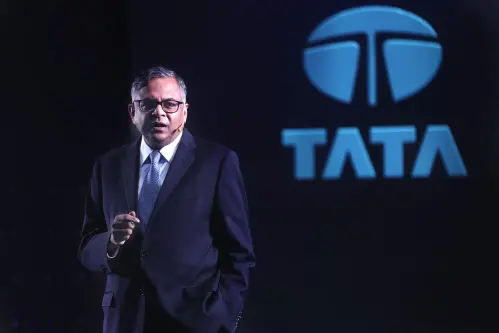
N Chandrasekaran has been reappointed executive chairman of Tata Sons for another five-year term, but the decision is facing a legal challenge from Tata Trusts. A legal opinion obtained by the Trusts from former Chief Justice of India D Y Chandrachud reportedly says the reappointment required majority support from the Trusts' nominee directors.
The Tata Sons board approved Chandrasekaran's reappointment at its September 17 meeting. Tata Trusts chairman Noel Tata voted against the resolution, while the other Trusts nominee, Venu Srinivasan, supported it.
Also Read

The two nominee directors were therefore split. Independent director Harish Manwani, who was chairing the meeting, then used his casting vote in favour of Chandrasekaran, allowing the resolution to pass.
The legal issue is whether that casting vote was sufficient. According to the opinion reported by The Times of India, Chandrachud's view is that a majority of Tata Trusts' nominee directors must separately support the appointment and that the casting vote cannot override that requirement.
Importantly, this is a legal opinion obtained by Tata Trusts, not a court ruling declaring the reappointment invalid.
Tata Trusts' role
Tata Trusts and affiliated trusts hold about 66% of Tata Sons' equity and have two nominee directors on its board. That ownership and board representation are central to the current dispute over governance and leadership.
The immediate question is not simply who holds the majority of shares. It is how the special rights of the Trusts' nominee directors operate under Tata Sons' Articles of Association and how those rights interact with the chairman's casting vote.
Tata Trusts has also challenged the reappointment on broader procedural grounds, according to reports, adding another layer to the dispute.
The bigger dispute: should Tata Sons remain unlisted?
The leadership dispute comes alongside a continuing disagreement over Tata Sons' future structure.
The Tata Sons board had decided in March 2024 that the holding company should remain unlisted and subsequently sought to surrender its regulatory registration. The Reserve Bank of India rejected that request on September 11 and advised Tata Sons to comply with regulations applicable to an upper-layer NBFC.
The RBI decision has brought the listing question back into focus. Tata Trusts, however, has maintained that all available options should be examined rather than moving directly towards a listing. Noel Tata has also argued that Tata Sons should remain unlisted and engage with the RBI.
This disagreement is significant because Tata Trusts' position is tied to its role as the majority shareholder and to the structure through which Tata Sons supports the wider Tata Group.
Rs 25,000 crore SP Group proposal
Another major issue discussed at the September 17 board meeting was a proposal involving the Shapoorji Pallonji Group.
The SP Group, which holds roughly 18% of Tata Sons, has proposed monetising part of its Tata Sons stake to generate at least Rs 25,000 crore. The proposed transaction would take place in two tranches over 18 months and involve a selective capital reduction process through the National Company Law Tribunal.
The proposal could provide liquidity to the SP Group without Tata Sons itself immediately pursuing a public listing. However, it remains a proposal and does not mean that Tata Sons has approved the transaction or decided on a listing.
Why Tata Group companies are in focus
The dispute matters beyond Tata Sons because the holding company sits at the centre of the wider Tata Group's ownership structure.
The questions now facing Tata Sons include Chandrasekaran's reappointment, the rights of Tata Trusts' nominee directors, the company's regulatory status, the possibility of a listing and the proposed restructuring of the SP Group's stake.
For investors, developments involving Tata Sons can draw attention because of its ownership interests across major Tata businesses. However, the governance dispute itself does not mean that the underlying operations of individual Tata companies have changed.
What happens next
The immediate legal question is whether the September 17 board vote was sufficient to complete Chandrasekaran's reappointment.
The Trusts' legal position could lead to further discussions over the interpretation of Tata Sons' Articles of Association and, if the dispute escalates, potentially legal proceedings. The final validity of the appointment would ultimately depend on the applicable corporate documents, law and any formal legal or judicial determination.
At the same time, Tata Sons must address the consequences of the RBI's September 11 decision and assess its options regarding its upper-layer NBFC status and potential listing. The SP Group's Rs 25,000-crore proposal adds another issue for the board to consider.
For now, the board has approved Chandrasekaran's five-year reappointment. But the Tata Trusts' objection means the legal and governance questions surrounding that decision remain unresolved.
Published: 18 Sept 2026, 10:59 am IST
ABOUT THE AUTHOR
Disclaimer: Kindly avoid objectionable, derogatory, unlawful and lewd comments, while responding to reports. Such comments are punishable under cyber laws. Please keep away from personal attacks. The opinions expressed here are the personal opinions of readers and not that of Mathrubhumi.