
Tata Sons has approved a five-year extension for N Chandrasekaran as chairman, as the group's battle with RBI over its private status enters a crucial phase.
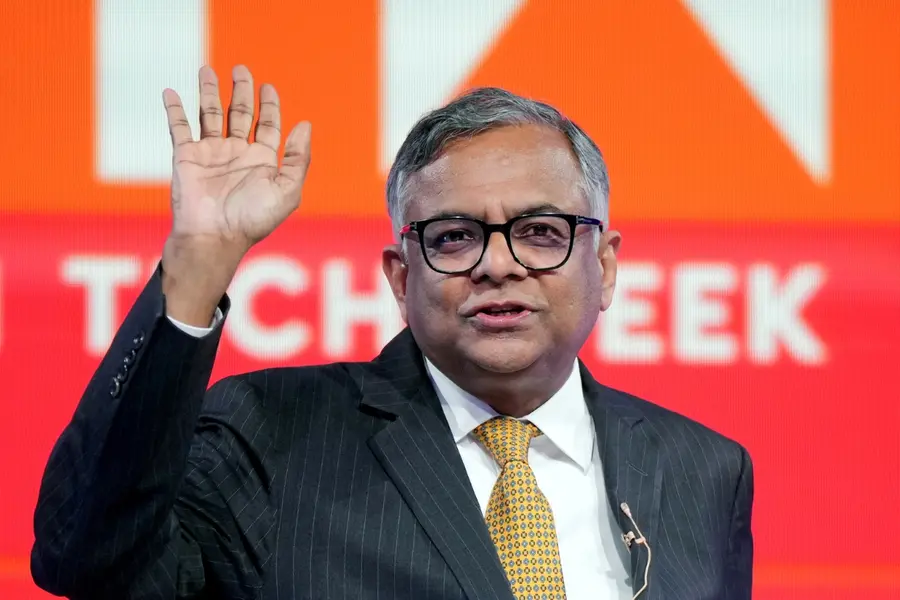
The Tata Sons board has approved a new five-year term for N Chandrasekaran as executive chairman, according to a person familiar with the matter, marking a dramatic turn in the holding company's leadership question just weeks after Chandrasekaran said he would not seek another term.
His current tenure ends in February 2027. The reasons for the change in position and the board's decision have not been publicly disclosed.
The decision comes at a particularly consequential moment for Tata Sons. The holding company faces renewed pressure from the Reserve Bank of India to comply with regulations applicable to Upper Layer non-banking financial companies, including a listing requirement.
The RBI rejected Tata Sons' application to voluntarily surrender its Certificate of Registration as a Core Investment Company on September 11, closing the route the company had pursued to remain outside the listing framework.
That regulatory decision has brought a question Tata Sons had sought to avoid for years back to the centre of the group's future: will the privately held holding company have to enter the public markets?
The RBI roadblock
Tata Sons was classified by the RBI as an Upper Layer NBFC in September 2022. Under the regulatory framework, entities in this category are subject to enhanced requirements, including a stock-market listing.
Tata Sons' original three-year listing deadline expired in September 2025, but the company remained unlisted while its application to surrender its registration was pending.
The group had sought to change that position. In March 2024, Tata Sons applied to surrender its CIC registration after repaying more than ₹21,000 crore in debt.
The move was intended to alter its regulatory status and avoid the mandatory listing route. The RBI, however, has now rejected that application.
The regulator's decision was followed by fresh clarification on the NBFC framework. The RBI's latest FAQs address the definitions of a Core Investment Company and the principal-business test, offering greater clarity around the regulatory considerations relevant to Tata Sons' failed deregistration bid.
Tata Sons' standalone assets are also well above the ₹1 lakh crore threshold used in the revised framework for determining Upper Layer NBFC classification, meaning the company continues to fall within the regulatory framework.
Why Chandrasekaran's extension matters now
The leadership decision assumes a different significance against this backdrop.
In August, Chandrasekaran announced that he would not seek reappointment when his second term ended in February 2027. He asked the board to begin the succession process, saying the group needed clarity on its next leadership.
His announcement came after an earlier proposal to extend his tenure had failed to receive unanimous support.
The situation has now changed sharply. Instead of preparing for a new chairman, Tata Sons' board has approved another five-year term for Chandrasekaran.
The extension would potentially keep the same chairman at the helm through a period in which Tata Sons faces major decisions over its regulatory status, possible listing and corporate structure.
Reports before Thursday's board meeting had already linked the leadership question with the listing issue, with continuity at the top emerging as a consideration as Tata Sons responds to the RBI decision.
A private Tata Sons faces a public-market question
For decades, Tata Sons has operated as the privately held holding company at the centre of the Tata Group. Its shareholder structure is unusual: Tata Trusts hold about 66% of the company, while the Shapoorji Pallonji Group owns around 18.37%, with the remainder held by Tata group companies and other shareholders.
A public listing would therefore represent more than a conventional IPO.
It would introduce market disclosure, listed-company governance requirements and public shareholders into the structure of the group holding company.
The RBI's September decision has significantly narrowed Tata Sons' route to retaining its existing private structure.
While the company could still pursue legal or regulatory avenues, the immediate regulatory position is that it remains within the Upper Layer NBFC framework and must address the listing requirement.
The development also comes amid differences among Tata Sons' stakeholders over the listing question.
Reports have previously said Tata Trusts chairman Noel Tata has opposed a public listing, while the Shapoorji Pallonji Group has supported listing.
Against that backdrop, Thursday's decision does two things at once: it settles, at least for now, the immediate uncertainty over who will lead Tata Sons after February 2027, and places Chandrasekaran at the centre of the next phase of the group's response to the RBI's regulatory challenge.
What remains unanswered is why Chandrasekaran, who said only last month that he would not seek another term, has now agreed to stay for five more years. Neither Tata Sons nor Chandrasekaran has publicly explained the reversal so far.
Published: 17 Sept 2026, 03:20 pm IST
ABOUT THE AUTHOR

Related Topics
Disclaimer: Kindly avoid objectionable, derogatory, unlawful and lewd comments, while responding to reports. Such comments are punishable under cyber laws. Please keep away from personal attacks. The opinions expressed here are the personal opinions of readers and not that of Mathrubhumi.