
A clash over Venu Srinivasan’s participation in Tata Sons’ listing debate has exposed a larger question over the powers and responsibilities of nominee directors.
A Tata Sons board meeting was supposed to settle questions about the group's future. Instead, it exposed a more fundamental question about who gets to speak for one of India's most powerful shareholder groups once a nominee walks into the boardroom.
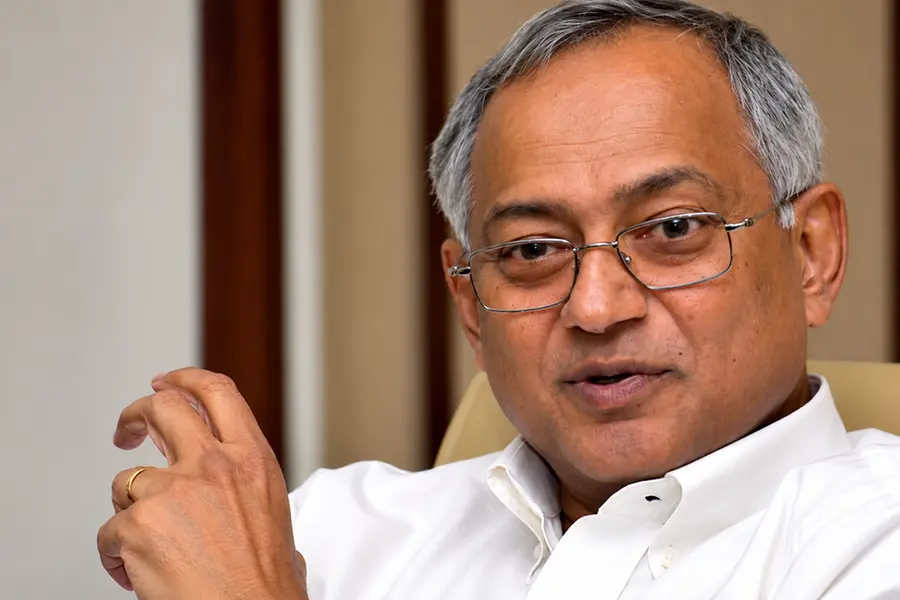
Venu Srinivasan found himself at the centre of that question this week.
The Sir Dorabji Tata Trust (SDTT), one of the Tata Trusts that holds a controlling interest in Tata Sons, sought to keep Srinivasan from taking part in discussions or voting on matters linked to a possible public listing of Tata Sons.
Srinivasan rejected that attempt and maintained that he could continue to exercise his rights as a director.
The significance of the confrontation lies less in the immediate vote than in what it reveals about the delicate line between being a shareholder's nominee and being a company director.
The unusual position Srinivasan found himself in
Srinivasan occupies an unusual position in the Tata Sons power structure. He was jointly nominated to the Tata Sons board by SDTT and Sir Ratan Tata Trust.
At the same time, once appointed to the board, he became a director of Tata Sons with responsibilities attached to that office.
Those two relationships came into conflict over the company's listing. The Tata Trusts have historically exercised enormous influence over Tata Sons because of their shareholding.
However, Srinivasan's response to SDTT's move centred on the proposition that his responsibilities as a director could not simply be suspended because his position differed from that of the Trust.
He reportedly described the SDTT resolution seeking to restrict his participation as illegal and without authority.
He also maintained that he remained entitled to participate in Tata Sons board proceedings.
That response transformed what could have been a routine disagreement between a nominee and his shareholder into a much larger corporate-governance question.
What exactly was SDTT trying to prevent?
The immediate issue was Tata Sons' listing.
SDTT had taken the position that Tata Sons should remain unlisted. Srinivasan's support for the listing route put him on the opposite side of that question.
The Trust subsequently moved to prevent him from participating in discussions or voting on board matters relating to a public listing.
Its position was that Srinivasan, having been nominated to represent the Trust's interests, should not take a position contrary to the Trust's established stance.
It is to be noted that Srinivasan's response introduced a competing principle.
His argument was, in effect, that a director's role carries obligations to the company that are distinct from the interests of the shareholder who nominated him.
That distinction is critical because nominee directors occupy a peculiar space in corporate governance.
They may enter the boardroom because a particular shareholder wants representation, but they are still directors of the company.
The Srinivasan episode has brought that tension into unusually sharp focus.
The joint nomination complicates the Trust's move
There is another detail that makes the dispute particularly consequential.
Srinivasan was not nominated by SDTT alone. His appointment involved both SDTT and Sir Ratan Tata Trust.
That became an important part of his response because SDTT's attempt to restrict him was being made without an equivalent instruction from the other trust involved in his nomination.
The situation was further complicated by the fact that Sir Ratan Tata Trust has faced restrictions imposed by the Maharashtra Charity Commissioner and has been unable to convene trustee meetings, according to reports.
In other words, the question was not simply whether SDTT disagreed with Srinivasan.
It was whether one of the entities involved in his nomination could independently determine what he could or could not do as a Tata Sons director.
Why the timing mattered
The dispute erupted immediately before the September 17 Tata Sons board meeting.
Srinivasan reportedly received the SDTT resolution late on September 16, giving him very little time before the board was due to meet.
He objected to the timing and argued that he had not been given an adequate opportunity to respond. He nevertheless attended the board meeting.
That detail is important because it turned SDTT's attempt to restrict his participation from an internal instruction into an actual test of whether that instruction would be recognised inside the Tata Sons boardroom.
The listing is only one part of the bigger dispute. The fight over Srinivasan's vote cannot be separated from the regulatory pressure surrounding Tata Sons.
The Reserve Bank of India has retained Tata Sons within the upper-layer NBFC framework and rejected its attempt to surrender its Core Investment Company registration.
That regulatory position has kept the question of a public listing alive.
The listing issue has consequently become a point where the interests of Tata Sons, the Tata Trusts and individual directors are colliding.
Srinivasan's position adds another dimension
If the Trust expects its nominee to follow its position on a matter before the Tata Sons board, while the nominee maintains that his responsibilities as a director require him to exercise his own judgment, the disagreement goes beyond one resolution.
It raises a question about the practical limits of shareholder influence over nominee directors.
The boardroom split is becoming harder to ignore
The Srinivasan episode also came against the backdrop of a visible split over the leadership and direction of Tata Sons.
At the September 17 meeting, the board backed a fresh five-year term for N Chandrasekaran.
Noel Tata voted against the proposal, while Srinivasan supported the board's position, according to reports.
Tata Trusts subsequently challenged the validity of Chandrasekaran's reappointment.
That development matters because it demonstrates that disagreements between the Tata Trusts and the Tata Sons board are no longer confined to an abstract question about corporate structure.
They are now appearing in actual board decisions.
The question Tata Sons may now have to confront
The Srinivasan dispute ultimately puts the spotlight on the relationship between ownership and boardroom authority.
The Tata Trusts' influence over Tata Sons flows primarily from their substantial shareholding.
A nominee director, meanwhile, occupies a board seat and assumes the responsibilities associated with being a director.
What happens when the two positions diverge?
SDTT's attempt to keep Srinivasan away from the listing discussion and his decision to reject that restriction have brought that question into the open.
For now, the immediate battle remains tied to the future of Tata Sons and its listing status. But the more enduring issue could be the one that surfaced almost incidentally: how much control does a shareholder retain over the person it sends into the boardroom?
That is a question with implications well beyond Tata Sons. And unlike the listing debate, it is not a question that can be settled simply by deciding whether the holding company goes public.
Published: 17 Sept 2026, 07:36 pm IST
ABOUT THE AUTHOR

Related Topics
Disclaimer: Kindly avoid objectionable, derogatory, unlawful and lewd comments, while responding to reports. Such comments are punishable under cyber laws. Please keep away from personal attacks. The opinions expressed here are the personal opinions of readers and not that of Mathrubhumi.