
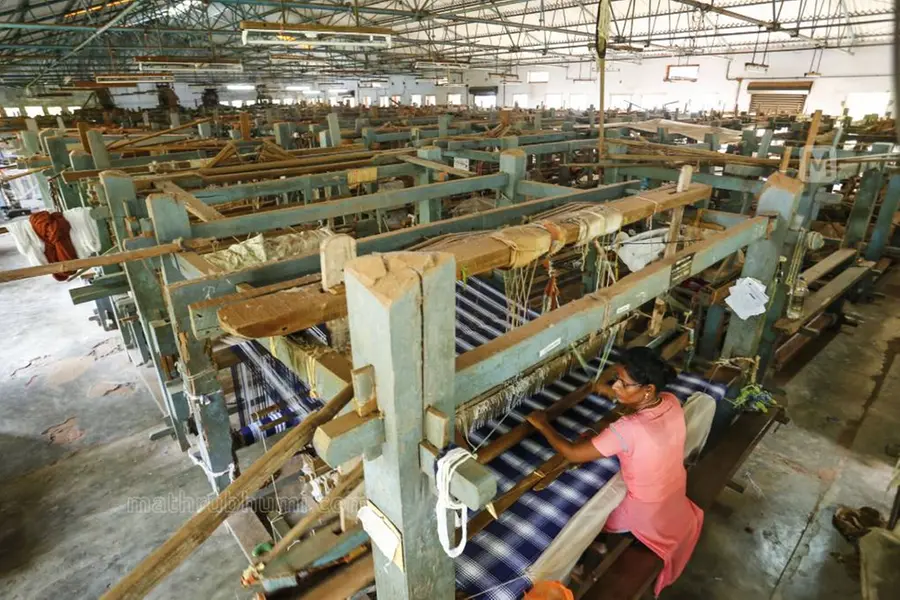
Vadakara: The weaving sector in the state is facing a dire situation, with dues amounting to crores of rupees owed to weaving workers and cooperative societies. The outstanding amount includes Rs 16 crore for handloom uniforms provided to school children. It also includes Rs 35 crore as production incentives from 2019, and Rs 25 crore owed to societies for cloth supply.
Due to a lack of working capital, several societies have been unable to pay wages for several months. Currently, approximately 18,000 people are employed in the weaving sector in the state.
Also Read

Uniforms ready, payment pending
The handloom school uniform project initially brought hope to the weaving sector, but the issue lies in delayed payment. Although the weaving of uniforms for the 2024-25 academic year is in progress, wages have not been paid since December-January, resulting in a five-and-a-half-month backlog.
Officially, the delay in receiving payments from the education department is attributed to the reason behind the outstanding dues. Since the government has not increased wages, societies have provided additional compensation.
Promising incentives, yet unreceived
The production incentive scheme, which offers double wages for each metre of additional cloth woven and the potential to earn up to Rs. 1000 per week, was designed to uplift weavers with low daily wages. However, these incentives have remained unpaid since 2019, amounting to Rs 35 crore across the state. Workers are now burdened with debt after taking loans and making various expenditures in anticipation of incentives.
While the budget allocated Rs 4 crore for production incentives, the increased demand caused by the school uniform scheme required an additional Rs 16 crore solely for incentives.
Societies struggle with debt
Out of the 760 registered weaving societies in the state, only around 400 are currently functioning. Hantex, the apex group, is expecting approximately Rs 25 crore for the cloth supplied. This situation has severely impacted the operations of societies, many of which lack working capital. Non-payment of employee benefits such as the Provident Fund (PF) and Employees' State Insurance (ESI) has also resulted in significant penalties, amounting to lakhs of rupees.
Published: 17 Jun 2023, 09:33 am IST
Related Topics
Disclaimer: Kindly avoid objectionable, derogatory, unlawful and lewd comments, while responding to reports. Such comments are punishable under cyber laws. Please keep away from personal attacks. The opinions expressed here are the personal opinions of readers and not that of Mathrubhumi.