
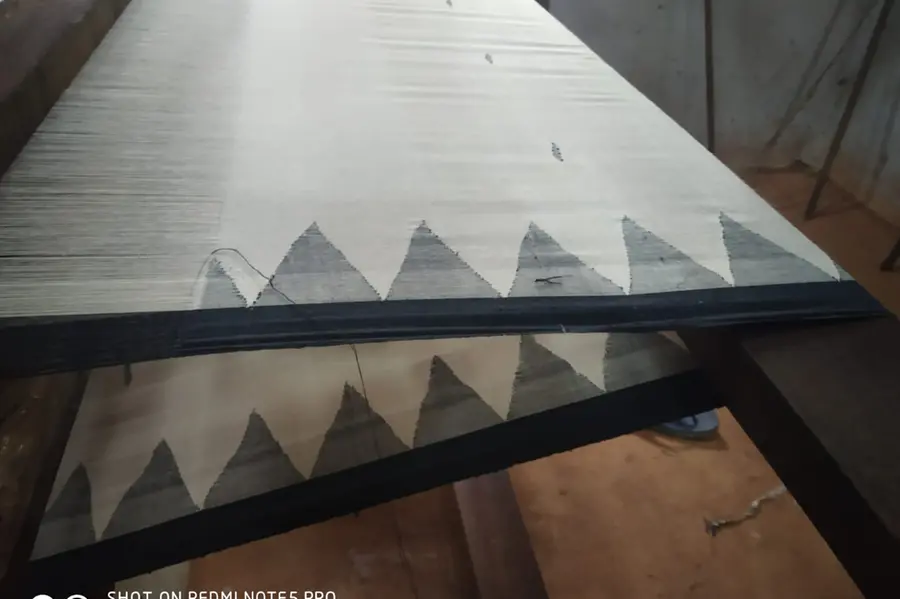
After a hiatus of four and half years, Kerala's prestigious Kuppadam khadi saree was weaved again in its only production home, Chemanchery Khadi centre, near Kozhikode. As a result of the diminishing demand due to lack of publicity and accumulating loss, Kozhikode Sarvodaya Sangam, the parent society, was forced to stop production.
However, the management decided to restart production in the wake of few orders and weavers came forward excitedly.
Although many units of the Sarvodaya sangam in Kerala produce Kuppadam khadi Dhotis (mundu), the centre is also known for another prestigious product, the Kudappam khadi sarees. Chemanchery is the only weaving centre in India where Kuppadam sarees are woven. Currently there are only six weavers who know the technique of weaving Kuppadam sarees.
After the saree production was stopped in May 2018, the weavers had to join the dhoti weaving team. Now, the unit restarted saree production at a slow pace using a single loom and hopes to weave more pieces in line with rising demand. Weavers Kunnath Meethal Kamala and K Bindu are in action again with a new ray of hope and excitement.
The speciality of Kuppadam saree is its hand woven border and super fine cotton fabric. In the 'chemanchery' style of Kuppadam technique, both the sides of a border get beautifully embroidered, thereby enabling you to wear the saree on either of its sides. Gorgeously woven pallus and cotton fabric woven out of high quality yarns (100th number for warp, and 80th number for weft) enhances its value too.

To make a saree, two weavers have to sit together and weave. Nowhere else in India can one find such a method of saree weaving. It is interesting to see the shuttling of the wooden shuttle, while weaving the weft on the warp, which is fixed on the wooden loom. Two weavers have to spend roughly six working days to finish a piece. Due to time taken to weave coupled with high material quality, the fabric’s market price is relatively high and costs around Rs 6,048. However, there is a 20 per cent rebate from the state government throughout the year, with an extra 10 per cent during festival seasons.
“Lots of enquiries were coming from different parts of Kerala, that's why we restarted the production,” said P Viswan, secretary at Kozhikode Sarvodaya Sangam.
“Right now, we are weaving 15 sarees from a warp. After finishing it, more sarees will be produced according to the demand,” said Anjali Vasudev, manager of Chemanchery Khadi production centre.
Kuppadam saree weaving started decades ago, stopped production for 10 years and started again in 2012, says P Hareesh Babu, former unit manager of the centre.
“Earlier, officials in top positions and politicians used to buy the sarees because of its fine cotton fabric, natural hue and classic looks. Gradually, the demand came down and the stock got piled up forcing the management to stop production,” he added.
“Once BJP leader Sobha Surendran purchased 10 sarees and introduced them to Delhi leaders and high officials. It was a great support to the unit,” Hareesh said.
Lack of publicity kills the industry
Lack of publicity is the main reason for the diminishing demand of khadi products. As the quality and market price of the product is relatively high, a more practical action plan is required. In addition, a Geographical Index tag may help the coveted khadi product to survive and become more popular.
Published: 22 Nov 2022, 10:42 am IST
Related Topics
Disclaimer: Kindly avoid objectionable, derogatory, unlawful and lewd comments, while responding to reports. Such comments are punishable under cyber laws. Please keep away from personal attacks. The opinions expressed here are the personal opinions of readers and not that of Mathrubhumi.