
IMF warns the West Asia conflict could drive global inflation and slower growth, disrupting energy supplies, trade routes and financial markets worldwide.
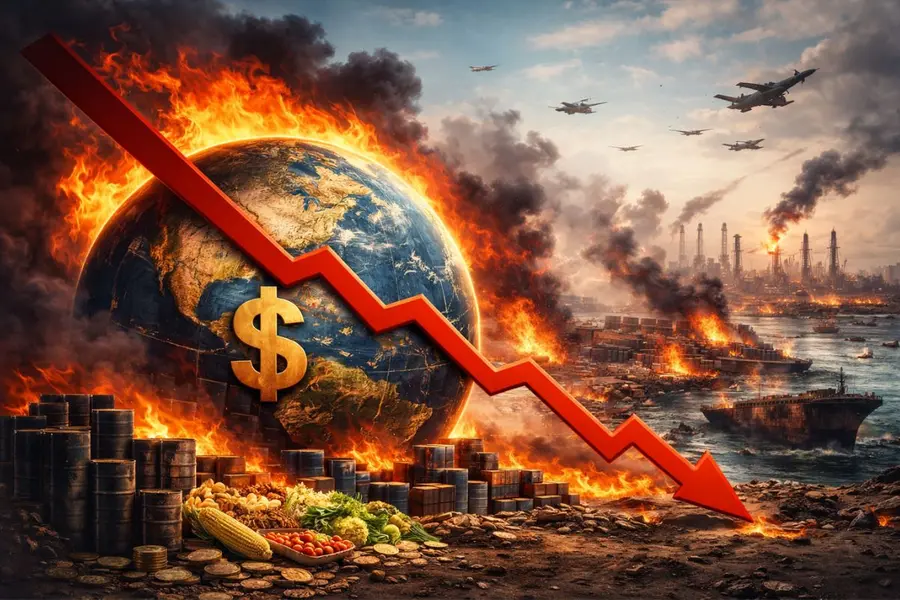
New Delhi: The International Monetary Fund has warned that the ongoing West Asia conflict involving the US, Israel and Iran could significantly impact the global economy, triggering higher inflation, slower growth and financial instability.
In its latest analysis, the IMF said the Middle East war impact on global markets is already disrupting livelihoods and weakening economic recovery prospects across regions.
Global economy faces inflation and growth slowdown
“The shock is global, yet asymmetric,” the IMF noted, highlighting that energy-importing economies and low-income countries are most vulnerable. Nations with limited fiscal buffers are likely to face higher inflation, rising import bills and economic stress.
The report stressed that global inflation risks are increasing as energy and food prices surge, particularly affecting countries dependent on imports.
Energy supply disruptions and oil price risks
A major concern is the disruption to energy flows through the Strait of Hormuz, through which nearly 25–30% of global oil and 20% of liquefied natural gas (LNG) supplies pass. Any prolonged disruption could lead to sharp spikes in oil prices and global fuel costs.
The IMF warned that:
- A short conflict may cause sudden spikes in oil and gas prices
- A prolonged war could sustain high energy costs, worsening inflation globally
Impact on Asia, Europe and emerging economies
In Asia’s manufacturing economies, rising fuel and electricity costs are increasing production expenses and reducing consumer purchasing power. Several countries are also facing currency pressure and balance-of-payments challenges.
In Europe, the crisis is reviving concerns similar to the 2021–22 gas crisis, particularly in countries like the UK and Italy, which rely heavily on gas imports. Meanwhile, nations such as France and Spain are relatively insulated due to stronger nuclear and renewable energy capacity.
Supply chain disruptions and trade impact
The IMF also flagged global supply chain disruptions, with shipping routes being altered due to security concerns. This has led to:
- Higher freight and insurance costs
- Delays in delivery timelines
- Disruptions in global trade and logistics
Air traffic interruptions around Gulf hubs are further affecting tourism and international travel, adding pressure on the global economy.
Critical materials and industrial supply risks
The conflict is impacting key global commodities:
- The Gulf region supplies a significant share of helium, essential for semiconductors and medical imaging
- Indonesia, a major nickel producer, could face shortages of sulphur needed for processing electric vehicle battery materials
These disruptions may slow production across industries, including technology and clean energy sectors.
Emerging Markets, Africa Face Economic Strain
Countries in Africa, Asia-Pacific and Latin America are grappling with rising food and fertiliser costs, tighter financial conditions and reduced external support. The IMF warned that food insecurity risks are rising, especially in low-income nations.
Eastern African economies dependent on Gulf trade and remittances are also seeing weaker demand, logistical bottlenecks and declining inflows.
Financial markets volatility increases
The conflict has unsettled global financial markets, with:
- Declines in stock markets
- Rising bond yields
- Increased market volatility
Although the sell-off remains contained compared to past crises, the IMF said global financial conditions have tightened, adding pressure on emerging markets.
Policy response and IMF support
The IMF urged governments to adopt country-specific economic policies to manage the crisis, particularly for nations with limited reserves and fiscal space.
Kristalina Georgieva reiterated the need for coordinated global support, stating that more countries are now seeking assistance amid growing uncertainty.
IANS
Published: 31 Mar 2026, 11:36 am IST
Related Topics
Disclaimer: Kindly avoid objectionable, derogatory, unlawful and lewd comments, while responding to reports. Such comments are punishable under cyber laws. Please keep away from personal attacks. The opinions expressed here are the personal opinions of readers and not that of Mathrubhumi.
