
Efforts are underway to trace the original Vazhappally Shasanam, a centuries-old copper plate inscription linked to the Chera dynasty and medieval Kerala history.
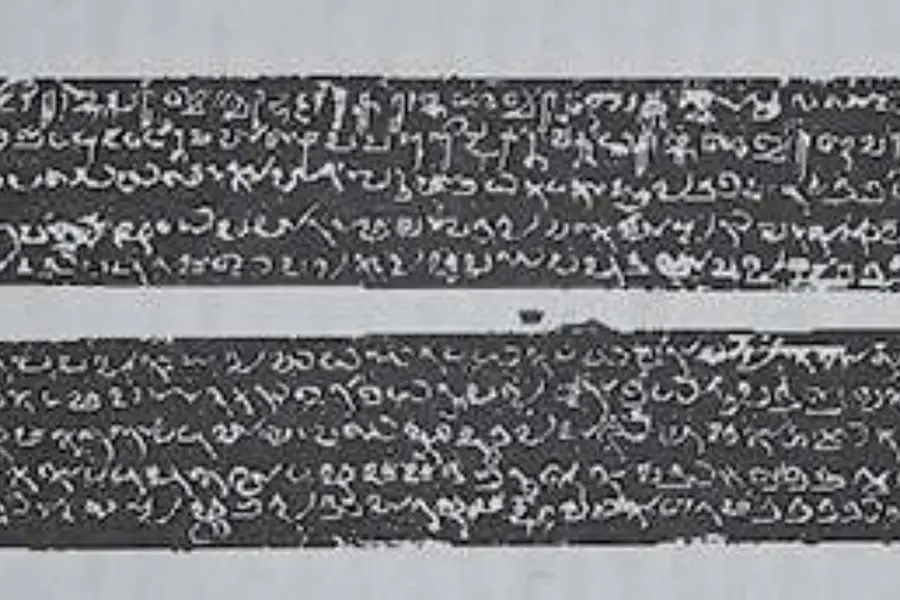
Changanassery(Kerala): Members of the administrative committee of Vazhappally Mahadeva Temple have begun efforts to trace the original 'Vazhappally Shasanam', a centuries-old copper plate inscription believed to be a key historical document from medieval Kerala.
The Vazhapally copper plate inscription was originally discovered at Thalavana Mutt, located in front of the Vazhapally temple premises. At present, only a copy of the inscription is available.
The discovery was made by T A Gopinatha Rao, who served as the head of the Travancore Archaeology Department between 1902 and 1917, along with scholar V Srinivasa Sastri. The inscription is written in Pallava script (or Pallava Grantha) and Vatteluttu script, scripts commonly used in South India during the early medieval period.
Also Read| Kerala's lost star Vasantha Kumari - The girl who touched an Asian Record
Historians say the inscription has played an important role in the study of the Chera Dynasty, which ruled parts of Kerala between AD 800 and 1122. Details about the copper plate were also published in the Travancore Archaeological Series in 1920, further highlighting its historical significance.
According to Dr G Gopikrishnan, head of the history department at NSS Hindu College, historians have identified that the inscription dates back to the reign of Rama Rajasekhara Deva, who ruled from Mahodayapuram until AD 844.
Historical records suggest that the inscription documents a decision taken around AD 830 during a gathering held at the Vazhappally temple premises. Local chieftains, community leaders known as Pathillathil Pottis, and the king are believed to have assembled to discuss temple rituals, particularly the Muttaabali (Pujas) offerings at the Thiruvatta temple.
Also Read| Vazhachal fauna census: 26 new species documented in Western Ghats
Unlike many traditional inscriptions that begin with the phrase “Swasti Sri”, meaning “may there be prosperity”, the Vazhappally inscription begins with “Namah Shivaya”, invoking Lord Shiva in praise of Thiruvazhappallyappan, the presiding deity of the temple.
The document also records penalties for violating temple practices. Anyone who disrupted the Muttaabali rituals at the Thiruvatta Mahadeva temple was required to pay a fine of 100 Roman dinars, according to the inscription. Those who obstructed temple duties were also required to pay a penalty of four nazhi (a traditional, small cylindrical vessel used in Kerala and Tamil Nadu to measure volume, specifically for rice or grains) of rice.
These inscriptions offer valuable insight into medieval Kerala’s social, religious and administrative systems. In earlier times, inscriptions engraved on stone or copper plates functioned much like modern government orders or official decrees.
The department that originally discovered the Vazhappally inscription was the Travancore Archaeology Department, which later became the Travancore-Cochin Archaeology Department and eventually evolved into the Kerala Archaeology Department. The original copper plate inscription may have been misplaced at some point during these institutional transitions.
Published: 11 Mar 2026, 03:59 pm IST
Related Topics
Disclaimer: Kindly avoid objectionable, derogatory, unlawful and lewd comments, while responding to reports. Such comments are punishable under cyber laws. Please keep away from personal attacks. The opinions expressed here are the personal opinions of readers and not that of Mathrubhumi.
