
Kerala’s drug crisis has morphed from street-level ganja to a sophisticated web of heroin couriers, migrant mules and five-star MDMA parties, as coastal smuggling, railway “dead drops” and elite club networks turn the state into both a narcotics gateway and a booming consumer market.
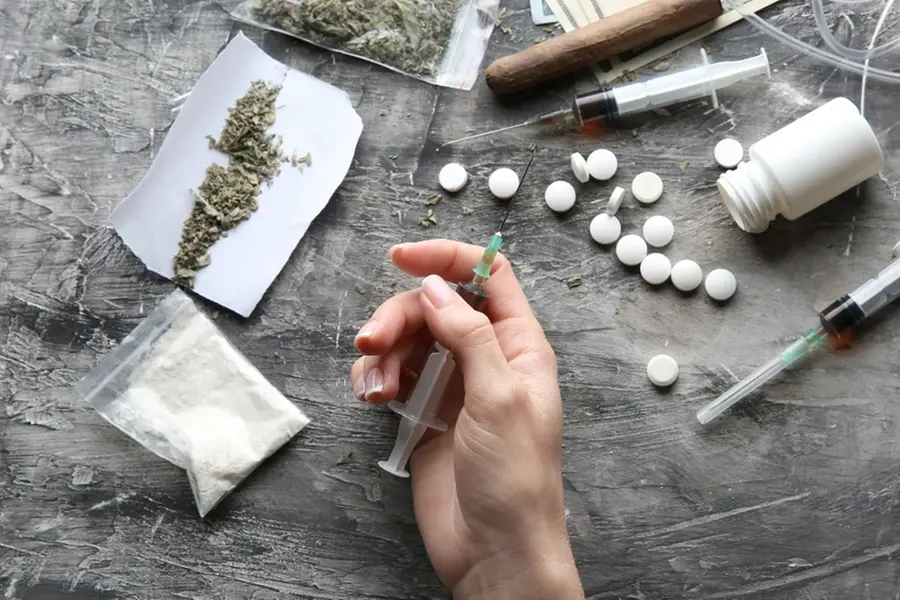
Kerala is grappling with a fast-evolving narcotics crisis as the state transforms into both a key transit hub and a booming consumer market for high-end synthetic drugs, with migrant workers, luxury hotel parties and inter-state cartels at the heart of the network, investigations by police and central agencies suggest.
Officials say the state's sprawling 590-km coastline, long exploited by traffickers operating from the Golden Crescent -- encompassing Afghanistan, Pakistan and Iran, known for opium and heroin -- and the Golden Triangle -- Myanmar, Laos and Thailand -- regions, is now only one part of a more complex supply chain that increasingly relies on overland routes, migrant carriers and discreet urban distribution channels.
Also Read: ‘Rape academies’ exposed! Hidden online groups are training men to drug and assault women
"When it comes to Kerala and narcotics, there is a problem of plenty," an Intelligence Bureau officer said, noting that both supply and demand have surged in recent years.
From Ganja to Heroin, MDMA and Ecstasy
Police say they are seeing a clear shift in consumption patterns. The demand for marijuana (ganja), once the dominant product in local seizures, has dropped sharply, replaced by heroin and high-end synthetic substances like MDMA and ecstasy that are easier to conceal and command higher margins.
One senior official pointed out that heroin's odourless, compact form makes it less detectable than ganja, encouraging traffickers to push users toward harder substances.
This trend has been particularly visible in Kochi and other urban centres, where a series of recent operations has revealed the scale of synthetic drug circulation.
In April, the Kochi City Police's District Anti-Narcotics Special Action Force (DANSAF) arrested 42-year-old Kevin B Mathew in Thrikkakara and seized 183.55 grams of MDMA and 93.51 grams of ecstasy pills from his possession, an unusually large haul for party drugs in the state. Investigators later linked him to a "white-collar" party at a luxury hotel in Kadavanthra, attended by doctors, advocates and businessmen.
Migrant workers as frontline carriers
Beyond urban party circuits, agencies are increasingly alarmed by the role of migrant workers as drug couriers. According to officials, the same middlemen who bring workers from states like Assam and other Northeastern regions into Kerala are now pressuring them to act as mules.
Also Read: Salim Dola's arrest in Turkey delivers major blow to Dawood Ibrahim syndicate
"They are lured with money, and if they refuse, they are threatened with being sent back home or losing their jobs," an officer said.
In the past 18 months alone, nearly 103 migrant workers have been booked in drug cases, most frequently in connection with heroin consignments intercepted at railway stations shortly after their arrival in the state. Investigators say that in many instances, the narcotics are not just transiting through Kerala from coastal or aerial routes but are being brought in directly from the workers' home states and redistributed locally.
A common modus operandi involves "dead drops" at railway stations: couriers leave bags containing heroin at predetermined spots instead of carrying them on their person, then call local contacts who retrieve the packages. This layered approach makes it harder to link end consumers or local distributors back to the original carriers.
Star hotels and ‘private’ parties under lens
At the other end of the spectrum, Kerala Police are probing a network of high-profile individuals suspected of sourcing and distributing MDMA, cocaine and ecstasy through invitation-only parties at upscale venues. These events, often hosted at luxury hotels and booked under the guise of private celebrations, effectively function as narcotics networking hubs, officers say.
Also Read: Pakistan-linked Golden Crescent drug surge prompts Indian crackdown
The March 28 raid at a five-star property in Kadavanthra, Kochi, was a turning point. Acting on a tip-off, city police arrested eight people, including professionals, and seized hybrid cannabis, cocaine, methamphetamine and ecstasy pills from the group.
Subsequent inquiries suggested that this was not an isolated gathering but part of a recurring pattern of elite parties where synthetic drugs are in heavy demand.
"The role of such venues in facilitating these events is under examination," one investigator said, adding that organisers often rotate locations and use closed circles of attendees to avoid detection.
With rising incomes and exposure to global nightlife trends, demand for party drugs among young professionals and affluent urban residents has become a major driver of the local market, police believe.
Inter-state and international cartels
Kerala's narcotics problem is also deeply embedded in wider inter-state and international networks. Investigations into recent seizures indicate that a significant portion of MDMA and methamphetamine entering Kochi originates from Bengaluru and other parts of Karnataka, while some heroin flows are linked to contacts in Delhi and the North.
From there, the state's ports and highways connect to larger trafficking routes that criss-cross South and Northeast India.
Security officials say cartels from both the Golden Crescent and the Golden Triangle now treat Kerala as a preferred destination and distribution launchpad. Once in the state, consignments are broken down and moved onward to Tamil Nadu, Andhra Pradesh, West Bengal and the Northeast, leveraging existing smuggling and migrant corridors.
Enforcement scramble amid rising demand
With multiple fronts to manage -- coastal surveillance, railway checks, migrant networks and elite party circuits -- agencies admit that enforcement is struggling to keep pace with the market’s expansion. "Demand has gone up a lot, and that inevitably attracts more suppliers from both inside and outside India," the Intelligence Bureau official said.
Kerala Police and central agencies say they are ramping up targeted operations, tightening monitoring of migrant labour inflows, increasing undercover presence in urban hotspots, and scrutinising high-end venues that repeatedly feature in narcotics cases.
But officials also concede that the state's combination of high literacy, disposable income, tourism appeal and extensive coastline makes it uniquely vulnerable.
For now, the picture that emerges is of a state caught in a widening drug web: from exploited migrant carriers and clandestine railway drops to five-star hotel parties and transnational cartels converging off its shores. As one senior officer put it, "Kerala is no longer just a stop on the route. It is a market, a gateway, and a playground -- all at once."
Published: 05 May 2026, 05:22 pm IST
Related Topics
Disclaimer: Kindly avoid objectionable, derogatory, unlawful and lewd comments, while responding to reports. Such comments are punishable under cyber laws. Please keep away from personal attacks. The opinions expressed here are the personal opinions of readers and not that of Mathrubhumi.
