
Intelligence and enforcement agencies warn that organised cartels are rerouting narcotics through Myanmar and Bangladesh into Kerala, exploiting the Malabar corridor’s connectivity and using micro‑consignments, influencers and female couriers to evade detection.
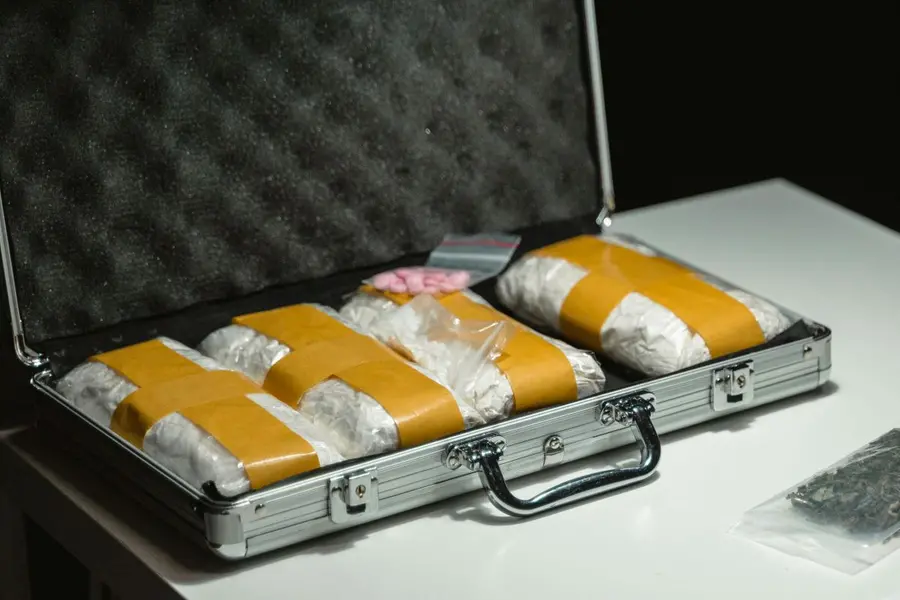
As New Delhi doubles down on an ambitious pledge to make India narcotics‑free by 2047, enforcement agencies warn that the country's drug-control challenge is shifting east and south -- with Kerala emerging as a new focal point in a sprawling transnational trade that now stretches from Myanmar to Malabar.
At the RN Kao Memorial Lecture on Friday, Union Home Minister Amit Shah reaffirmed the Narendra Modi government's deadline for a "Drug‑Free India by 2047", and said security agencies were intensifying action across states.
While traditional trafficking routes through the India‑Pakistan border remain tightly monitored, intelligence and law‑enforcement officials say organised crime networks are adapting fast -- and Kerala, long known for its high drug consumption rates, has become a preferred destination and transit hub for traffickers.
Also Read: India busts Rs 182 crore Captagon shipment headed to Middle East
"Cartels are chasing newer states," a senior official involved in anti‑narcotics operations told IANS.
"Punjab and Jammu & Kashmir saw established methods that agencies could counter. Kerala presents a different, evolving challenge — traffickers keep changing their modus operandi, and every major seizure seems to reveal a new method," the official said.
Shift in sourcing and routes
Officials describe a marked shift in supply chains. Where consignments once flowed from Afghanistan and Pakistan into India and were moved by road to Kerala, investigators now report a growing volume of heroin and synthetic drugs sourced via Myanmar.
According to intelligence assessments, Pakistani cartel networks have developed ties with counterparts in Myanmar; consignments are routed into India through Bangladesh and then moved by road to southern states, including Kerala.
Heightened security along the India‑Pakistan and northwestern borders — and stepped‑up interceptions in Punjab, Jammu & Kashmir and Rajasthan — have reportedly compounded pressure on old routes, prompting traffickers to diversify.
Also read: Inside Kerala's luxury drug culture and the dark economy powering it
"When one corridor closes, another opens," a customs official said. "We are now seeing new transnational partnerships and more complex, multi‑leg trafficking chains."
High margins keep heroin lucrative
Law‑enforcement sources say heroin and MDMA remain among the most frequently intercepted drugs destined for Kerala. Heroin's profitability is a major driver: officials estimate street margins that can convert a purchase price of roughly Rs 3,000 per gram into resale prices near Rs 12,000 per gram, with bulk wholesale values often quoted at Rs 25‑30 lakh per kilogram.
That profit calculus incentivises sophisticated concealment. Investigators have recovered heroin hidden inside everyday consumer items -- soap boxes, small bottles and other containers -- deliberately shipping small quantities per trip to reduce detection risk while maintaining frequent runs.
"They want to move a lot by sending a little often," an investigating officer said. "That makes misses more likely and hits harder to replicate into convictions."
Modus operandi exposed
The prevalence of micro‑consignments came to light after the arrest of three suspects from Assam in Angamaly, near Kochi, who were found with 600 grams of heroin concealed in more than 40 soap boxes. In separate high‑profile seizures across the Malabar belt, police and excise teams have intercepted large consignments of MDMA and arrested persons including social‑media influencers and repeat offenders, signalling traffickers’ use of unconventional couriers.
Also Read: Indian opioid tablets, addiction and the rise of West Africa's 'zombie drug' crisis
In one case, excise officials at Pantheerankavu toll plaza seized 3.5 kg of MDMA -- valued at about Rs 3 crore -- and arrested 20‑year‑old social media influencer Fathima Nasreen alongside a known offender, PK Shafeeq. In Kozhikode district, police recovered 11.83 kg of MDMA and small amounts of cannabis from an apartment near Malabar Medical College; two people, including one Sheetal Shivdas, were detained in that probe. Arrests in Kochi last year of individuals including a YouTuber for possession of MDMA underline the growing role of influencers as carriers, officials said.
Malabar corridor and interstate links
Intelligence Bureau officers say the Malabar coast -- and Kozhikode district in particular -- has become a strategic area for traffickers. Kozhikode's road links into Tamil Nadu, Karnataka and Andhra Pradesh, and its relative proximity to the Bengaluru‑Mysuru industrial and logistics corridor, make it attractive both as a destination market and as a node for onward distribution.
"The Malabar corridor affords connectivity that traffickers exploit," a senior IB official said. “From there, consignments can move quickly into neighboring states or be diverted to urban nodes where demand and prices are high.”
Changing choice of carriers
Investigators report evolving tactics in choice of couriers. There is a perceptible rise in the use of high‑profile and influential individuals to move consignments, alongside a preference for female couriers -- a calculated tactic traffickers believe will draw less scrutiny during checks.
"Using influencers and women as carriers exploits social stereotypes and trust,” the official said, adding, "It complicates risk profiling for checkpoints and surveillance."
Officials acknowledge successful raids and seizures, but they also stress operational limits. Small, well‑concealed consignments, frequent short runs, and changing routes have produced a notable number of 'misses' even where agencies have acted on intelligence.
"We have many hits, but the misses are quite large because of the methods used," one enforcement officer said.
State and central agencies, however, say they are adapting: stepped‑up coastal and interstate surveillance, enhanced coordination between customs, excise, narcotics bureaus and state police, and expanded intelligence sharing with neighbouring countries are among the measures being pursued.
Investigators are also intensifying scrutiny of logistics chains, e‑commerce packaging, and courier services that traffickers exploit.
Beyond enforcement, officials warn the trend has social and economic consequences. Synthetic drugs such as MDMA have reportedly overtaken marijuana in demand in parts of Kerala, compounding public‑health concerns. The use of social media and influencer networks to normalise or facilitate distribution raises questions about regulation and awareness‑building among young people.
Analysts say policy responses must combine criminal enforcement with preventive health measures, demand‑reduction programmes and community engagement. "Arrests alone won't break supply and demand," said a researcher on drug policy. "You need harm‑reduction, rehabilitation, and targeted community outreach alongside interdiction."
Published: 16 May 2026, 05:13 pm IST
Related Topics
Disclaimer: Kindly avoid objectionable, derogatory, unlawful and lewd comments, while responding to reports. Such comments are punishable under cyber laws. Please keep away from personal attacks. The opinions expressed here are the personal opinions of readers and not that of Mathrubhumi.
