
Explore Kishanganj and Bihar`s Seemanchal region`s political landscape. Understand the influence of Muslim voters, AIMIM, and the past elections.
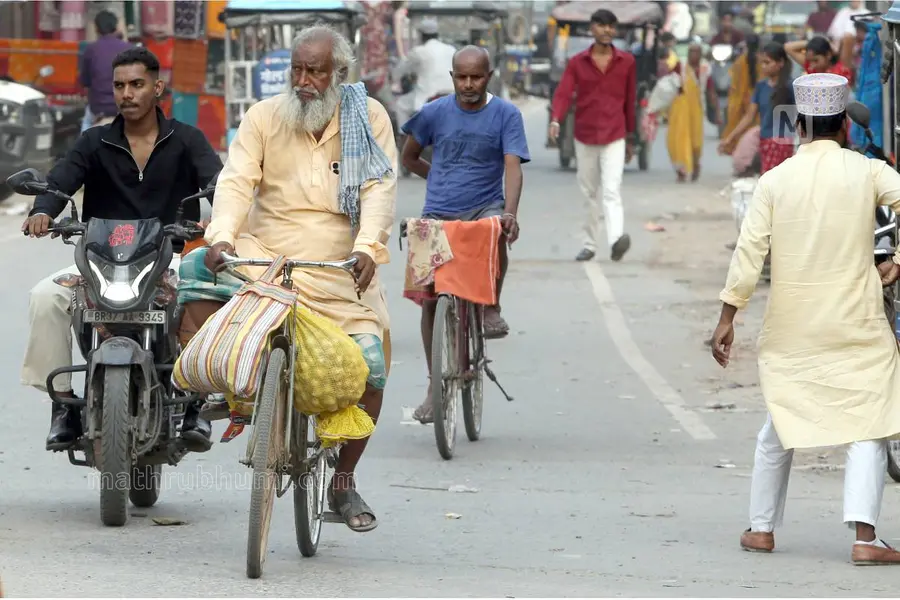
Kishanganj, the heart of Bihar’s north-eastern Seemanchal region, lies an eight-hour drive from Patna along National Highway 31.
The journey, which passes through Muzaffarpur, Samastipur, and Darbhanga, takes one through lush paddy fields that stretch endlessly on both sides. The vast plains of north Bihar meet the Bengal border here, where preparations for the traditional Chhath Puja fill every small town and crossroads.
Seemanchal, which officially forms part of the Purnia division, comprises seven districts — Araria, Madhepura, Saharsa, Purnia, Kishanganj, Katihar, and Khagaria. The demand to create a separate Seemanchal state emerged in the 1990s under RJD leader Mohammed Taslimuddin, who represented Kishanganj three times in Parliament. Though the movement lost steam, the region has continued to play a decisive role in Bihar’s politics.
The rural pulse that decides Bihar’s politics
In Bihar, where nearly 90% of the population lives in villages, rural voters determine the course of the state’s politics. The regions of Mithilanchal and Seemanchal, in particular, have historically influenced electoral outcomes. These are among the most underdeveloped parts of the state, with Mithilanchal dominated by upper castes, Muslims, and Dalits, while Seemanchal has a Muslim majority — 68% in Kishanganj, 43% in Katihar, 42% in Araria, and 38% in Purnia.
According to the 2022 caste survey, Muslims make up 17.7% of Bihar’s population, with significant influence in about 70 Assembly constituencies. In Seemanchal alone, Muslims play a decisive role in at least 24 constituencies.
In 2020, the All India Majlis-e-Ittehadul Muslimeen (AIMIM), led by Asaduddin Owaisi, entered Bihar’s political landscape, splitting the Muslim vote that traditionally went to the RJD-led Mahagathbandhan (Grand Alliance). The AIMIM won five out of 20 seats it contested, most of them in Seemanchal, helping the NDA secure a majority by dividing opposition votes.
While AIMIM’s gains shocked the political establishment, four of its five MLAs later defected to the RJD, a setback that damaged the party’s credibility. Nevertheless, Owaisi’s assertive identity-based politics struck a chord with a section of Muslim youth, particularly in Kishanganj and Araria.
Although AIMIM has seen growing acceptance among sections of the Muslim community, opinions remain divided on its role and impact. One view is that the party acts as a vote-cutter, splitting Muslim votes and indirectly helping the BJP-led NDA. Others, however, argue that Asaduddin Owaisi’s efforts to assert Muslim identity and political consciousness are essential.
This time too, the Majlis Party is contesting in Bihar. Owaisi reportedly sought an alliance with the Mahagathbandhan, but RJD leader Tejashwi Yadav refused. Subsequently, Owaisi joined hands with Chandrashekhar Azad’s Azad Samaj Party (ASP) and Swami Prasad Maurya’s Apni Janta Party to form the Grand Democratic Alliance, contesting around 100 seats. The key question in the Seemanchal region is whether Owaisi will once again play the role of a vote-divider.
Political observers in Kishanganj point to three main arguments. The first is that AIMIM lacks the credibility and momentum it had in 2020, when Owaisi successfully mobilised young Muslims through identity-based politics. However, the defection of four of AIMIM’s MLAs to the RJD soon after the last election damaged its credibility. The second argument is that any votes AIMIM secures this time will mainly weaken the JD(U) and, consequently, benefit the BJP.
The third factor shaping this election is generational change among Muslim voters. Issues such as education, employment, development, and identity now resonate differently with the youth. This shift affects not just AIMIM but all parties, including Prashant Kishor’s Jan Suraaj Party, which has also set its sights on Muslim voters.
Kishor’s “40-20 formula” — 40% Hindus and 20% Muslims — is reflected in his decision to field 40 Muslim candidates. His campaign has attracted a section of educated voters, though there’s still a perception that voting for Jan Suraaj, like AIMIM, may indirectly help the NDA.
Meanwhile, the NDA alliance has fielded only five Muslim candidates — four from JD(U) and one from Chirag Paswan’s party, with none from the BJP. The BJP continues to focus on consolidating Hindu votes, while its allies have also reduced Muslim representation. In 2020, JD(U) fielded 11 Muslim candidates, none of whom won; this time, the number has dropped to four. The JD(U)’s past support for the Waqf Bill and the Citizenship Amendment Act (CAA) has also created resentment among Muslim voters.
Despite the complex history and current political equations, the political mood in Bihar’s Seemanchal region remains quietly introspective. Issues such as the voter list revision and infiltration, once prominent in campaign rhetoric, have largely faded. Instead, local concerns like caste-religion dynamics, development stagnation, and regional inequalities are shaping the narrative.
Key constituencies with significant Muslim voter influence:
- Kishanganj district: Thakurganj, Bahadurganj, Kochadhaman, Kishanganj
- Araria district: Araria, Forbesganj, Raniganj, Jokihat, Sikti, Narpatganj
- Katihar district: Katihar, Balrampur, Kadwa, Pranpur, Korha, Manihari, Barari, Kodha
- Purnea district: Purnea, Baisi, Banmankhi, Amour, Rupouli
Published: 28 Oct 2025, 11:17 am IST
Disclaimer: Kindly avoid objectionable, derogatory, unlawful and lewd comments, while responding to reports. Such comments are punishable under cyber laws. Please keep away from personal attacks. The opinions expressed here are the personal opinions of readers and not that of Mathrubhumi.
