
An in-depth election analysis of Bhabanipur shows a tight contest between Mamata Banerjee and Suvendu Adhikari, shaped by voter demographics, recent trends and political rivalry.
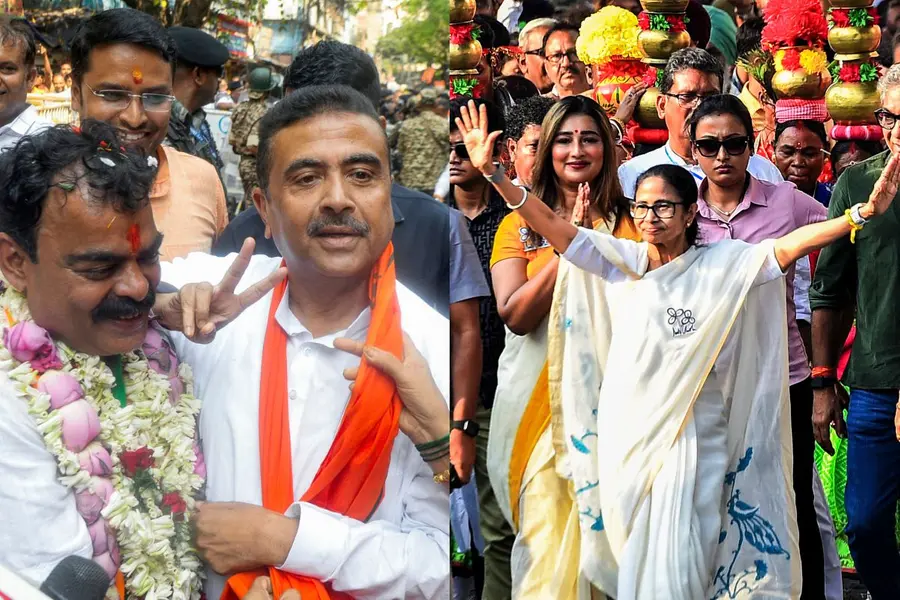
The Bhabanipur Assembly constituency has emerged as the focal point of the West Bengal election 2026, with Chief Minister Mamata Banerjee facing her most direct and high-stakes challenge from BJP leader Suvendu Adhikari.
Rather than just a political contest, Bhabanipur represents a layered electoral battle shaped by demographics, recent voting patterns, and strategic positioning by both parties.
Also Read

The BJP’s decision to field Adhikari in Bhabanipur, a seat long associated with Banerjee, is a calculated move. Backed by Union Home Minister Amit Shah, the strategy aims to directly confront the Chief Minister in her stronghold while symbolically elevating the contest to a state-defining clash.
This is also a continuation of a political rivalry that has evolved sharply over the years. Once allies during the Nandigram movement of 2007, Banerjee and Adhikari are now central figures in Bengal’s most intense political duel.
The deciding factors: Community equations, voter shifts and political rivalry
Bhabanipur’s electoral outcome depends heavily on its voter composition. With nearly 76% Hindu voters, divided between Bengali-speaking and non-Bengali-speaking groups, and around 24% minority voters, the constituency reflects a delicate balance.
The Trinamool Congress has traditionally benefited from strong minority consolidation and support among Bengali-speaking Hindus. However, the BJP’s steady rise among non-Bengali voters and its growing urban footprint have altered the equation.
Since 2014, the BJP has consistently expanded its presence across several Kolkata Municipal Corporation wards in Bhabanipur.
The 2024 Lok Sabha election results further indicated this shift, with the Trinamool trailing in multiple wards despite retaining the larger parliamentary seat.
Another critical factor is the Special Intensive Revision (SIR) of electoral rolls. The deletion of over 47,000 voters, along with more than 14,000 under adjudication, could impact traditional voting patterns, particularly in areas that have historically supported the Trinamool Congress.
For the BJP, Bhabanipur is not just a constituency but a symbolic gateway to its broader “Parivartan” push in Bengal. For Banerjee, retaining the seat is equally crucial to reaffirm political dominance in her home turf.
What the analysis suggests
While Mamata Banerjee continues to hold an advantage due to incumbency, personal connect, and a consolidated support base, Suvendu Adhikari’s aggressive challenge, combined with shifting urban trends, has made the contest significantly tighter.
Based on current ground indicators and past voting patterns, Mamata Banerjee appears to have a narrow edge, but the margin is expected to be slim.
At a glance:
Constituency: Bhabanipur (South Kolkata)
Candidates:
- TMC: Mamata Banerjee
- BJP: Suvendu Adhikari
- Congress: Pradip Prasad
- ISF: Sheikh Muzafakkar Ali
Trend: Tight contest; BJP likely to gain in urban pockets, TMC expected to retain core base
Published: 10 Apr 2026, 07:03 am IST
Disclaimer: Kindly avoid objectionable, derogatory, unlawful and lewd comments, while responding to reports. Such comments are punishable under cyber laws. Please keep away from personal attacks. The opinions expressed here are the personal opinions of readers and not that of Mathrubhumi.