
Against the backdrop of the political turmoil and sustained protests over alleged paper leaks, the Centre is set to introduce the Public Examinations (Prevention of Unfair Means) Amendment Bill, 2026 in the Lok Sabha on Monday.
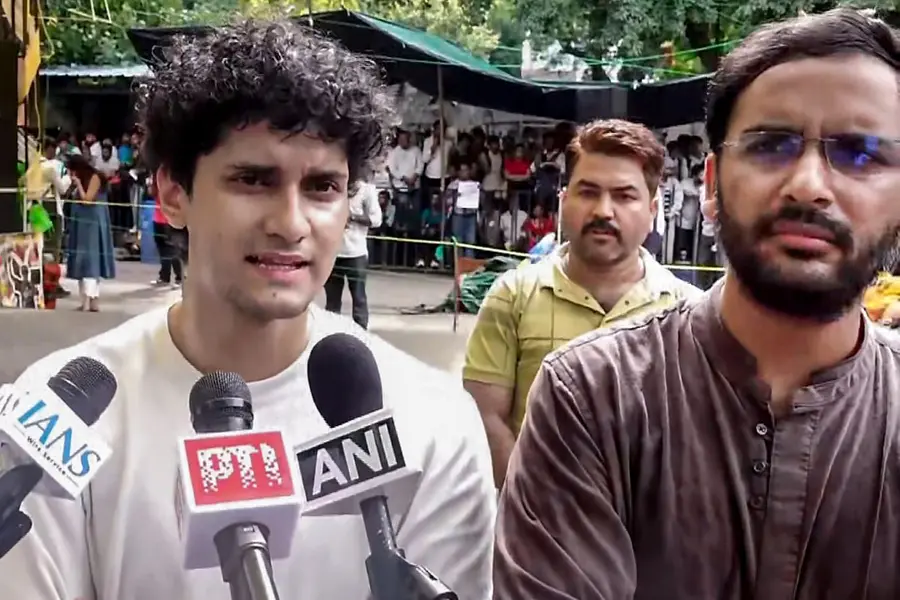
As the Centre prepares to introduce the Public Examinations (Prevention of Unfair Means) Amendment Bill, 2026 in Parliament following the NEET-UG 2026 controversy, leaders of the Cockroach Janata Party (CJP), which spearheaded weeks of protests, say their immediate priority is not electoral politics but building a grassroots movement for students and young people.
The remarks come after the 37-day agitation at Delhi's Jantar Mantar, led by CJP alongside activist Sonam Wangchuk, culminated in the resignation of Union Education Minister Dharmendra Pradhan and negotiations with senior Union ministers. While the protests have fuelled speculation over CJP's political future, the outfit's founder and spokespersons insist they are focused on expanding the movement rather than becoming another political party. They also rejected what they described as attempts to brand protesters as "anti-nationals" or "viruses".
Also Read

Founder cautions against personality cult
CJP founder Abhijeet Dipke urged supporters not to turn the movement into a personality-driven campaign, warning against a culture centred on individual leaders despite what he described as a political victory.
Speaking to NDTV, CJP spokesperson Saurav Das said the organisation's immediate agenda is to take the movement to the grassroots instead of entering full-time politics.
"Right now our focus is very clear that this movement has to go to the grassroots because there are 750-800 political parties already. None of them are able to fulfil the wishes of the youth. And we want to take this movement to the grassroots so that be it any political party or political leader in power, they will be able to work for the youth and fulfil their demands. That is our agenda right now," Das said.
'We were professionals, not seasoned protesters'
CJP spokesperson Ashutosh Ranka said the core members had no prior background in political activism and had left their professional careers to join the movement.
"We are all educated people. We are not seasoned protesters. All of us have been working professionally. We had nothing to do with politics or these issues. Dipke was studying in Boston. He would have probably started looking out for jobs after this," Ranka told NDTV.
Responding to remarks in Dharmendra Pradhan's resignation letter suggesting that some people had tried to exploit the agitation, Ranka said he hoped the government would stop portraying the protesters as enemies of the nation.
"I mean, I don't want to get into the nitty-gritties of it, but I hope he still doesn't want to call us anti-nationals or viruses, which exactly was being called to us for quite some time. At the end of the day, I think justice has been served," he said.
Amendment Bill heads to Parliament
Against the backdrop of the political turmoil and sustained protests over alleged paper leaks, the Centre is set to introduce the Public Examinations (Prevention of Unfair Means) Amendment Bill, 2026 in the Lok Sabha on Monday.
Union Minister of State for Personnel, Public Grievances and Pensions Dr Jitendra Singh will seek leave to introduce the Bill, which proposes seven amendments to the 2024 law aimed at strengthening enforcement and speeding up investigations and trials in examination-related offences.
The proposed changes empower states and Union Territories to designate Courts of Session as Special Fast Track Courts exclusively for cases under the Act. Trials would be conducted on a day-to-day basis and completed within three months of filing the chargesheet, while investigations must be finished within two months.
The Bill also allows the Centre to establish a Special Task Force to investigate high-stakes or inter-state examination fraud, authorises states to appoint specialised prosecutors, and proposes stricter prison terms and higher financial penalties for organised paper leaks involving individuals, coaching centres and service providers.
The legislation follows a Monsoon session that has seen repeated disruptions since it began on July 20, with opposition parties and student groups continuing to press the Centre over the handling of the NEET-UG 2026 examination. The CJP has since withdrawn its sit-in at Jantar Mantar, saying it did so "in good faith" after reaching an understanding with the government. Parliament's handling of the amendment Bill is now expected to be closely watched.
Published: 26 Jul 2026, 07:04 am IST
Related Topics
Disclaimer: Kindly avoid objectionable, derogatory, unlawful and lewd comments, while responding to reports. Such comments are punishable under cyber laws. Please keep away from personal attacks. The opinions expressed here are the personal opinions of readers and not that of Mathrubhumi.