
West Bengal's proposed name change to Paschim Banga has revived a decades-old debate over the state's identity, the Partition of Bengal and the politics behind earlier attempts to rename it.
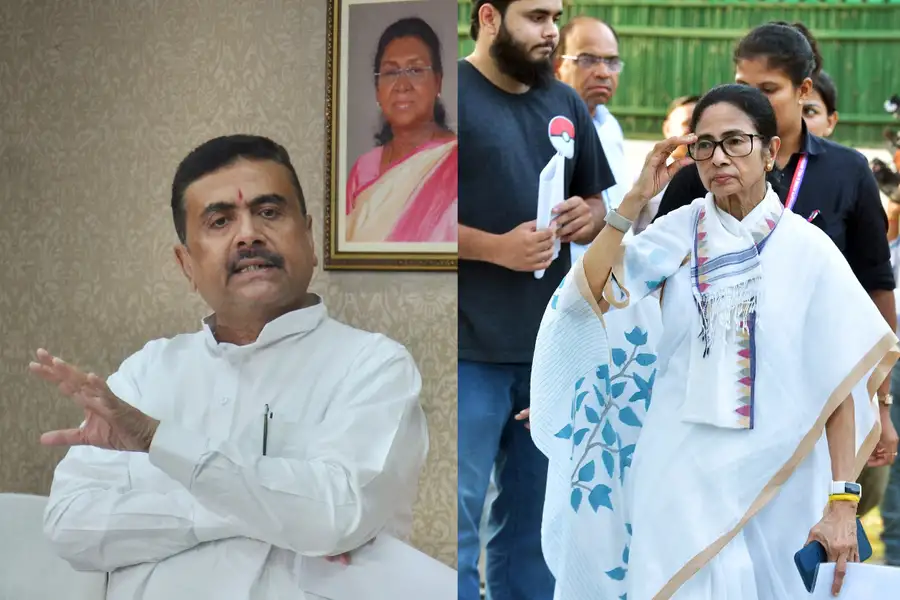
West Bengal could soon have a new official name, with Chief Minister Suvendu Adhikari announcing that the state Cabinet has approved a proposal to rename it ‘Paschim Banga’ in English as well as Bengali.
The resolution is scheduled to be introduced in the Assembly on December 9. But the proposal is about more than changing a name: it has reopened a long-running debate over Bengal's Partition, cultural identity, political history and the process of renaming Indian states.
Why ‘Paschim Banga’ instead of ‘Bangla’?
The latest proposal marks a departure from the previous Trinamool Congress government's attempt to rename the state ‘Bangla’.
Under Mamata Banerjee, the state Assembly considered different names in 2016, including ‘Bangla’ in Bengali, ‘Bengal’ in English and ‘Bangal’ in Hindi. In July 2018, the Assembly passed a resolution proposing ‘Bangla’ as the name across languages. However, the proposal did not receive approval from the Union government.
One of the reasons behind the earlier demand was administrative visibility. Since the English name ‘West Bengal’ begins with W, the state often appeared towards the end of alphabetical lists at national meetings. A name beginning with B was expected to improve its position in such listings.
The latest proposal takes a different approach. Instead of adopting ‘Bangla’, the BJP-led state government wants to use ‘Paschim Banga’ in English as well as Bengali.
Chief Minister Adhikari has linked the choice to the state's historical formation during the 1947 Partition. His position is that retaining the word ‘Paschim’, meaning ‘West’, acknowledges the division of undivided Bengal and the circumstances in which West Bengal became part of India. The government has also invoked the role of Syama Prasad Mookerjee in advocating the creation of a separate state for Bengali Hindus.
What does the 1947 Partition have to do with the name?
The debate over ‘Paschim Banga’ is also connected to the history of Bengal's Partition.
On June 20, 1947, the Bengal Legislative Assembly voted on the proposal to divide the province. Legislators representing the western part voted in favour of Partition, while the political process eventually led to the creation of West Bengal within India and East Bengal becoming part of Pakistan. East Bengal later became Bangladesh in 1971.
The BJP's position places particular emphasis on Syama Prasad Mookerjee's role in advocating the division of Bengal and the creation of a separate province for Bengali Hindus.
However, the historical interpretation remains politically contested. While the BJP presents the Partition vote as an important moment in the formation of West Bengal, other political groups and historians emphasise the displacement, violence and human suffering associated with the division.
The disagreement reflects two different approaches to the state's identity: one rooted in the political circumstances of its creation and the other emphasising its shared Bengali language and cultural heritage.
Why has changing West Bengal's name been difficult?
The state has made several attempts to change its name over the years.
- 1999: The Left Front government reportedly pursued a proposal to rename the state Paschim Banga, but it did not secure the necessary approval.
- 2011: The Mamata Banerjee government revived the demand for a name change and proposed Paschim Banga.
- 2016: The Assembly considered three names: Bangla in Bengali, Bengal in English and Bangal in Hindi.
- 2018: The Assembly passed a resolution proposing Bangla as the name across languages. The proposal was not cleared by the Centre.
The latest proposal therefore represents another attempt to settle an issue that has remained unresolved across successive state governments.
What does the Constitution say about renaming a state?
Changing the official name of an Indian state involves a constitutional process under Article 3 of the Constitution.
The provision gives Parliament the power to alter the name, area or boundaries of an existing state through legislation.
- The process involves the following steps:
- The state government can initiate a proposal and pass a resolution in its Assembly.
- The proposal is taken up by the Union government.
- A Bill seeking to change the state's name requires the President's recommendation before introduction in Parliament.
The President refers the proposal to the state legislature to seek its views within a specified period.
Parliament considers and passes the legislation. The state legislature's views are required to be sought, but they are not binding on Parliament.
Therefore, even if the West Bengal Assembly passes the proposed resolution on December 9, the state will not automatically acquire its new official name. Further action at the Union level and parliamentary approval will be necessary.
How many Indian states have changed their names?
Several Indian states have undergone official name changes since Independence, often reflecting linguistic identity, regional aspirations and administrative reorganisation.
| Earlier name | Present name | Year |
|---|---|---|
| United Provinces | Uttar Pradesh | 1950 |
| Madras | Tamil Nadu | 1969 |
| Mysore | Karnataka | 1973 |
| Uttaranchal | Uttarakhand | 2007 |
| Orissa | Odisha | 2011 |
These changes demonstrate how state names have evolved alongside India's political and cultural history.
The West Bengal government's immediate next step is to introduce the proposal in the Assembly on December 9, during the winter session scheduled from December 4 to 14.
If the resolution is passed, the proposal will be forwarded to the Union government for further consideration.
For now, ‘Paschim Banga’ remains a proposed name, not the state's officially changed name. The final outcome will depend on the constitutional process involving the Centre and Parliament.
Is this just a name change or a political statement?
The proposed renaming is significant because it brings together three issues: historical memory, regional identity and political positioning.
For the BJP, retaining ‘Paschim’ reinforces its interpretation of the 1947 Partition as a defining moment in the creation of West Bengal. The proposed name also distinguishes the state's identity from the broader cultural and geographical idea of Bangla.
For the Trinamool Congress, the earlier ‘Bangla’ proposal represented a different vision, placing greater emphasis on linguistic and cultural identity while addressing the state's position in alphabetical listings.
The two approaches reveal how a state's name can become part of a wider political debate. It is not merely an administrative label; it can also reflect how governments choose to interpret history and define regional identity.
The proposal also raises questions about the role of state governments and the Union government in decisions involving constitutional changes. Even when a state Assembly supports a name change, Parliament retains the legislative authority to make it official under Article 3.
Ultimately, the December 9 resolution will be an important political step, but it will not mark the end of the process. The larger question is whether the proposed name can secure the necessary approval at the national level.
Published: 23 Nov 2026, 05:01 pm IST


ABOUT THE AUTHOR

Disclaimer: Kindly avoid objectionable, derogatory, unlawful and lewd comments, while responding to reports. Such comments are punishable under cyber laws. Please keep away from personal attacks. The opinions expressed here are the personal opinions of readers and not that of Mathrubhumi.