
Union Education Minister Dharmendra Pradhan resigned amid nationwide protests over examination irregularities, while activist Sonam Wangchuk described the development as a "victory of democracy" following his 26-day hunger strike and sustained student-led agitation.
Gurgaon: Union Education Minister Dharmendra Pradhan resigned on Saturday, saying he had submitted his resignation to Prime Minister Narendra Modi to ensure that the ongoing protests over examination irregularities were not exploited by "anti-national forces". The resignation came after weeks of nationwide student demonstrations and activist Sonam Wangchuk's 26-day hunger strike demanding accountability and reforms in the examination system.
In a post on X, Wangchuk welcomed the development, calling it a "victory of democracy" achieved through peaceful public participation. He described it as a victory of "peace, patience and perseverance" and congratulated the Cockroach Janta Party (CJP), Generation Z and citizens across the country for standing together without fear. Wangchuk said the focus should now shift "from accountability to reforms."
Also Read

Pradhan, in his resignation letter, said the unity of the country and the future of students should not be jeopardised by the ongoing unrest. He said his decision was intended to prevent the situation from being exploited by forces working against national interests and to ensure that students' futures did not become entangled in prolonged legal disputes.
Reflecting on the controversy, Pradhan said he had accepted responsibility from the beginning of the examination crisis and remained committed to protecting the interests of meritorious students. He noted that after irregularities were detected in the May 3 NEET-UG examination, the Centre transferred the investigation to the CBI, cancelled the examination and successfully conducted a re-examination for more than two million candidates on June 21 with the support of state governments and local administrations.
Pradhan also announced that the NEET-UG examination would be conducted entirely in Computer-Based Test (CBT) mode from next year as part of broader examination reforms. He thanked Prime Minister Narendra Modi for the opportunity to serve in the Union Cabinet and reiterated that serving the nation would remain his highest priority.
The resignation came as the Centre prepared to implement a tougher anti-paper leak framework. Parliament has already passed legislation providing stricter punishment for examination paper leaks, while the government plans to establish Special Fast-Track Courts and a Special Task Force (STF) to investigate and prosecute such cases more effectively.
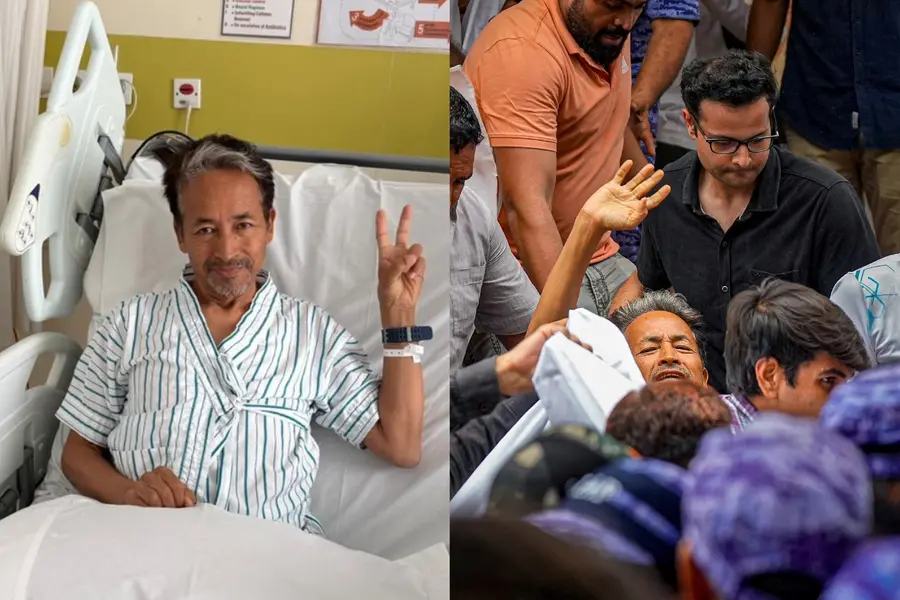
Meanwhile, concerns continued over Wangchuk's treatment in hospital. Gitanjali J. Angmo questioned the heavy police presence at Safdarjung Hospital and later at Medanta Hospital, where Wangchuk was admitted. She said police personnel were stationed at the entrance, reception, lifts and outside the intensive care unit, allegedly deciding who could meet him despite court observations that he was not under detention.
Angmo also appealed against politicising the movement, saying it had always been about education, accountability and the future of India's students rather than political parties or ideologies. She said Wangchuk and the CJP had stood alongside students throughout the protest, keeping their concerns at the centre of the movement.
Published: 25 Jul 2026, 03:51 pm IST
ABOUT THE AUTHOR
Related Topics
Disclaimer: Kindly avoid objectionable, derogatory, unlawful and lewd comments, while responding to reports. Such comments are punishable under cyber laws. Please keep away from personal attacks. The opinions expressed here are the personal opinions of readers and not that of Mathrubhumi.