
From a satirical post on social media to the resignation of Union Education Minister Dharmendra Pradhan, here is how the Cockroach Janta Party turned digital outrage into real political impact.
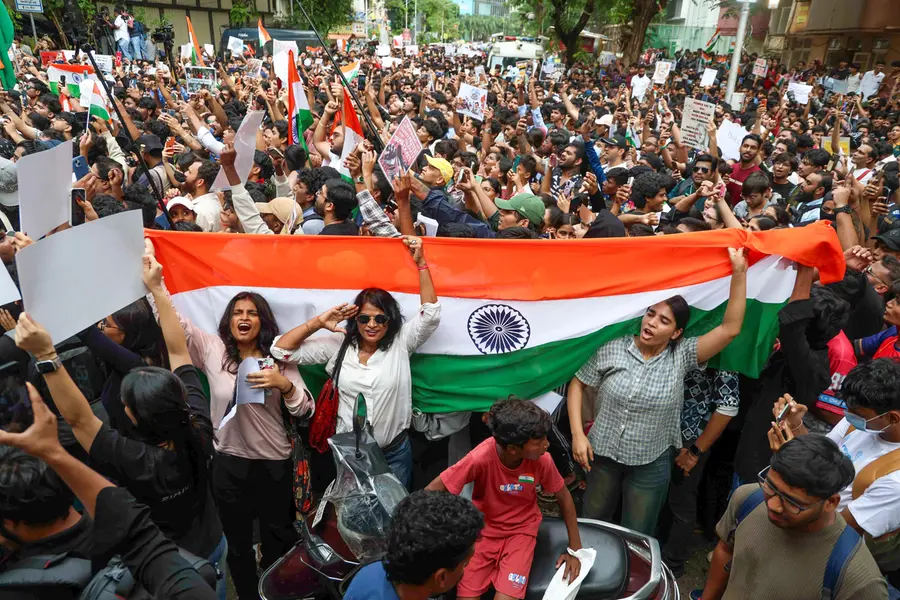
What began in mid-May 2026 as a satirical response to a controversial courtroom remark culminated on July 25 in one of the most remarkable political concessions in recent Indian history – the resignation of Union Education Minister Dharmendra Pradhan.
Spurred into action when Chief Justice of India Surya Kant likened unemployed youth to "cockroaches" and "parasites”, 30-year-old communications strategist Abhijeet Dipke launched the Cockroach Janta Party (CJP) online. Adopting the tagline "A political party for the people the system forgot to count”, the movement mobilised millions over examination leaks, governance failures and systemic accountability.
Chronology: The 70-day campaign that brought down a minister
The spark: courtroom remarks and online birth (May 15-16)
- May 15: CJI Surya Kant makes oral remarks comparing unemployed youth to "cockroaches" who attack institutions. The hashtag #Cockroach trends nationwide.
- May 16: Abhijeet Dipke posts on X announcing a "new platform for all the cockroaches" and launches the CJP website. Over 40,000 people register via a Google Form within hours, propelling #MainBhiCockroach to national attention.
- Clarification: The CJI issues a statement clarifying his remarks were targeted at individuals with "fake and bogus degrees," not the general youth.
Going viral: Millions join the digital front (May 17-21)
- Protest song: CJP drops “Haan Main Hoon Cockroach”, focusing on student stress, paper leaks and systemic failure. Registrations pass 70,000.
- Rapid expansion: CJP's Instagram handle garners 3 million followers in 78 hours, eventually topping 17 million and surpassing major political parties. High-profile figures like Sabeer Bhatia, Anurag Kashyap and Konkona Sen Sharma signal support.
- Platform action: CJP's handle on X is withheld in India following a legal demand.
Taking to the streets: The campaign goes offline (June 1–11)
- June 1: Dipke announces physical protests starting at Jantar Mantar, New Delhi.
- June 2–3: Activist Sonam Wangchuk joins the movement. CJP appoints Saurav Das, Vijeta Dahiya and Ashutosh Ranka as official spokespersons.
- June 6: Dipke arrives from the US to lead the first physical demonstration at Jantar Mantar; six people are briefly detained.
- June 10–11: CJP launches a nationwide campaign from Savitribai Phule Pune University, releasing a five-point manifesto for examination reform and demanding Education Minister Dharmendra Pradhan's resignation.
Round-the-clock sit-in and hunger strike (June 20–28)
- June 20: After deadlines pass without official response, CJP initiates an indefinite, 24/7 sit-in at Jantar Mantar.
- June 28: Sonam Wangchuk begins an indefinite hunger strike at the site alongside hundreds of students.
Police crackdown and escalation (July 4–20)
- July 18–19: Weakened by intense heat, Wangchuk is forcibly taken by Delhi Police to Safdarjung Hospital. He refuses IV treatment, vowing to continue his fast until demands are met.
- July 20: Thousands join the 'Sansad Chalo' march in Delhi. Police deploy tear gas and batons to disperse the crowds, injuring several demonstrators. CJP representatives meet Union Minister J P Nadda to reiterate their call for Pradhan's resignation.
Political backing and government concessions (July 21–23)
- National support: Opposition parties express solidarity, with Rahul Gandhi joining student demonstrations. Key cultural figures voice concern over police action.
- Judicial action: The Delhi High Court designates a special fast-track court for paper leak cases.
- PM's address: Prime Minister Narendra Modi releases a late-night video message committing to Cabinet discussions on NEET leaks and strict legislative measures.
The climax: written assurances and ministerial resignation (July 24–25)
- July 24: Sonam Wangchuk ends his hunger strike after receiving a written assurance that charges against non-violent student protesters will be dropped. The Centre requests 24 hours to decide on the Education Minister's position.
- July 25: Dharmendra Pradhan officially resigns as Union Education Minister, sealing a historic win for the student-led pressure movement.
Thus a movement that started as a single internet post transformed into a national force, securing judicial fast-track courts, policy commitments on examination integrity, the dropping of protest charges and the resignation of a Union Cabinet Minister.
Published: 25 Jul 2026, 03:48 pm IST
ABOUT THE AUTHOR

Related Topics
Disclaimer: Kindly avoid objectionable, derogatory, unlawful and lewd comments, while responding to reports. Such comments are punishable under cyber laws. Please keep away from personal attacks. The opinions expressed here are the personal opinions of readers and not that of Mathrubhumi.