
Discover the rich history behind India's Teachers' Day on September 5, celebrating Dr Sarvepalli Radhakrishnan's legacy, higher education reforms and the National Teachers' Awards.
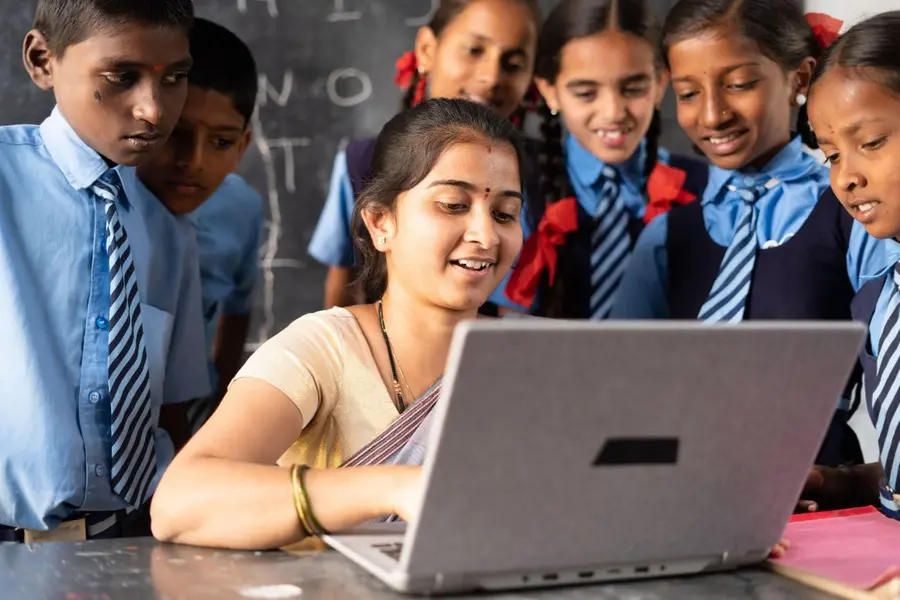
New Delhi: Across India, schools and colleges transform into hubs of celebration every September 5. Cultural performances, student-led games and the nostalgic tradition of senior students stepping into their teachers' shoes define the day. Beyond the classroom festivities, September 5 holds deep historical relevance, tied to the birth anniversary of Dr Sarvepalli Radhakrishnan, one of India’s most distinguished scholars, philosophers and second President.
Why September 5? The Radhakrishnan legacy
Dr Sarvepalli Radhakrishnan was born on September 5, 1888. The tradition of celebrating Teachers’ Day on his birth anniversary officially began in 1962, the year he assumed office as President of India.
When his students and admirers approached him to ask for permission to celebrate his birthday as a public event, Radhakrishnan declined a personal tribute. Instead, he proposed a broader vision: “Instead of celebrating my birthday, it would be my proud privilege if September 5 is observed as Teachers’ Day.”
His request transformed a personal milestone into an annual national movement honoring the contribution of educators.
Who was Dr Sarvepalli Radhakrishnan?
Before entering public life as India’s first Vice-President and second President, Radhakrishnan was an educator. He taught philosophy at several leading institutions and served as Vice-Chancellor of both Andhra University and Banaras Hindu University.
Radhakrishnan viewed education as a tool for holistic personal development rather than mere academic instruction.
Shaping India's higher education system
Radhakrishnan’s impact on Indian education extended far beyond the classroom. In 1948, shortly after Independence, the Indian government appointed him chairman of the University Education Commission.
The Commission’s landmark 1948-49 report examined the higher education framework and suggested structural reforms that shaped modern academic standards, university governance, research priorities and the creation of “deemed to be universities”. Along with the later Kothari Commission report, it remains a cornerstone of India's national education policy history.
National Teachers' Awards 2026
Continuing a national tradition instituted in 1958, Teachers’ Day 2026 will feature the conferment of the National Teachers’ Awards. President Droupadi Murmu will present the awards to 48 exceptional school teachers at a ceremony at Vigyan Bhawan in New Delhi.
Selected through a three-stage online evaluation process across district, state, and national levels, the 2026 awardees represent 27 states, seven Union Territories, and six Central Government organisations. The awards celebrate educators who have demonstrated innovation in teaching methods and remarkably enriched student learning.
National Teachers' Day vs World Teachers' Day
While India marks Teachers' Day on September 5, World Teachers’ Day is celebrated globally on October 5.
Established by UNESCO in 1994, October 5 commemorates the anniversary of the 1966 ILO/UNESCO Recommendation concerning the Status of Teachers. The international document sets global benchmarks regarding teacher rights, employment conditions and training standards.
Published: 05 Sept 2026, 08:39 am IST
ABOUT THE AUTHOR

Related Topics
Disclaimer: Kindly avoid objectionable, derogatory, unlawful and lewd comments, while responding to reports. Such comments are punishable under cyber laws. Please keep away from personal attacks. The opinions expressed here are the personal opinions of readers and not that of Mathrubhumi.