
Every October 31, children knock on doors in costume and hold out a bag. The ritual feels modern, but its roots run back centuries.
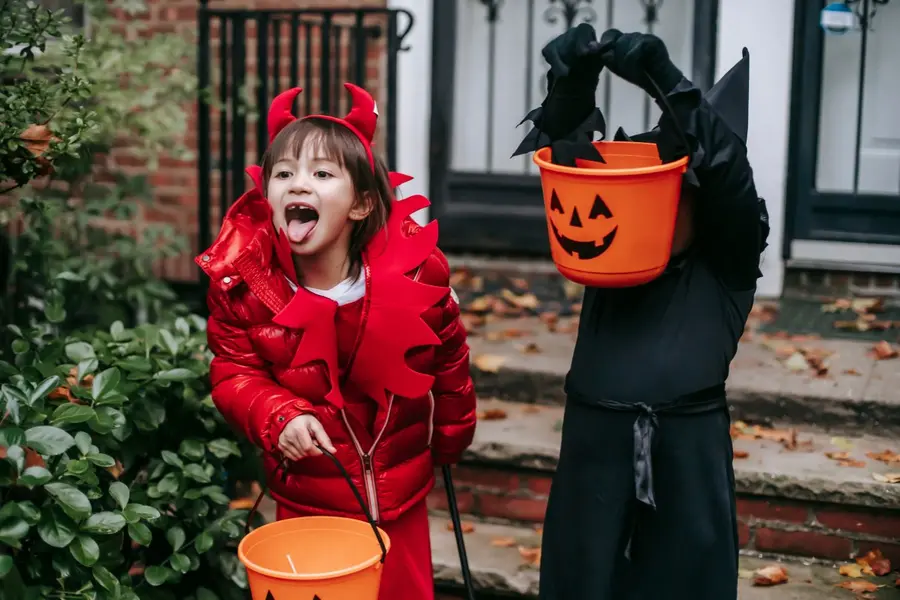
Trick-or-treating feels like a thoroughly modern habit, yet almost nothing about it is new. The treats, the costumes, the mischief and even the glowing lanterns all have ancestors that are hundreds of years old.
A feast spread over three nights
Start with the name. Halloween is a worn-down version of All Hallows' Eve, the night before All Saints' Day on November 1. Western Christianity folds the pair into a three-day season called Allhallowtide: the Eve, then the saints, then, on November 2, All Souls' Day, given over to the dead.
On the first night, the lanterns come out and neighbours gather. On the second, the faithful go to church. On the third, they pray for those they have lost. The mood moves from bonfire-bright to hushed, and the modern holiday has kept only its loudest evening.
The original trick-or-treaters wanted prayers, not candy
The oldest ancestor of the doorstep ritual belongs to the third night. In medieval Europe, people (children included) went door to door on All Souls' Day in a custom called souling. They asked for soul cakes: small, sweet, spiced biscuits, some pressed with a cross.
The terms were tender. You gave the cake; the callers prayed for your dead. Food for remembrance. Hand it over, and your departed were spoken of aloud.
Take away the cross and the prayer, and what remains is a knock, a plea and a small sweet thing placed in an open palm. Sound familiar?
Sing for your supper
The costumes came from somewhere else. In some regions, young people practised guising: they disguised themselves, called at houses, and earned apples or coins with a song or a joke.
The rule was simple. Perform, and you are paid. It is why the grown-up at the door still sometimes demands a joke before the chocolate appears, and why the costumes keep getting more ambitious. Witches, superheroes and invented characters now walk the streets, and adults have long since joined in.
The trouble with gates
Then there is the other half of the phrase. Halloween has always had a mischievous streak, and in earlier eras, young people expressed it with gusto. Garden gates were lifted away. Door handles were knotted together. Windows were soaped. Nothing sinister, only the kind of nuisance that makes a grown man shout at the dark.
In North America, communities found a smarter answer than shouting: give the mischief somewhere to go. Organised festivities took hold, and so did treats. By the early twentieth century, children calling on homes for sweets had become a fixture, and the old threat finally had a punchline: trick or treat. Pay the toll, and your gate stays on its hinges.
The turnip that became a pumpkin
No Halloween porch is dressed without a glowing pumpkin, yet the pumpkin is a newcomer. Across parts of the British Isles, people hollowed out turnips and other root vegetables and carved faces into them to make lanterns. Anyone who has tried to carve a turnip will understand what happened next.
When the custom reached North America, the pumpkin took over. It was bigger, it was easier on the knife, and it made a better face. Today a lit pumpkin, a few strings of lights and some spooky décor serve as a code the whole street understands: this house is playing, and the children are welcome.
The quiet part of the story
It would be tidy to end on candy, but All Souls' Day had another side. Families in many communities walked to cemeteries, cleaned tombstones, lit candles and prayed for relatives who had died. It was an act of upkeep and affection, a way of keeping family history from slipping out of reach.
That undercurrent is still there, beneath the glow-in-the-dark skeletons. Halloween, for all its noise, is a night about the dead.
What is really in the bag
It is fashionable to wave off modern Halloween as a marketing machine of elaborate costumes and overflowing bowls. The history says otherwise. Those chocolates are descendants of soul cakes. The costumes owe a debt to the guisers, the pranks to the village rascals, and the pumpkin to a humble turnip.
What began as a tangle of seasonal habits, neighbourly swaps and prayers for the departed has spent centuries becoming a night when a whole street opens its doors at once.
So when the bell rings this evening, take a moment before you reach for the bowl. You are not just dispensing sweets. You are keeping up a very old bargain, and you are about to renew it.
Published: 30 Oct 2026, 05:18 pm IST


ABOUT THE AUTHOR

Related Topics
Disclaimer: Kindly avoid objectionable, derogatory, unlawful and lewd comments, while responding to reports. Such comments are punishable under cyber laws. Please keep away from personal attacks. The opinions expressed here are the personal opinions of readers and not that of Mathrubhumi.