
Serbia erupts in celebration after Aleksandar Vucic concedes defeat to the student-backed opposition, ending his party’s 14-year grip on power.
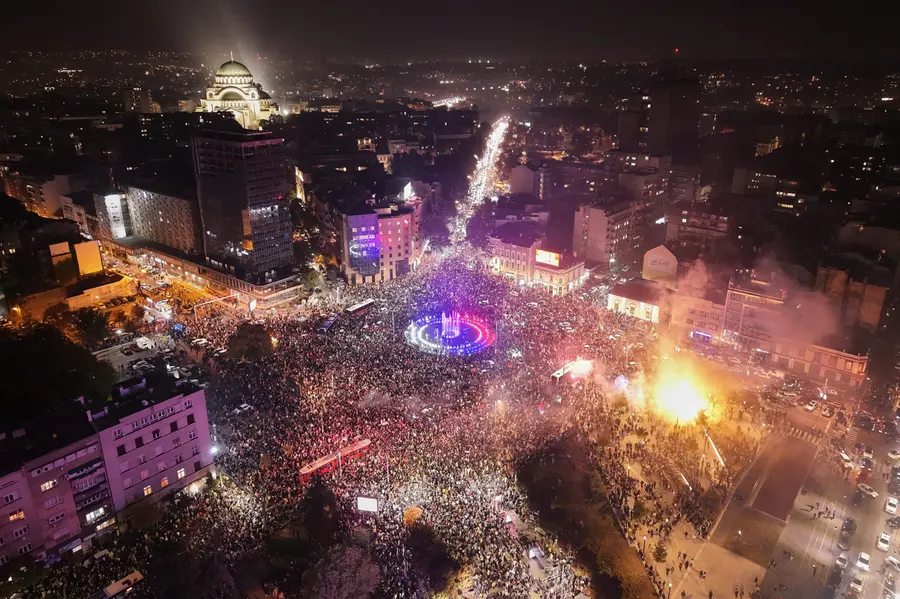
Belgrade: Celebrations swept across Serbia after long-serving leader Aleksandar Vucic conceded defeat in a parliamentary election, paving the way for a student-backed opposition movement to take power after two years of protests against his government.
Cars filled the streets of the capital, Belgrade, with supporters honking horns, singing and chanting “Aleksandar is gone”. Crowds also tore down fences and tents at a central park camp occupied by Vucic loyalists for more than a year. One tent was later set on fire.
For many celebrating, the result represented more than a change in government. It was a chance to break from years of political dominance and demand accountability over allegations of corruption.
“We are all too happy, finally we are becoming one normal and free country,” Belgrade resident Dragana Kovacevic told reporters.
Another resident, Maja Stetic, described the outcome as a moment of liberation and a new future for Serbia’s children.
How the student-backed movement defeated Vucic
Vucic acknowledged his party’s defeat on election night, saying projections indicated that the opposition’s Students’ List would win between 135 and 140 seats in Serbia’s 250-member Parliament. His Serbian Progressive Party (SNS) was projected to secure around 105 seats.
“It is now clear that we have lost and the Students’ List has won,” Vucic told supporters.
He nevertheless blamed independent media and alleged interference by European countries and what he called an “American deep state” for his party’s loss.
The election marked a major setback for Vucic, who had held power for 14 years through his party and was seeking to become prime minister after serving nearly two full terms as president. He resigned from the presidency last month to lead his party’s campaign.
The tragedy that fuelled two years of protests
The student movement gained momentum after 16 people died in 2024 when a concrete canopy collapsed at a railway station in Novi Sad.
The disaster triggered protests over allegations of corruption, cronyism and wrongdoing during renovation work at the station. Demonstrators held the government responsible and demanded accountability.
The Students’ List built on that public anger, drawing support from people disillusioned with established political parties. Although university students shaped the movement, they did not appear on its electoral list. Instead, the candidates included relatively unknown experts, athletes, farmers and artists.
The campaign presented itself as a non-partisan effort to rebuild Serbia’s economy and restore democracy.
For Dijana Hrka, whose child was among those killed in the station disaster, the election result brought hope after years of waiting.
“I have been waiting for this moment for two years,” she told N1 television while celebrating in Belgrade.
“Now I expect that they will all be held accountable,” she said.
With AP inputs
Published: 26 Oct 2026, 10:55 am IST
ABOUT THE AUTHOR

Disclaimer: Kindly avoid objectionable, derogatory, unlawful and lewd comments, while responding to reports. Such comments are punishable under cyber laws. Please keep away from personal attacks. The opinions expressed here are the personal opinions of readers and not that of Mathrubhumi.