
Railway Minister Ashwini Vaishnaw has confirmed that India’s first Sleeper Vande Bharat Express will launch in December following minor retrofitting
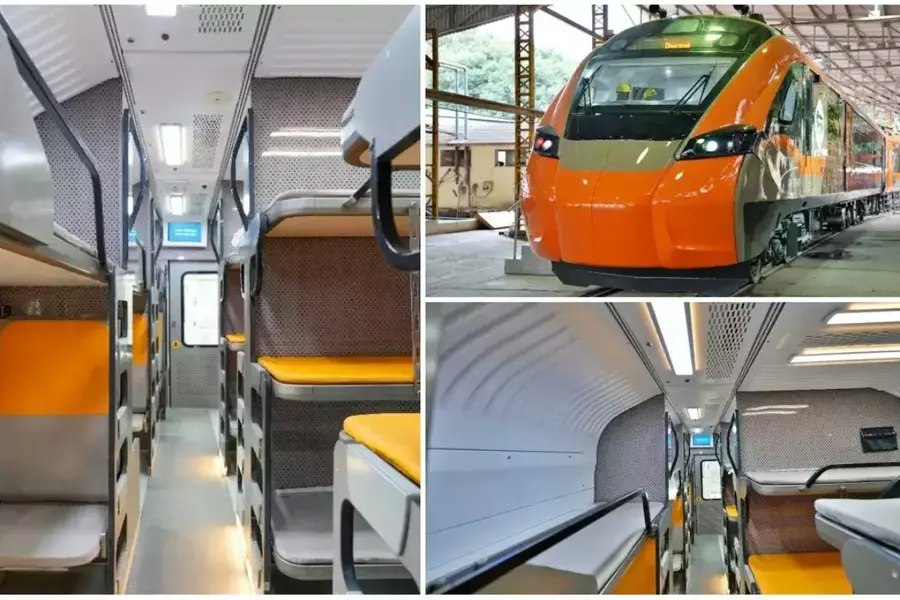
India’s first Sleeper Vande Bharat Express is set to begin passenger service next month, with the Railway Ministry confirming that final adjustments are under way to meet long-distance comfort requirements.
Railway Minister Ashwini Vaishnaw said the prototype sleeper rake completed extensive trials, after which engineers recommended a series of small but essential modifications. These upgrades are currently being implemented at Bharat Earth Movers Ltd (BEML), which is manufacturing the initial fleet of 10 sleeper rakes.
Also Read

Testing highlighted issues linked to bogie movement, seating ergonomics and passenger comfort, prompting fine-tuning before the national rollout. The minister stated that these refinements, though minor, are crucial for achieving world-class standards. He confirmed that the first Sleeper Vande Bharat will be launched in December, following previous delays including a missed October 15 target.
Officials from BEML said that the prototype rake was returned to the factory after assessments by the Research Designs and Standards Organisation (RDSO) and the Commissioner of Railway Safety. The ongoing retrofitting includes several upgrades such as fire-survival cables for CCTV systems, repositioning of AC ducts, installation of Arc Fault Detection Devices to strengthen fire protection, and a third-party audit to ensure compliance with European standards on fire safety and crashworthiness. The emergency alarm button in sleeper coaches is also being shifted for easier passenger access.
With testing completed and retrofitting nearing completion, officials expect the December launch timeline to remain on track. As more rakes enter production, the Sleeper Vande Bharat service is expected to improve long-distance premium travel for thousands of passengers.
Alongside the sleeper rollout, work on India’s first bullet train corridor between Mumbai and Ahmedabad continues. The project saw a major milestone earlier this year when the Prime Minister reviewed construction at the Surat station site. According to the Railway Ministry, a 100-kilometre trial run is planned for August 2026, followed by high-speed testing at 350 kmph. Once operational, the bullet train is expected to cut travel time between Mumbai and Ahmedabad from the current 5.5 hours to around 2.5 hours. The high-speed rail network is planned to expand to additional routes in the future, offering faster and safer intercity connectivity.
Both high-speed and premium sleeper rail services are expected to reshape intercity travel as trials, audits and production progress in the coming months.
Published: 19 Nov 2025, 09:14 pm IST
Disclaimer: Kindly avoid objectionable, derogatory, unlawful and lewd comments, while responding to reports. Such comments are punishable under cyber laws. Please keep away from personal attacks. The opinions expressed here are the personal opinions of readers and not that of Mathrubhumi.