
As Reliance Industries announces plans to double its investment in Gujarat, chairman Mukesh Ambani praises Prime Minister Narendra Modi as India’s ‘protective wall’
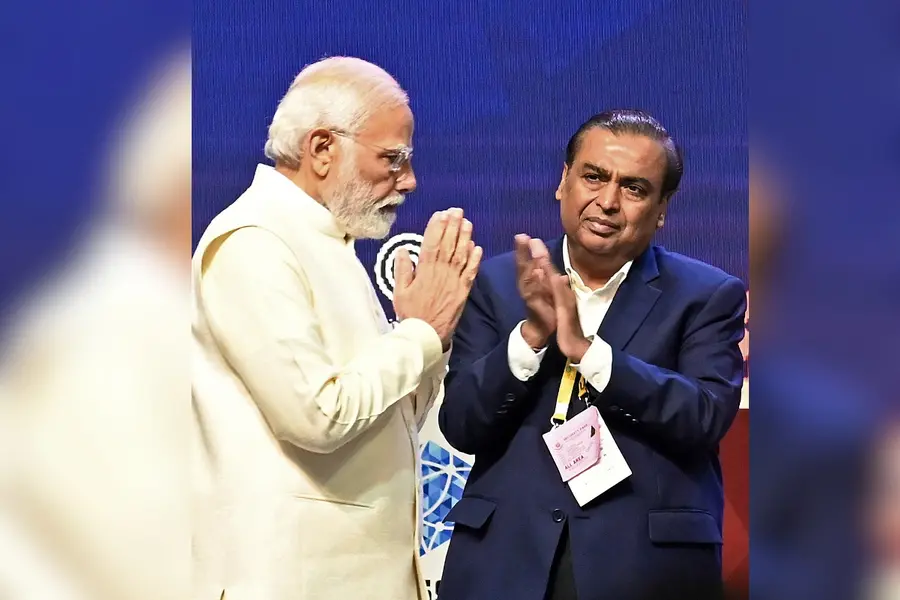
Gandhinagar: At the Vibrant Gujarat Regional Conference, Mukesh Ambani announced that Reliance Industries will double its investments in Gujarat, increasing its commitment from ₹3.5 lakh crore to ₹7 lakh crore over the next five years.
Ambani presented the expansion as a driver of “employment, livelihoods and greater wealth for every Gujarati.” However, critics argue that such mega-corporate projects often concentrate wealth in a few key sectors—petrochemicals, telecom, and retail—without delivering broad-based benefits to the public.
Also Read

The ‘Protective Wall’ Rhetoric
Ambani lauded Prime Minister Narendra Modi as an “invincible protective wall” shielding India from global uncertainties. The statement highlights the close ties between political leadership and corporate interests, where policy incentives, fast-tracked approvals, and regulatory support often favour established conglomerates. Observers note a feedback loop: political patronage ensures corporate growth, while corporate praise reinforces political legitimacy.
Who really benefits?
While framed as a public good, the Reliance expansion largely consolidates the company’s dominance in sectors it already controls, benefiting shareholders and top management far more than ordinary citizens. Gujarat, already a hub for Reliance operations, sees mega-projects that boost select industries, but smaller businesses and local enterprises often remain on the sidelines.
Ambani also pledged support for PM Modi’s vision of hosting the 2036 Olympic Games in Ahmedabad, including managing the Veer Savarkar Multi-Sports Complex. Beyond sports, this partnership serves as a public relations win for both Reliance and the government, creating the perception of national progress closely linked with corporate growth.
Published: 11 Jan 2026, 05:30 pm IST
Related Topics
Disclaimer: Kindly avoid objectionable, derogatory, unlawful and lewd comments, while responding to reports. Such comments are punishable under cyber laws. Please keep away from personal attacks. The opinions expressed here are the personal opinions of readers and not that of Mathrubhumi.