
Yadav’s controversial stance on relaxing the liquor ban by exempting toddy further alienated this crucial voter base, and his failure to fully commit to ending the liquor ban made it easier for the NDA to capitalise on the issue
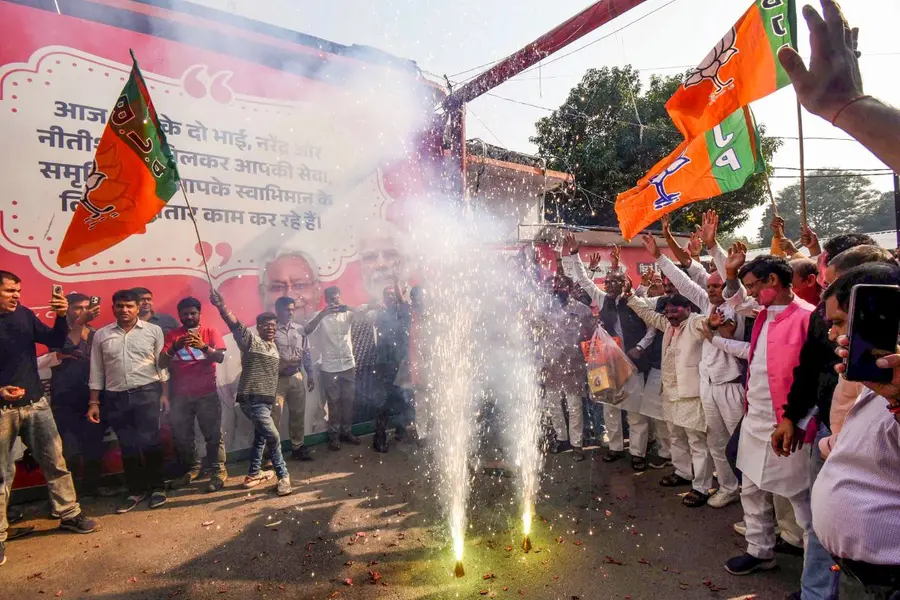
Bihar Chief Minister Nitish Kumar and his NDA coalition have proven themselves adept at outmanoeuvring the opposition in the lead-up to the state elections, adopting a strategy reminiscent of the famous Godfather quote: "Keep your friends close, but your enemies closer." The ruling coalition, unperturbed by opposition criticisms, began rolling out a series of policy announcements and welfare measures, many of which appeared to mirror the promises made by RJD leader Tejashwi Yadav.
Shortly after Yadav, the chief ministerial candidate for the opposition INDIA alliance, pledged 200 units of free electricity for households, Nitish Kumar made a surprising about-turn on his earlier stance against "freebies." The veteran leader, who had once been a vocal critic of such measures, announced that his government would provide 125 units of free power per month to households. This move not only countered the opposition's promises but also defused public frustration surrounding the issue of inflated electricity bills, which had been blamed on the installation of prepaid meters.
In another strategic move, the Nitish Kumar government responded to Yadav's proposal for "100 per cent domicile" by introducing a clever variation: a "100 per cent domicile" policy for women who already enjoyed 35 per cent reservations in government jobs. This policy targeted the state's female workforce—a key demographic in Bihar—ensuring that the benefits were directed at those most likely to turn out at the polls.
The ruling coalition also implemented a number of other measures aimed at consolidating its base, including hikes in stipends for workers in the unorganised sector, like Aasha and Aanganwadi workers, as well as increases in pensions for elderly women and other vulnerable groups.
In response to Yadav's "Mai Bahin Samman Yojana" (Mother-Sister Honour Scheme), which aimed to provide financial assistance to women, the NDA launched its own initiative, the "Mukhymantri Mahila Rojgar Yojana." Under this scheme, Rs 10,000 was transferred into the accounts of over one crore women in the state, further diminishing the impact of Yadav's announcement.
Yadav, clearly caught off guard, declared that he would make no new announcements "till the model code of conduct came into force," effectively blocking the ruling coalition from mimicking his promises any further.
By the time the election campaigns were in full swing, the opposition appeared to have run out of fresh ideas. Yadav's only new proposal—"a government job for at least one member of every family"—was widely seen as unrealistic, even among his own supporters. Promises aimed at winning over Bihar's Extremely Backward Classes, such as a law against atrocities akin to the SC/ST Act, were never followed through, possibly due to concerns about alienating the upper castes and other powerful OBC groups.
Once the election dates were confirmed, the BJP, led by Prime Minister Narendra Modi, began its campaign with full force. Modi seized the opportunity to target Yadav, dismissing him as the figurehead of a potential "return to jungle raj"—a reference to the lawlessness associated with the RJD's rule in the 1990s. Posters promoting Yadav’s persona as Lalu Prasad's heir apparent were mocked as "jungle raj in new clothes."
The opposition’s campaign struggled to gain traction, particularly among women voters, a constituency that had historically supported Kumar due to his imposition of prohibition in the state. Yadav’s controversial stance on relaxing the liquor ban by exempting toddy further alienated this crucial voter base, and his failure to fully commit to ending the liquor ban made it easier for the NDA to capitalise on the issue.
Furthermore, the absence of women at Yadav’s rallies, despite otherwise good attendance, sent a clear signal about the shifting political winds in Bihar. As the campaign reached its final stages, it became evident that the opposition had struggled to present a compelling alternative to the ruling coalition's strategic manoeuvres.
Published: 14 Nov 2025, 11:08 pm IST
Disclaimer: Kindly avoid objectionable, derogatory, unlawful and lewd comments, while responding to reports. Such comments are punishable under cyber laws. Please keep away from personal attacks. The opinions expressed here are the personal opinions of readers and not that of Mathrubhumi.
