
Currently, pan masala, tobacco and related products attract 28% GST plus a compensation cess at varying rates
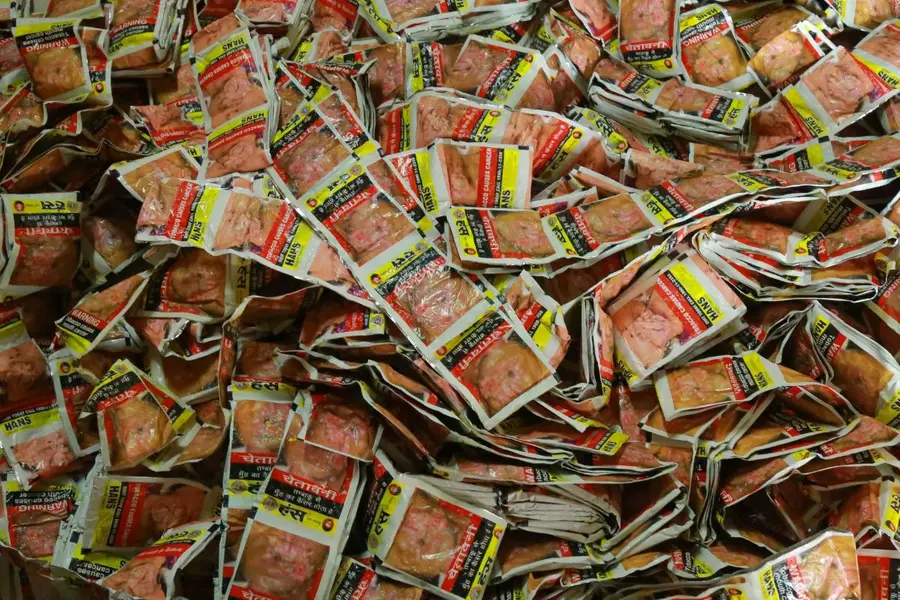
New Delhi: Finance Minister Nirmala Sitharaman on Friday said the proposed Health and National Security Cess will be imposed on pan masala manufacturing units, emphasising that the revenue raised will be shared with states to support expenditure on health schemes.
Replying to the debate on the Health Security and National Security Cess Bill, 2025, Sitharaman noted that the constitutional authority to levy such a cess flows from Article 270, which empowers Parliament to impose a cess for a specific purpose. The Lok Sabha later passed the Bill by a voice vote.
The legislation seeks to boost resources for national security and public health by levying a cess on machines or other processes used to manufacture pan masala and similar products.
Sitharaman said the Centre had transferred more money to states than it had collected from various cesses between 2014–15 and 2025–26. She stated that while the government collected ₹6,07,573 crore from health and education cesses during this period, it transferred ₹6,49,459 crore.
Referring to the Agriculture Infrastructure and Development Cess introduced in 2021–22, she said the government had so far transferred ₹3,77,214 crore, against collections of ₹3,87,226 crore.
Cesses as a share of Gross Tax Revenue (GTR), excluding the Compensation Cess, stood at 6.1% in the 2025–26 Budget Estimates — lower than the 7% recorded between 2010 and 2014.
Addressing criticism over the introduction of another cess, Sitharaman said: “It is not as though in 2014 the government decided that we would levy cesses and not give funds to the states. Before 2014, four types of cesses were already being collected.”
She cited the example of a cess imposed on crude oil in 1974 to create the Crude Oil Industry Development Fund, noting that the fund was established in 2023–24. She said ₹17,730 crore and ₹19,376 crore had been earmarked for transfer to this fund in the revised estimates for 2024–25 and the budget estimates for 2025–26, respectively.
The National Calamity Contingent Duty (since 2001) and the Road and Infrastructure Cess (since 2000) also continue to be collected. Between 2014–15 and 2025–26, ₹11.34 lakh crore was transferred under the Road and Infrastructure Cess, compared with collections of ₹11.11 lakh crore.
Why the bill?
Explaining the purpose of the Bill, Sitharaman said it aims to create a “dedicated and predictable resource stream” for two key national priorities — health and national security.
She added that pan masala will attract the maximum 40% Goods and Services Tax (GST) rate based on its consumption, and the new cess will not affect GST revenues. The Health and National Security Cess, levied over and above GST, will be based on the production capacity of machines in pan masala factories. All expenditure from the cess proceeds will be subject to CAG audit.
Currently, pan masala, tobacco and related products attract 28% GST plus a compensation cess at varying rates. With the end of the compensation cess period, the GST rate will rise to 40%. Additionally, tobacco will attract excise duty, and pan masala will attract the new Health and National Security Cess.
On Wednesday, the Lok Sabha passed an amendment to the Central Excise Act, 1944, enabling excise duty to be levied on tobacco over and above the 40% GST.
Sitharaman stressed that public health is a state subject, while national defence falls under the central government. “In today's world, where credible defence capabilities are absolutely critical, we must raise adequate resources. Modern conflicts are dominated by precision weapons, space-based assets, cyber operations, and other advanced technologies,” she said.
She also acknowledged concerns about a potential drop in tax incidence on pan masala. “Once the GST Compensation Cess comes to an end, the effective tax incidence on pan masala, which is currently about 88 per cent… would fall sharply,” she said.
Since lower taxes could make pan masala more affordable, Sitharaman said: “We cannot allow it to become cheaper and also lose revenue.”
Published: 05 Dec 2025, 08:08 pm IST
Related Topics
Disclaimer: Kindly avoid objectionable, derogatory, unlawful and lewd comments, while responding to reports. Such comments are punishable under cyber laws. Please keep away from personal attacks. The opinions expressed here are the personal opinions of readers and not that of Mathrubhumi.
