
Heavy rain continues to disrupt Mumbai as Tulsi and Vihar lakes overflow, train services face delays, and flooding affects several areas across the city and neighbouring districts.
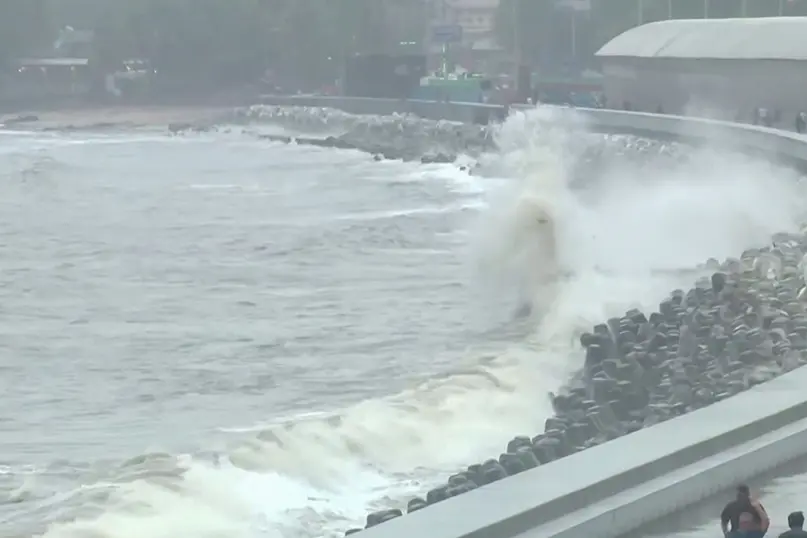
Mumbai remained under the grip of heavy monsoon rain on Wednesday, with flooded roads, delayed train services and overflowing reservoirs disrupting daily life across the city. Overnight showers pushed Tulsi Lake to overflow just hours after nearby Vihar Lake reached full capacity, while rising water levels and waterlogging continued to affect commuters and residents in several areas.
The latest spell of rain has brought both relief and concern for the financial capital. Reservoir levels have risen sharply, strengthening the city's water supply, but the persistent downpour has slowed transport services, inundated low-lying neighbourhoods and prompted authorities to keep a close watch on vulnerable locations.
Tulsi Lake overflows as reservoir levels surge
Tulsi Lake, one of the seven reservoirs that supply drinking water to Mumbai, began overflowing at 11.43 pm on Tuesday, following continuous rainfall across its catchment area inside Sanjay Gandhi National Park. The overflow came less than three hours after Vihar Lake also reached full capacity and started overflowing.
According to the Brihanmumbai Municipal Corporation (BMC), the combined water stock across Mumbai's seven reservoirs has crossed 41% of their live storage capacity after receiving substantial rainfall over the past two days. Officials said water storage has increased by more than 12% in the last 24 hours and nearly 24.5% over 48 hours, offering a significant boost to the city's drinking water reserves.
While Tulsi and Vihar are now overflowing, reservoirs such as Modak Sagar, Tansa, Bhatsa, Middle Vaitarna and Upper Vaitarna have also recorded steady gains following widespread rain across their catchment areas.
Waterlogging returns as heavy showers continue
Heavy rain returned after a brief break, leading to fresh waterlogging in several parts of Mumbai and slowing movement across the city. Roads in low-lying areas witnessed flooding as drains struggled to cope with the continuous rainfall.
The India Meteorological Department (IMD) has forecast intermittent spells of light to moderate rain through the day, with generally cloudy skies expected over Mumbai and its suburbs. Civic authorities have advised residents to remain cautious as high tides and continued rainfall could worsen flooding in vulnerable pockets.
Train services hit again
The monsoon continued to impact Mumbai's transport network, with suburban train services on both the Central Railway and Western Railway corridors running around 25 to 30 minutes behind schedule during the morning rush.
On the Central Railway network, services were briefly affected after ballast beneath the tracks was washed away between Neral and Shelu stations in neighbouring Raigad district. Railway teams restored both tracks early in the morning, allowing train movement to resume.
Long-distance rail services also remained affected. Restoration work in the Bhor Ghat section between Karjat and Lonavala continued after a landslide earlier this week, resulting in the diversion, cancellation and short termination of several trains.
Towards Gujarat, mail and express services faced disruption after waterlogging near Surat temporarily halted train movement overnight. Although operations resumed once floodwaters receded, railway authorities said dozens of trains had already been cancelled, rescheduled or short-terminated because of the weather.
Suburban services beyond Vasai Road, which were suspended on Tuesday evening after floodwaters rose above track level, resumed later after conditions improved. However, delays continued on Wednesday due to speed restrictions in waterlogged sections.
Videos circulating on social media showed hundreds of stranded passengers walking along railway tracks through knee-deep water after services were suspended, highlighting the challenges faced by commuters during the peak of the disruption.
Flood situation worsens in parts of Maharashtra
The impact of the monsoon was not limited to Mumbai.
In Pune, authorities released 27,203 cusecs of water from the Khadakwasla Dam following heavy rainfall, increasing the flood risk in riverside areas. Rising river levels led to water entering several houses and residential societies along the Sinhagad Road stretch.
Meanwhile, the Godavari River in Nashik witnessed a strong flow despite no discharge from upstream dams. Commissioner of Police Sandeep Karnik said disaster management teams, police personnel and Home Guards had been deployed at vulnerable locations while the situation was being monitored round the clock through the Disaster Control Room.
He appealed to residents not to visit river ghats or venture close to fast-flowing water, warning that even without dam releases, the river was flowing at a dangerous pace.
Rain boosts water supply but challenges remain
The continuous rainfall has brought welcome relief to Mumbai's water supply outlook after weeks of concern over reservoir levels. With two reservoirs now overflowing and storage rising rapidly across the system, officials say the city is in a stronger position than it was just days ago.
At the same time, the monsoon continues to test Mumbai's infrastructure. Flooded roads, disrupted train services and overflowing rivers in neighbouring districts have once again underscored the challenges that accompany periods of intense rainfall.
With more showers expected over the coming days, authorities have urged residents to stay updated on weather advisories, avoid waterlogged routes wherever possible and exercise caution near rivers, lakes and other flood-prone areas.
With agency inputs
Published: 08 Jul 2026, 03:30 pm IST
Related Topics
Disclaimer: Kindly avoid objectionable, derogatory, unlawful and lewd comments, while responding to reports. Such comments are punishable under cyber laws. Please keep away from personal attacks. The opinions expressed here are the personal opinions of readers and not that of Mathrubhumi.
