
Mumbai’s BMC election has turned into a high-stakes political duel, with the Thackeray cousins banking on identity and welfare, while the BJP-Shinde Mahayuti pushes a development-first pitch to retain control of Asia’s richest civic body.
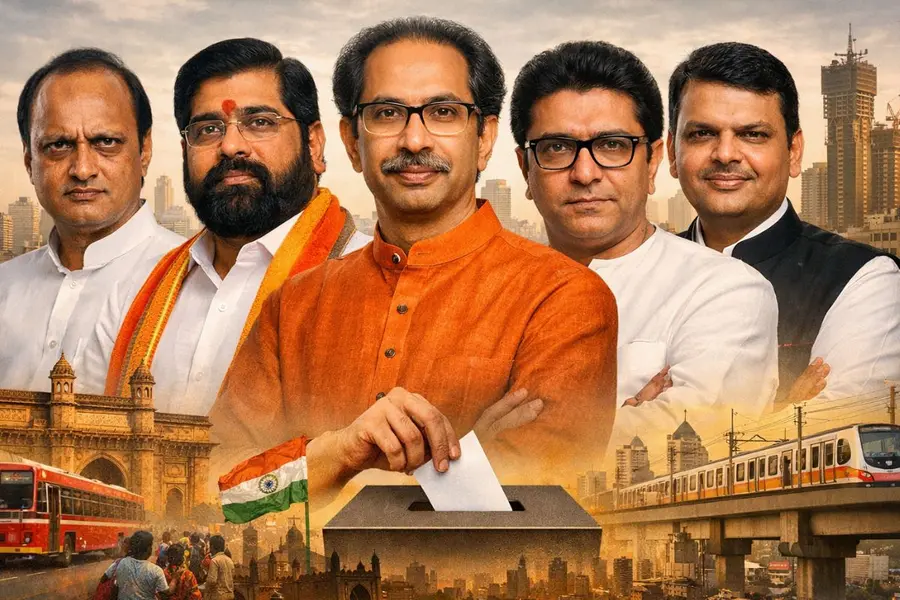
With less than a week to go for polling, Mumbai’s civic election has burst out of the municipal mould and into a full-blown political slugfest. The January 15 Brihanmumbai Municipal Corporation (BMC) polls are no longer about roads, drains, or garbage alone — they are now a referendum on identity, governance, and political control of India’s richest civic body.
The most striking development in this election cycle is the unlikely reunion of Uddhav Thackeray and Raj Thackeray. After years of public acrimony, the Thackeray cousins have stitched together a joint ‘Vachan Nama’, pitching themselves as the guardians of Mumbai’s local interests and Marathi cultural identity.
Also Read

Their campaign message is direct and emotive — Mumbai belongs first to its residents, and civic resources must prioritise Mumbaikars.
The Thackeray alliance has leaned heavily on welfare-led promises. These include one lakh affordable homes over five years, a proposed BMC Housing Authority to reserve land for residents, property tax waiver for homes up to 700 sq ft, cheaper BEST bus fares, and free electricity units.
Women-centric schemes such as a ₹1,500 monthly allowance for house helps and Koli women, along with creches in every Assembly segment, form a key pillar of their outreach. Symbolically, they have also promised that Mumbai’s Mayor will always be Marathi-speaking.
Facing them is the ruling Mahayuti, led by the Bharatiya Janata Party and Shiv Sena, which has attempted to flip the narrative from identity to infrastructure.
Also read: Shinde unveils MahaYuti’s plan for Mumbai: Pothole-free roads, metro boost, better sanitation
The alliance has released a development-focused manifesto highlighting large-scale housing through slum cluster redevelopment, expansion of public transport with 12,000 electric buses, and a ₹50,000-crore underground utility tunnel project aimed at ending constant road digging.
The Mahayuti has also sharpened its ideological edge. Alongside promises of women’s concessions and interest-free loans, it has proposed using Artificial Intelligence to identify and deport illegal immigrants, explicitly naming Bangladeshis and Rohingyas, while also announcing plans for a Marathi Language Department within the BMC.
The campaign has turned combative. Mahayuti leaders, including Devendra Fadnavis and Eknath Shinde, have accused the Thackerays of abandoning ideological clarity. In response, Uddhav Thackeray has alleged contractor-driven governance, misuse of civic funds, and raised objections over unopposed ward victories, calling them an erosion of democratic choice.
Despite the sparring, there is overlap — both camps promise 24/7 water supply via the Gargai-Pinjal projects, upgraded civic hospitals, and cleaner air. Yet the tone of the contest suggests something larger is at stake. This BMC election is shaping up not merely as a civic vote, but as a battle over who defines Mumbai’s future — identity politics or development-first governance.
Published: 12 Jan 2026, 12:02 pm IST
Related Topics
Disclaimer: Kindly avoid objectionable, derogatory, unlawful and lewd comments, while responding to reports. Such comments are punishable under cyber laws. Please keep away from personal attacks. The opinions expressed here are the personal opinions of readers and not that of Mathrubhumi.