
Mumbai faces a 10% water cut as reservoir levels fall. BMC warns of strict action and criminal cases against illegal water pump users.
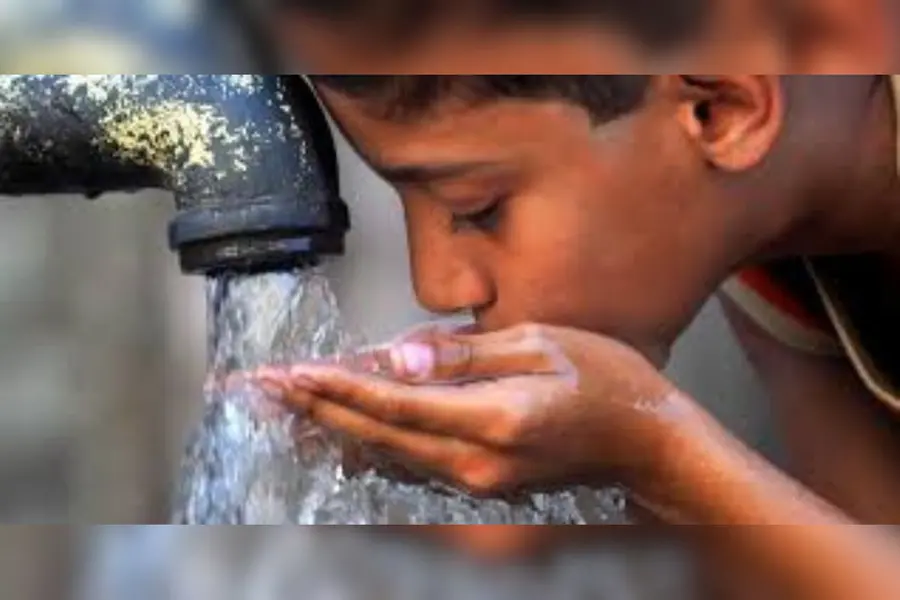
Mumbai: With reservoir levels dropping and monsoon uncertainty looming over Maharashtra, the Brihanmumbai Municipal Corporation (BMC) has intensified its response to Mumbai’s growing water crisis by launching strict enforcement against illegal water extraction practices across the city.
The civic body has already imposed a 10 per cent water cut in Mumbai starting Friday as a precautionary step after water stock in the city’s seven key lakes declined significantly. Officials say the move comes amid concerns over weak monsoon conditions linked to global weather patterns such as El Nino and the Indian Ocean Dipole (IOD), both of which could impact rainfall distribution this year.
According to BMC data, the total usable water stock available in reservoirs supplying Mumbai stood at 340,399 million litres as of May 11. This accounts for just 23.52 per cent of the city’s annual required water stock of 14,47,363 million litres, raising concerns over long-term supply stability if monsoon rains are delayed or weaker than expected.
Amid the water shortage concerns, Additional Municipal Commissioner Abhijit Bangar directed civic officials to begin aggressive checks against residents illegally using electric suction pumps connected to pipelines and taps to draw excess water.
Officials said inspections across parts of Mumbai revealed multiple instances where residents installed unauthorised electric pumps to increase water flow to their premises. The practice reportedly reduces water pressure in nearby areas, particularly affecting residents living in elevated and tail-end localities.
The BMC has now warned that citizens caught using such illegal pumps could face penalties, seizure of equipment, disconnection of water supply connections, and even criminal cases in repeat offences.
Civic officials also cautioned that illegal suction systems not only disrupt equitable water distribution during rationing but can also increase contamination risks in pipelines due to pressure imbalance within the supply network.
To manage the situation during the ongoing water cut, Bangar has instructed engineers and ward-level officials to prepare micro-level water distribution plans to maintain stable supply pressure across different parts of the city.
The civic administration has also directed field engineers to remain on-site in vulnerable areas, coordinate with local residents and public representatives, and quickly resolve water-related complaints during the rationing period.
Mumbai depends heavily on seven major lakes for its daily water supply, Tulsi, Vihar, Bhatsa, Modak Sagar, Tansa, Upper Vaitarna, and Middle Vaitarna, located across Mumbai, Thane, and Nashik districts.
With summer demand remaining high and rainfall uncertainty persisting, water management is expected to remain a major issue in Mumbai in the coming weeks.
With PTI inputs
Published: 16 May 2026, 02:57 pm IST
Related Topics
Disclaimer: Kindly avoid objectionable, derogatory, unlawful and lewd comments, while responding to reports. Such comments are punishable under cyber laws. Please keep away from personal attacks. The opinions expressed here are the personal opinions of readers and not that of Mathrubhumi.
