
Mumbai’s Bandra-Kurla Complex will soon see driverless pod taxis connecting BKC with Bandra and Kurla stations
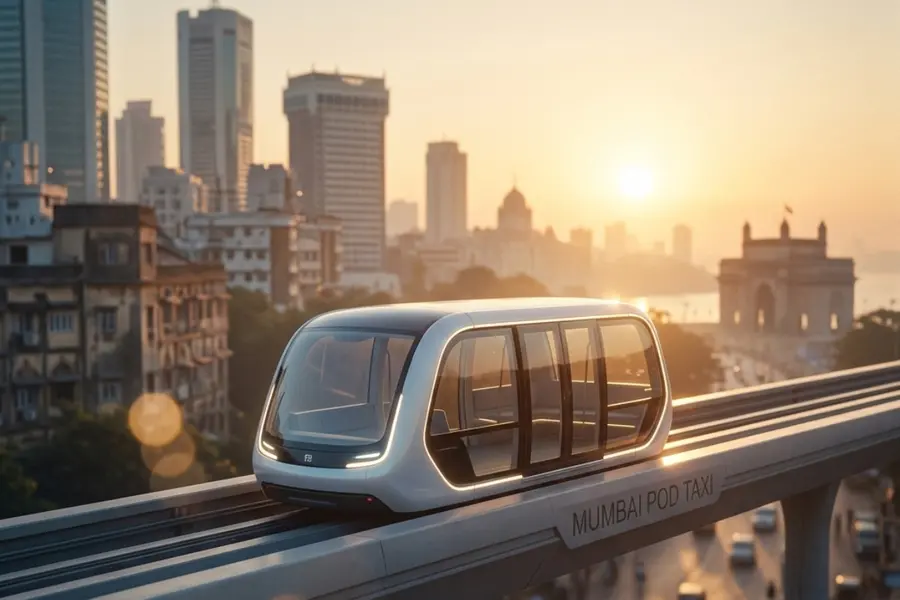
Mumbai is set to introduce a driverless pod taxi system in the Bandra-Kurla Complex (BKC) to tackle last-mile congestion, connecting the business district with Bandra and Kurla railway stations via an elevated corridor.
The plan, approved by the Mumbai Metropolitan Region Development Authority (MMRDA), is expected to serve an estimated 4 lakh to 6 lakh daily commuters travelling to and from BKC. Traffic pressures in the area are set to rise further due to upcoming projects, including the bullet train corridor and new commercial developments.
Officials say the autonomous pods are designed to alleviate pressure on the roads while providing a convenient and efficient option for commuters.
Elevated corridor and pod details
The pods will operate on an elevated track with 38 stations, reaching speeds of up to 40 kilometres per hour and carrying approximately six passengers each. According to the MMRDA, the vehicles will be fully autonomous, with departures scheduled at intervals of 15 to 30 seconds.
This frequency is intended to make them suitable for the narrow roads connecting BKC with the suburban railway stations. The elevated design also ensures that the road below remains available for regular traffic.
Cost and implementation
The project has been approved at an estimated cost of about Rs 1,017 crore and will be executed under a public-private partnership model. Sai Green Mobility Private Limited has been appointed as the concessionaire, while Ultra PRT will act as the technology partner. The operating period is planned for 30 years.
Fare and operational details
A techno-economic feasibility study recommended a fare of Rs 21 per kilometre, with a proposed annual increase of 4 percent. The final fare structure will be notified by the authorities.
Officials note that the pod system is intended to reduce reliance on auto-rickshaws, cabs, and buses for short trips between railway stations and offices in BKC, where daily travel demand is high and road space is limited.
A pilot for automated last-mile transit
If completed on schedule, the pod taxi corridor could become Mumbai’s first significant example of using compact, automated transit to address last-mile congestion in a dense business district. Officials describe it as a key test case for integrating driverless technology into urban mobility planning.
Published: 06 Apr 2026, 10:22 pm IST
Related Topics
Disclaimer: Kindly avoid objectionable, derogatory, unlawful and lewd comments, while responding to reports. Such comments are punishable under cyber laws. Please keep away from personal attacks. The opinions expressed here are the personal opinions of readers and not that of Mathrubhumi.
