
Pakistan’s DG ISPR has called India’s Declassified: Operation Sindoor documentary “propaganda”, but retired Indian military officials featured in the film have rejected Islamabad’s claims over the 2025 conflict.
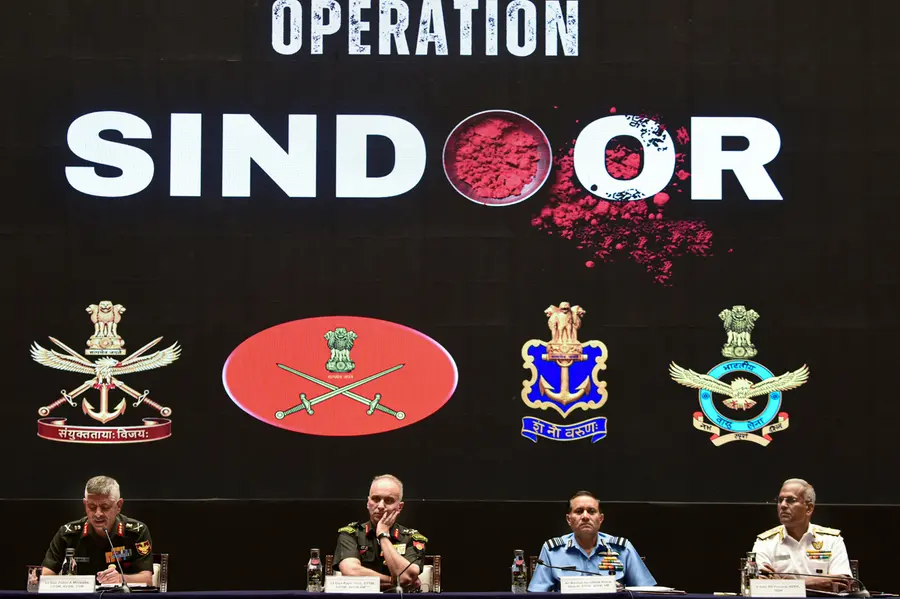
Pakistan’s Director-General of Inter-Services Public Relations (DG ISPR) has come under sharp criticism from retired Indian armed forces officials and strategic analysts after issuing a statement in the wee hours of August 18 dismissing India's Declassified: Operation Sindoor documentary as "propaganda” and a “Bollywood-style” attempt to rewrite history.
The documentary, which premiered on Discovery Channel India and Discovery+ on August 15, 2026, features first-hand accounts from senior Indian political and military leadership, including NSA Ajit Doval, former CDS Gen Anil Chauhan, and former DGMO Lt Gen Rajiv Ghai.
In a strongly worded statement, Pakistan’s ISPR accused India of “mutilating history” and “cobbling together a propaganda video to project a military blunder as a successful endeavour.” The statement, attributed to DG ISPR Lt Gen Ahmed Sharif Chaudhry, made several assertions.
The ISPR claimed that Operation Sindoor was a “failed venture” and that Pakistan’s “Marka-e-Haq” successfully thwarted Indian aggression, shooting down eight Indian military aircraft.
It further asserted that Pakistan’s Operation Bunyanum Marsoos targeted 26 Indian military facilities using precision-guided rockets, missiles, and loitering munitions.
The statement argued that the documentary contradicts itself by claiming “100% mission success” while acknowledging extensive Pakistani missile, drone, and air activity.
It also claimed that hostilities ended via DGMO-level communication and a US-facilitated ceasefire, not a unilateral Indian victory. Finally, the ISPR declared that India cannot “erase aircraft losses, conceal military casualties, or convert a battlefield defeat into a self-proclaimed victory.”
'Desperate narrative from a defeated state'
Retired Indian armed forces officials and strategic analysts have rejected the ISPR statement as “desperate,” “factually baseless,” and “an attempt to salvage Pakistan’s bruised military prestige.”
Former Director General of Military Operations, Lt Gen Rajiv Ghai (Retd) -- whose interview features prominently in the documentary -- dismissed the ISPR’s claims as “a classic case of cognitive dissonance.”
In a statement to media outlets, he said the DG ISPR’s statement is a desperate attempt to rewrite a battlefield reality that Pakistan’s own military leadership acknowledged in real time. During the 88-hour conflict, Pakistan’s DGMO Major General Kashif Abdullah called him on the emergency hotline, requesting an immediate halt to hostilities. He said, "Sir, having hit so many BrahMos missiles at us, you should now be satisfied, and we can bring this to a stop." This is not propaganda; this is operational record. Gen Ghai added that the ISPR’s claim of "eight aircraft shot down" was "pure fiction" and "never corroborated by any independent source, satellite imagery, or wreckage evidence."
Former Indian Air Force Chief Air Chief Marshal AP Singh (Retd), who also appears in the documentary, called the ISPR statement “a laughable attempt to mask Pakistan’s operational failure.”
He said Pakistan’s Air Force was decisively degraded during Operation Sindoor. Indian precision strikes neutralised key radar and air-defence nodes, rendering their air operations ineffective.
The claim of “eight aircraft shot down” is a fabrication. Not a single Indian aircraft was lost during the 88-hour window. Pakistan’s own post-conflict assessments, leaked to international media, confirm significant damage to PAF infrastructure.
Former CDS Gen Anil Chauhan (Retd), whose interview provides strategic context in the documentary, described the ISPR statement as “a transparent effort to domesticise a military defeat.”
He said Operation Sindoor was a textbook example of integrated tri-service operations. India achieved its objectives with precision and minimal collateral damage. Pakistan’s retaliation was fragmented and ineffective. The ISPR’s narrative is designed for domestic consumption in Pakistan, not for international scrutiny. The operational record speaks for itself.
Former Naval Chief Admiral Dinesh K Tripathi (Retd), who also features in the documentary, highlighted the Indian Navy's role in enforcing maritime dominance during the conflict.
He said the Indian Navy's deployment of BrahMos-equipped platforms and submarine assets ensured Pakistan’s naval operations were contained. The ISPR’s claim of “successful retaliation” ignores the reality that Pakistan’s naval assets were forced to remain in port due to credible Indian threats.
Indian strategic analysts have also weighed in, describing the ISPR statement as “a sign of Pakistan’s military establishment living in denial.”
Dr C Uday Bhaskar, a senior defence analyst, told media outlets that the ISPR statement is a classic example of a defeated military trying to salvage its prestige through narrative control.
Pakistan's claim of “eight aircraft shot down” has never been substantiated. No wreckage, no pilot captures, no satellite evidence. Meanwhile, the documentary features first-hand accounts from the very officials who planned and executed the operation. The credibility gap is glaring.
What Declassified: Operation Sindoor reveals
The documentary, 'Declassified: Operation Sindoor', provides a detailed account of India’s 88-hour military response to the Pahalgam terror attack of April 22, 2025, which killed 26 civilians. Key revelations include:
* Prime Minister Narendra Modi’s directive to the National Security Council to plan a “surgical, proportionate, and decisive” response within 72 hours of the attack.
* NSA Ajit Doval coordinated with the three service chiefs to execute a tri-service operation targeting terror infrastructure across Pakistan.
* The Indian Air Force carried out precision strikes on 26 terror camps, radar installations, and air-defence nodes using BrahMos missiles and precision-guided munitions.
* Pakistan’s DGMO-level request for ceasefire came on May 10, 2025, following sustained Indian military pressure. US-facilitated diplomatic engagement led to a mutually agreed cessation of hostilities, not a Pakistani “victory.”
Published: 18 Aug 2026, 12:18 pm IST
ABOUT THE AUTHOR

Disclaimer: Kindly avoid objectionable, derogatory, unlawful and lewd comments, while responding to reports. Such comments are punishable under cyber laws. Please keep away from personal attacks. The opinions expressed here are the personal opinions of readers and not that of Mathrubhumi.